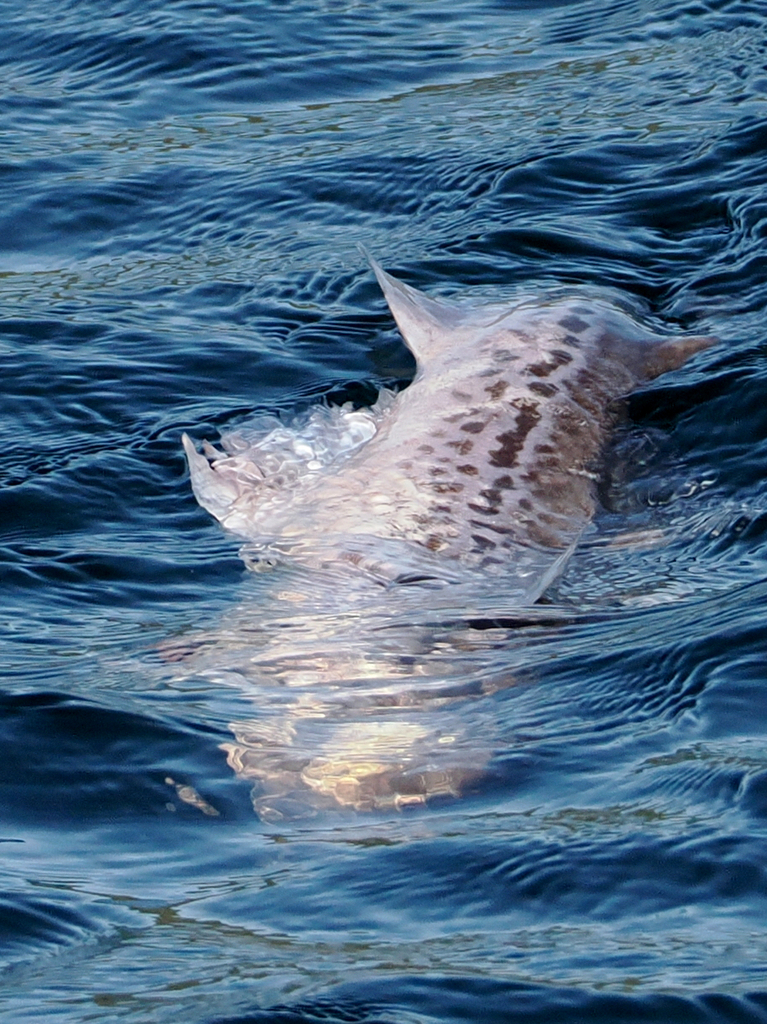
Walleye Pollock (Gadus chalcogrammus) lives in continental Shelf across North Pacific Ocean. It feeds on copepods and krill. Its conservation status is Least Concern.
Fascinating facts about the Walleye Pollock
- Alaska pollock leapt back into the cod family after more than half a century in its own genus. In 1956 it was placed in Theragra, but research in 2008 showed it is closely related to Atlantic cod and should be moved back to Gadus. The U.S. FDA then officially changed the name in 2014 to Gadus chalcogrammus, underscoring its genetic ties to other cods.
- Stormy summers set the stage for a pollock boom three years later. The storms stir up nutrients, and this results in phytoplankton being plentiful for longer, which in turn allows more pollock hatchlings to survive. It has been found that catches of Alaska pollock go up three years after stormy summers.
- A pollock's diet flips with size: fish under 60 mm stick to tiny copepods, while those over 60 mm add krill to the menu. Young pollocks can be divided into two sub-groups, fish with lengths below 60 mm (2+1⁄2 in) and fish greater than 60 mm. Both groups mainly feed on copepods. However, the latter group will also forage for krill. In winter, when food is scarce, foraging can be costly due to the fact that longer hunting time increases the risk of meeting a predator. The larger young pollocks have no need to hunt during the winter because they have a higher capacity for energy storage, while smaller fish do not, and have to continue foraging, putting them at greater risk.
- Alaska pollock, hauling roughly 3 million metric tons annually across the North Pacific. Around 3 million metric tons (3,000,000 long tons; 3,300,000 short tons) of Alaska pollock are caught each year in the North Pacific, from Alaska to northern Japan. Alaska pollock landings are the largest of any single fish species in the U.S., with the average annual Eastern Bering Sea catch between 1979 and 2022 being 1.26 million metric tons. Each year's quota is adjusted based on stock assessments... quotas were reduced from 2008 to 2010 in the Bering Sea due to stock declines. These numbers illustrate the fish's economic weight and why precise, science-based quotas are vital to keep the resource from slipping into over-exploitation.
- Four of the 13 corporations control 40 percent of the world's Alaska pollock ( Gadus chalcogrammus ) stock.
Sources
Every fact above was checked against these pages, and kept only where one of them states it.
At a glance
RangeNorth Pacific Ocean
HabitatContinental Shelf
DietCopepods and krill
About the Walleye Pollock
In the dark, icy waters of the North Pacific, the walleye pollock glides with effortless precision, its sleek, silvery body weaving through the currents with a fluidity that belies its remarkable adaptability. As it navigates the complex web of underwater canyons and ridges, this resilient fish embodies the very essence of survival, its abundance a testament to its ability to thrive in one of the planet's most unforgiving environments. With each subtle flick of its tail, the walleye pollock seems to embody the understated elegance of the deep, a master of the unseen world that lies just beyond our reach.
Hear the Walleye Pollock, and 4,400+ more
Real recorded sounds, 11 nature games and a free Daily 5, 1v1 quiz duels, conservation wins and a safe Kids mode. Free on Feravox.