Photo: Robin White
Feravox · The Voice of the Wild
Arabian Carpetshark
Chiloscyllium arabicum
Near Threatened
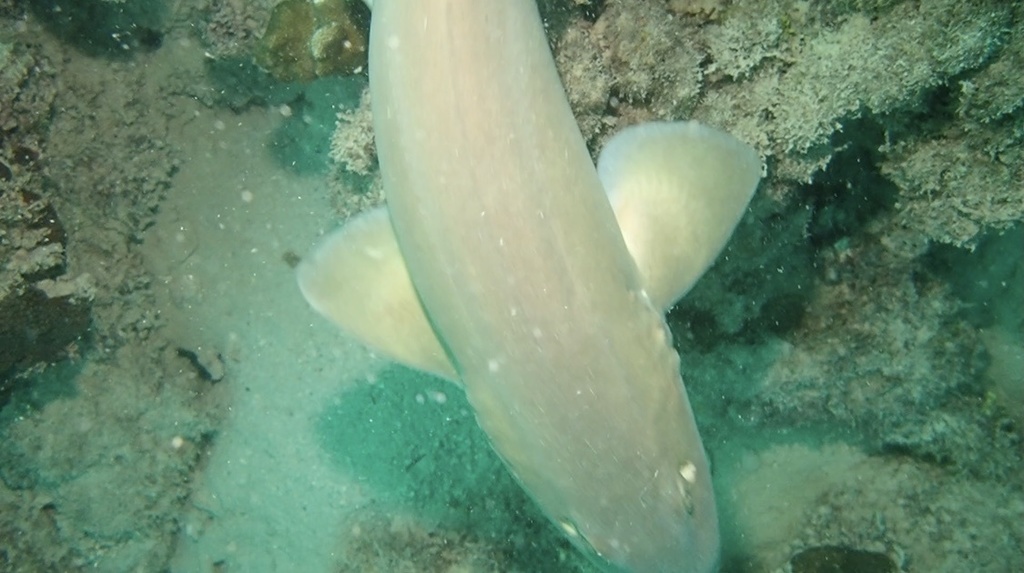
Arabian Carpetshark (Chiloscyllium arabicum) lives in shallow coral reefs across Persian Gulf to India. It feeds on bony fishes and invertebrates. Its conservation status is Near Threatened.
The Arabian carpetshark, Chiloscyllium arabicum, glides through the shallow waters of the Persian Gulf to western India with a sleek, nearly cylindrical form that reaches up to 78 cm (31 in). Its plain tan dorsal surface fades to a crisp white belly, occasionally brushed with an orange hue along the fin margins, while juveniles display faint lighter spots. Two dorsal fins with straight trailing edges sit far apart, the second smaller yet longer-based, and a prominent ridge runs along the back, linking them. This demersal predator favors coral reefs, lagoons, rocky coastlines and mangrove estuaries, often sheltering in caves and crevices; most individuals are found shallower than 10 m (33 ft) but the species can occur down to 100 m (328 ft). It feeds on a varied menu of bony fishes, including snake eels, and invertebrates such as stomatopods, shrimp, crabs, squid, gastropods, and echiuroid worms, and can survive brief periods out of water. Reproduction is oviparous: females lay egg capsules in adhesive-tended batches of four, hatching after 70–80 days at 24 °C (75 °F), and the young emerge under 10 cm (3.9 in). Males clasp a female’s pectoral fin with their mouth while inserting a single clasper for up to 15 minutes during courtship.
Real recorded sounds, 11 nature games and a free Daily 5, 1v1 quiz duels, conservation wins and a safe Kids mode. Free on Feravox.