Photo: Theo Busschau
Feravox · The Voice of the Wild
Three Spot Gourami
Trichopodus trichopterus
Least Concern
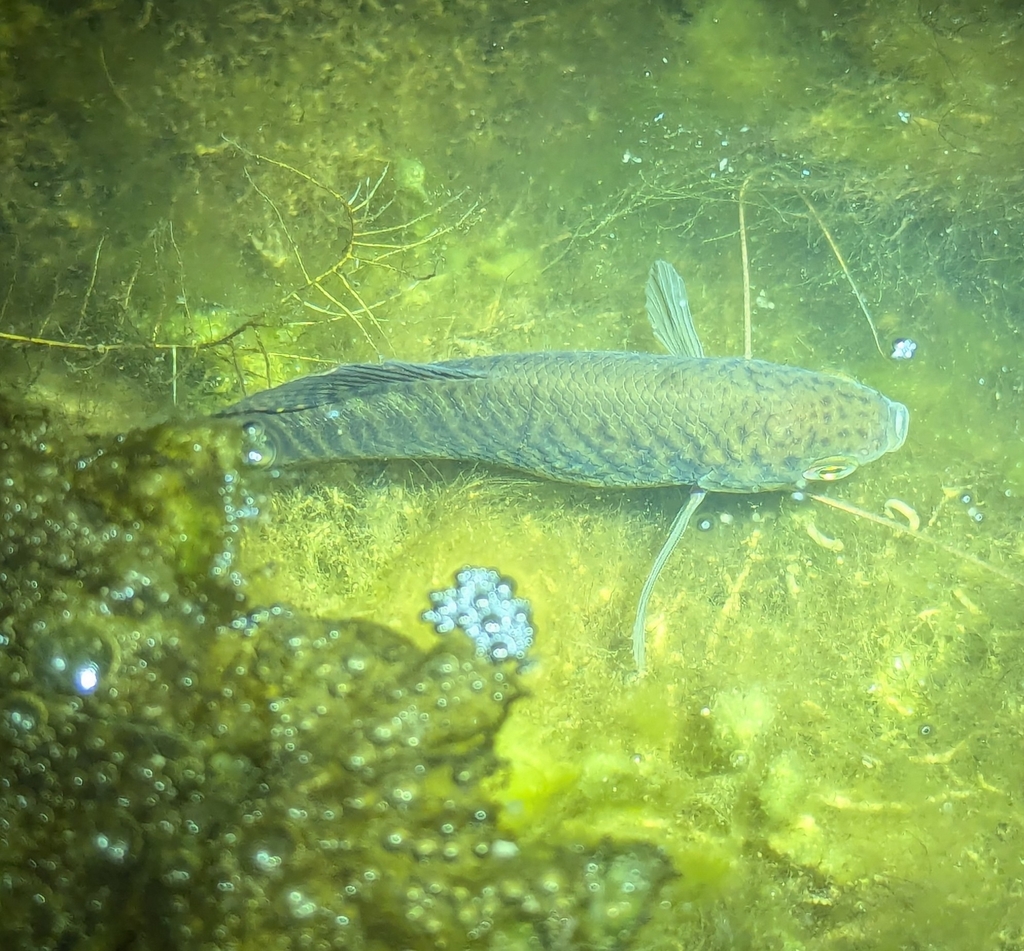
Three Spot Gourami (Trichopodus trichopterus) lives in freshwater marshes across Southeast Asia. It feeds on zooplankton, crustaceans, insect larvae. Its conservation status is Least Concern.
The three spot gourami (Trichopodus trichopterus) glides through the slow-moving waters of southeastern Asia with a sleek, laterally compressed body that reaches about 15 cm in length. Its most striking feature is the trio of dark marks that line each flank – two bold spots flanking the eye, the eye itself completing the pattern. Selectively bred varieties dazzle hobbyists: opaline forms display a marbled pattern, while the blue, golden, platinum, and lavender morphs are also common. In the wild these fish inhabit marshes, swamps, canals, and lowland wetlands, migrating with the monsoon flood pulse from permanent ponds to seasonally flooded forests along the Mekong, then retreating as waters recede. Their diet is opportunistic, snatching zooplankton, tiny crustaceans, and insect larvae, while in captivity they thrive on algae-based flakes complemented by bloodworms, tubifex, brine shrimp, and even mosquito larvae. A male three spot gourami is a diligent architect, inflating a bubble nest on the water’s surface and fiercely guarding it until the fry hatch. The young emerge with a rudimentary labyrinth organ, allowing them to gulp atmospheric oxygen – an adaptation that lets the species persist in oxygen-poor habitats. Their temperament is equally nuanced: males can be territorial, especially toward long-tailed rivals, yet when raised together they may form surprisingly cooperative pairs, each assuming a subtle hierarchy while still displaying the playful chases that hint at their wild-born vigor.
Real recorded sounds, 11 nature games and a free Daily 5, 1v1 quiz duels, conservation wins and a safe Kids mode. Free on Feravox.