Photo: ashleyrsteel
Feravox · The Voice of the Wild
Tropical Gar
Atractosteus tropicus
Least Concern
Tropical Gar (Atractosteus tropicus) lives in freshwater rivers and wetlands across Southern Mexico, Central America. Its conservation status is Least Concern.
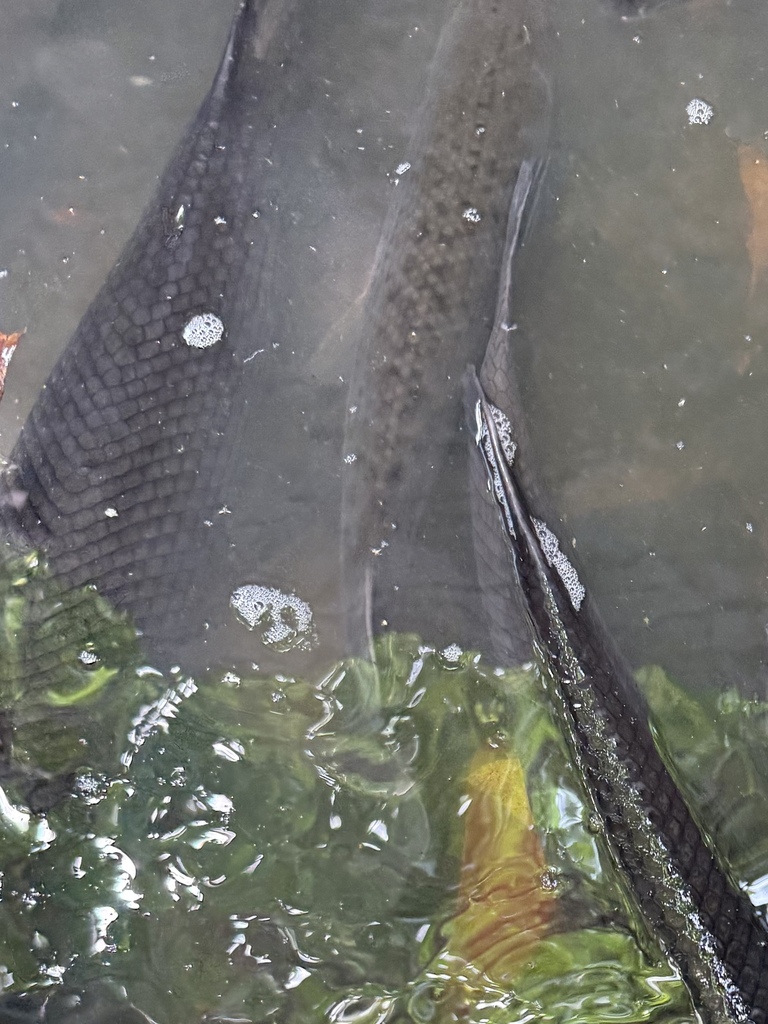
The tropical gar (Atractosteus tropicus) glides through the warm rivers and wetlands of southern Mexico and Central America with a torpedo-shaped, grey-green body armored in thick, diamond-shaped ganoid scales. Its signature elongated snout, broader and shorter than that of the longnose gar, houses a lightning-fast lever-like jaw lined with sharp, conical teeth that snap shut in a split-second to seize small fish, crustaceans and even amphibians. A lateral line of neuromasts runs the length of its flank, guiding the predator through currents while its heavy scales and fulcra along the fins help it stay anchored in fast-moving water. Though the smallest of the seven living gar species, typically under a metre and rarely exceeding 1.25 m (4 ft) and 2.9 kg (6.4 lb), it is a top predator, lying in wait among submerged vegetation before lunging with a burst of speed that belies its ancient lineage. One surprising trait sets it apart: as a bimodal breather, it can gulp air into a vascularized swim bladder that functions like a lung, allowing it to survive in deoxygenated pools that form during the wet season. This dual respiration, combined with its nocturnal spawning in shallow lakes, makes the tropical gar a living reminder of a lineage that has persisted since the early Cretaceous, yet still thrives in the dynamic waterways of Central America.
Real recorded sounds, 11 nature games and a free Daily 5, 1v1 quiz duels, conservation wins and a safe Kids mode. Free on Feravox.