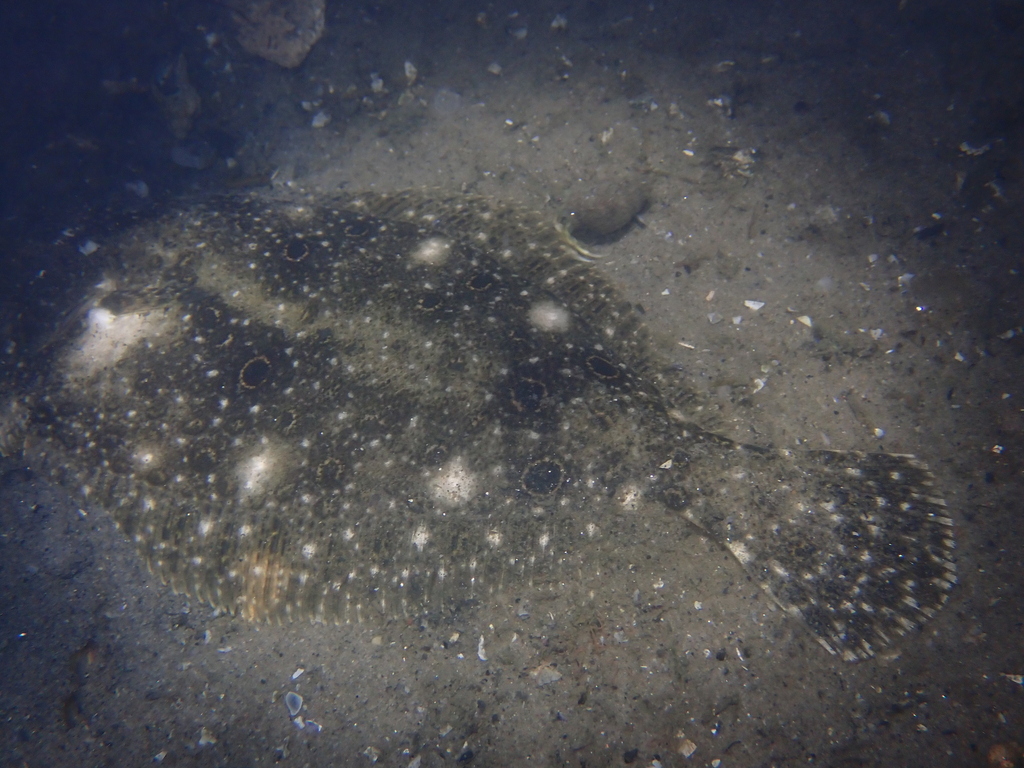
Photo: Zakqary Roy
Feravox · The Voice of the Wild
Summer Flounder
Paralichthys dentatus
Least Concern
Summer Flounder (Paralichthys dentatus) lives in coastal shelf waters across Nova Scotia to Florida. It feeds on fish and crustaceans. Its conservation status is Least Concern.
The summer flounder, Paralichthys dentatus, glides across the Atlantic seafloor with a laterally-compressed silhouette punctuated by five to fourteen eye-like ocellated spots that shimmer like tiny lanterns against the sand. Growing typically 38.1-50.8 cm (15-20 in) and weighing 0.4-1.3 kg (1-3 lb), the heaviest individuals can tip the scales at 9 kg (26 lb), their sharp teeth ready for a predatory lifestyle. In spring they abandon the deep-water spawning grounds and migrate inshore, threading through beaches, inlets, bays, estuaries, canals, and creeks where they linger until autumn, their dark side capable of dynamic camouflage that matches the grain of the substrate with astonishing precision. These left-eye flatfish lie buried with only their heads exposed, ambushing sand lance, menhaden, Atlantic silverside, mummichog, small bluefish, porgies, squid, shrimp, and crabs, yet they can burst upward as rapid swimmers to chase prey into mid-water or even the surface. Females, often the largest and oldest, reach sexual maturity at two years and can live up to 20 years, with females recorded at 17 years and males at 15. Their ability to burrow swiftly into muddy or sandy bottoms and to alter coloration on demand makes them masterful hunters in the shifting coastal ecosystems of the western Atlantic, from Nova Scotia to Florida.
Real recorded sounds, 11 nature games and a free Daily 5, 1v1 quiz duels, conservation wins and a safe Kids mode. Free on Feravox.