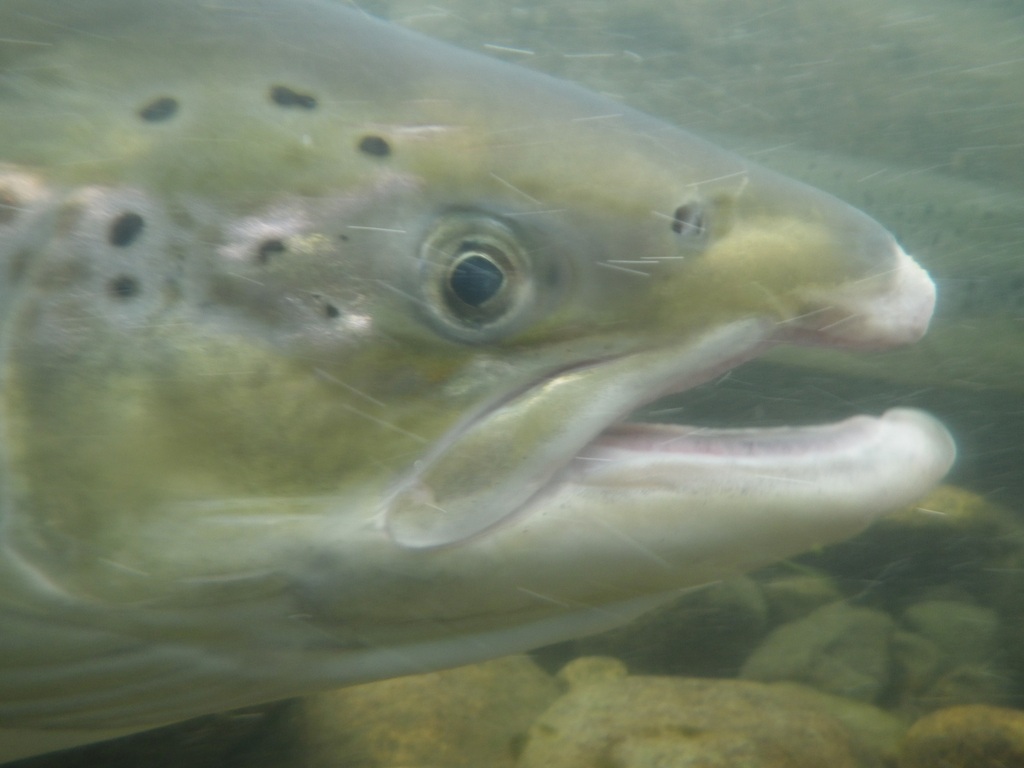
Atlantic Salmon (Salmo salar). Its conservation status is Near Threatened.
Fascinating facts about the Atlantic Salmon
When a young Atlantic salmon reaches about 15 cm (5.9 in) it transforms into a smolt, swapping its spotted river camouflage for shiny sides and preparing to ride sea-surface currents instead of swimming thousands of kilometres under its own power. This switch shows how a simple size cue triggers a massive habitat shift.
After just two years at sea the average fish measures 71–76 cm (28–30 in) and weighs 3.6–5.4 kg (7.9–11.9 lb), but a rare individual caught in Scotland in 1960 tipped the scales at 49.44 kg (109 lb), the heaviest ever recorded. Those giants illustrate the extraordinary growth potential when ocean feeding is uninterrupted.
Only 5–10 % of mature Atlantic salmon survive spawning and head back to the ocean, and of those, just 5 % ever take the wrong river on their return. The tiny odds highlight how precise their homing instincts must be, even after years at sea.
Norway now farms more than half of the world’s Atlantic salmon supply, supplying over 50 % of all cultivated fish of this species. This dominance underscores how aquaculture has reshaped the market, offering a viable alternative to dwindling wild stocks.
In the 1800s, over half of North America’s historic salmon runs vanished, and by 1850 the United States had lost more than 50 % of its native populations due to dams, logging and agriculture. The rapid decline reveals how quickly human activity can erase centuries-old migrations.
Advertisement
Hear the Atlantic Salmon, and 4,400+ more
Real recorded sounds, 11 nature games and a free Daily 5, 1v1 quiz duels, conservation wins and a safe Kids mode. Free on Feravox.