Feravox · The Voice of the Wild
Sora: a two-minute wildlife lesson
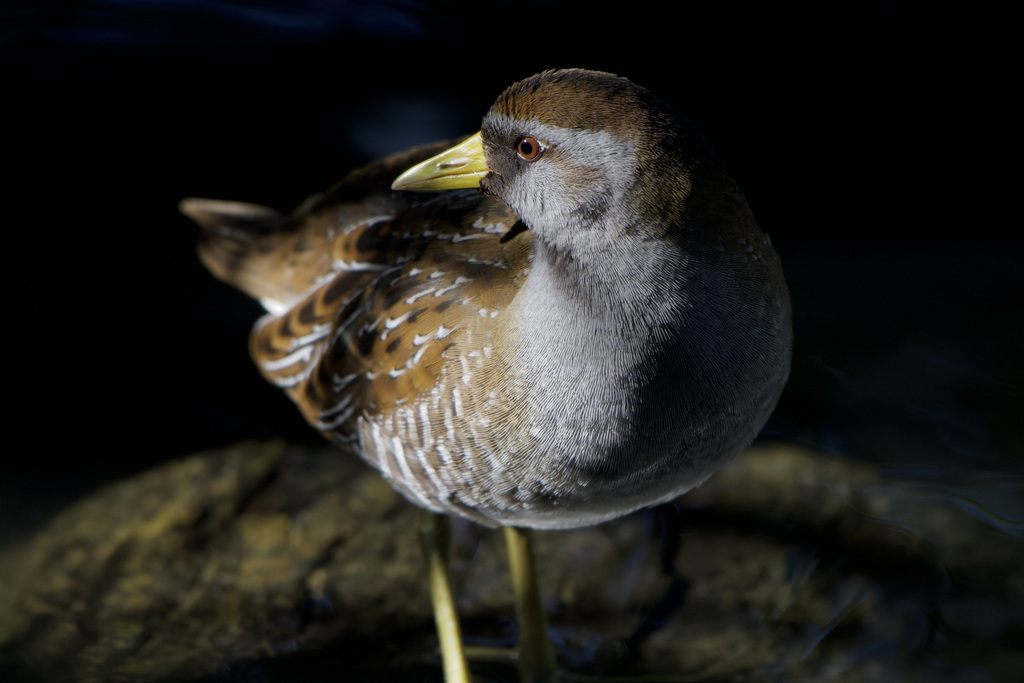
Soras are heard far more often than seen. One of their calls is a whinny that slides down in pitch.
Cranes and Marsh Birds · day 3 of 7
Five facts
- Soras are heard far more often than seen. One of their calls is a whinny that slides down in pitch.
- Play a sora's call in a marsh and one may come out to check who is there.
- A sora nest usually holds 8 to 13 eggs, and up to 16 have been reported. Odd-looking eggs may be buried and left unwarmed.
- Chicks can walk and swim a short way by the end of their first day. By about 4 weeks old they look after themselves.
- Its menu changes with the seasons: about 40% plants in spring and summer, but 68 to 69% in fall and winter.
The quiz
1. How do people usually notice a sora?
- By its bright red feathers
- By hearing its call (correct)
- By its huge nest in a tree
- By its large flocks in the sky
Soras are more often heard than seen.
2. What does a sora often do when it hears a recording of its call?
- Flies far away
- Falls silent for a week
- Comes to investigate (correct)
- Builds a new nest
Soras will often investigate the source of a played call.
3. What may a sora do with an odd-looking egg?
- Bury it and not warm it (correct)
- Carry it to another nest
- Sit on it twice as long
- Paint it with mud
Soras may bury irregular eggs and refuse to incubate them.
4. What can sora chicks do by the end of their first day?
- Fly across the marsh
- Walk and swim a short way (correct)
- Find food alone for the winter
- Build their own nest
Chicks can walk and swim short distances by the end of day one.
5. When do soras eat the most plant food?
- Only in spring
- Only in summer
- Never, it eats only snails
- In fall and winter (correct)
Plants make up 68 to 69% of the diet in fall and winter, against 40% in spring and summer.
Same week
Today’s lesson is waiting
Two minutes a day, a new wild animal. Free on iPhone, Android and the web.
Hear them, don't just read about them
Feravox is a free wildlife app: 4,400+ species with real recorded sounds, 11 nature games and a free Daily 5, 1v1 quiz duels, conservation wins, and a safe Kids mode.
Nature documentaries
Blue Planet III2026 · BBC OnePlanet Earth III2023 · BBC OneBlue Planet II2017 · BBC OnePlanet Earth II2016 · BBC OneFrozen Planet II2022 · BBC OneSeven Worlds, One Planet2019 · BBC OneMammals2024 · BBC OneSecret Garden2026 · BBC OneWild Isles2023 · BBC OneOur Planet2019 · NetflixOur Planet II2023 · NetflixThe Blue Planet2001 · BBC One