Feravox · The Voice of the Wild
Kagu: a two-minute wildlife lesson
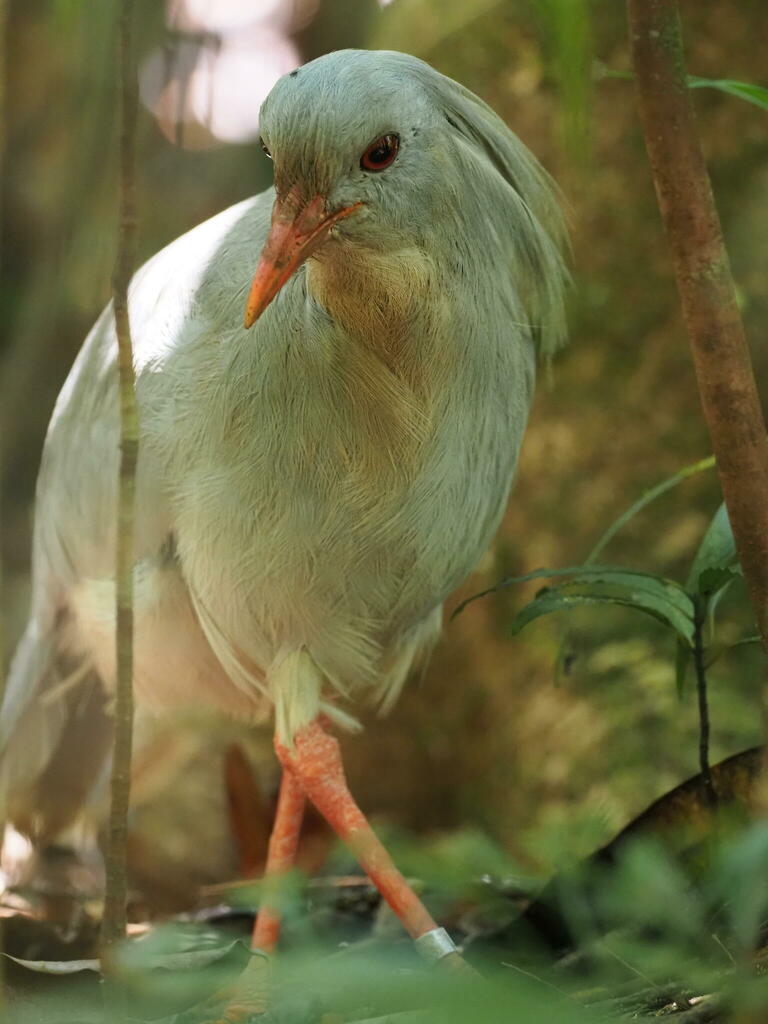
The kagu has flaps called nasal corns over its nostrils, something no other bird has. They probably keep dirt out while it probes the soil.
Cranes and Marsh Birds · day 6 of 7
Five facts
- The kagu has flaps called nasal corns over its nostrils, something no other bird has. They probably keep dirt out while it probes the soil.
- Its wings are full size but lack the muscles to fly. It still uses them to glide away from danger and to show off.
- To hunt, it stands still and watches. It may balance on one foot and gently stir the leaves with the other to scare out prey.
- Parents share their single egg in 24-hour shifts, swapping places around noon each day.
- Grown-up chicks may stay home for up to six years. They help their parents defend the family territory.
The quiz
1. What feature does the kagu have that no other bird has?
- Teeth on its tongue
- Nasal corns over its nostrils (correct)
- A third eyelid on top of its head
- Feathers on its bill
Its nasal corns, covering the nostrils, are not shared by any other bird.
2. Why can't the kagu really fly?
- Its wings are tiny
- It has no wing feathers
- Its wings lack flight muscles (correct)
- Its legs are too heavy
Its wings are full size but lack the muscles needed for flight.
3. How does a kagu flush prey out of the leaves?
- It gently stirs the leaves with one foot (correct)
- It digs with both feet
- It flaps its wings to blow them away
- It drops pebbles on them
Standing on one foot, it moves the leaf litter with the other.
4. How long is each parent's shift on the egg?
- 1 hour
- One week
- 10 minutes
- 24 hours (correct)
Each parent sits for 24 hours, changing over around noon.
5. How do older kagu offspring help their parents?
- They sit on the eggs
- They help defend the territory (correct)
- They feed the new chicks
- They build the nest alone
They do not incubate or feed chicks, but they help defend the territory.
Same week
Today’s lesson is waiting
Two minutes a day, a new wild animal. Free on iPhone, Android and the web.
Hear them, don't just read about them
Feravox is a free wildlife app: 4,400+ species with real recorded sounds, 11 nature games and a free Daily 5, 1v1 quiz duels, conservation wins, and a safe Kids mode.
Nature documentaries
Blue Planet III2026 · BBC OnePlanet Earth III2023 · BBC OneBlue Planet II2017 · BBC OnePlanet Earth II2016 · BBC OneFrozen Planet II2022 · BBC OneSeven Worlds, One Planet2019 · BBC OneMammals2024 · BBC OneSecret Garden2026 · BBC OneWild Isles2023 · BBC OneOur Planet2019 · NetflixOur Planet II2023 · NetflixThe Blue Planet2001 · BBC One