Feravox · The Voice of the Wild
Limpkin: a two-minute wildlife lesson
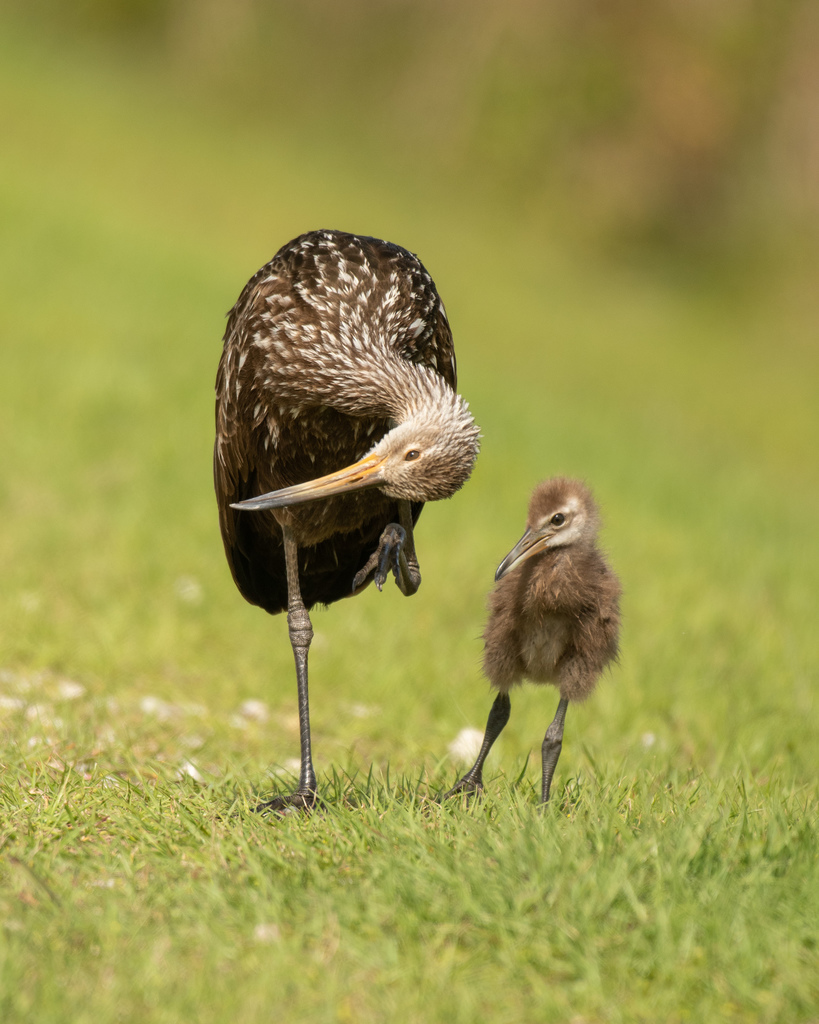
The limpkin is named for the way it walks: its steps make it look as if it has a limp.
Cranes and Marsh Birds · day 5 of 7
Five facts
- The limpkin is named for the way it walks: its steps make it look as if it has a limp.
- Its bill has a small gap near the tip that works like tweezers. In many birds the tip bends slightly right, like an apple snail's shell.
- It sets a snail in the mud, flips off its little lid and pulls it out in 10 to 20 seconds, rarely breaking the shell.
- Its wild, wailing scream has starred in films: it was used for jungle sounds in Tarzan and for the hippogriff in Harry Potter.
- Thanks to its long toes, a limpkin can stand on floating water plants. Its chicks can already swim when they hatch.
The quiz
1. Where does the limpkin's name come from?
- Its limp-looking walk (correct)
- Its bright yellow legs
- A famous explorer
- The sound of its wings
Its walk gives the impression that it is limping.
2. How does the limpkin's bill help it eat snails?
- It is short and hooked for smashing
- It is wide like a spoon
- A small gap near the tip works like tweezers (correct)
- It has teeth along the edges
The bill is slightly open near the end, giving a tweezers-like grip.
3. About how long does a limpkin take to pull a snail out of its shell?
- About 1 hour
- 10 to 20 seconds (correct)
- A whole day
- 5 minutes
The extraction takes 10 to 20 seconds, usually without breaking the shell.
4. In Harry Potter, which creature's sound used the limpkin's call?
- The dragon
- The owl Hedwig
- The phoenix
- The hippogriff (correct)
The limpkin's call was used for the hippogriff in the film.
5. What lets a limpkin stand on floating water plants?
- Its long toes (correct)
- Its very light bones
- Its webbed feet
- Its short wings
Its long toes spread its weight on floating plants.
Same week
Today’s lesson is waiting
Two minutes a day, a new wild animal. Free on iPhone, Android and the web.
Hear them, don't just read about them
Feravox is a free wildlife app: 4,400+ species with real recorded sounds, 11 nature games and a free Daily 5, 1v1 quiz duels, conservation wins, and a safe Kids mode.
Nature documentaries
Blue Planet III2026 · BBC OnePlanet Earth III2023 · BBC OneBlue Planet II2017 · BBC OnePlanet Earth II2016 · BBC OneFrozen Planet II2022 · BBC OneSeven Worlds, One Planet2019 · BBC OneMammals2024 · BBC OneSecret Garden2026 · BBC OneWild Isles2023 · BBC OneOur Planet2019 · NetflixOur Planet II2023 · NetflixThe Blue Planet2001 · BBC One