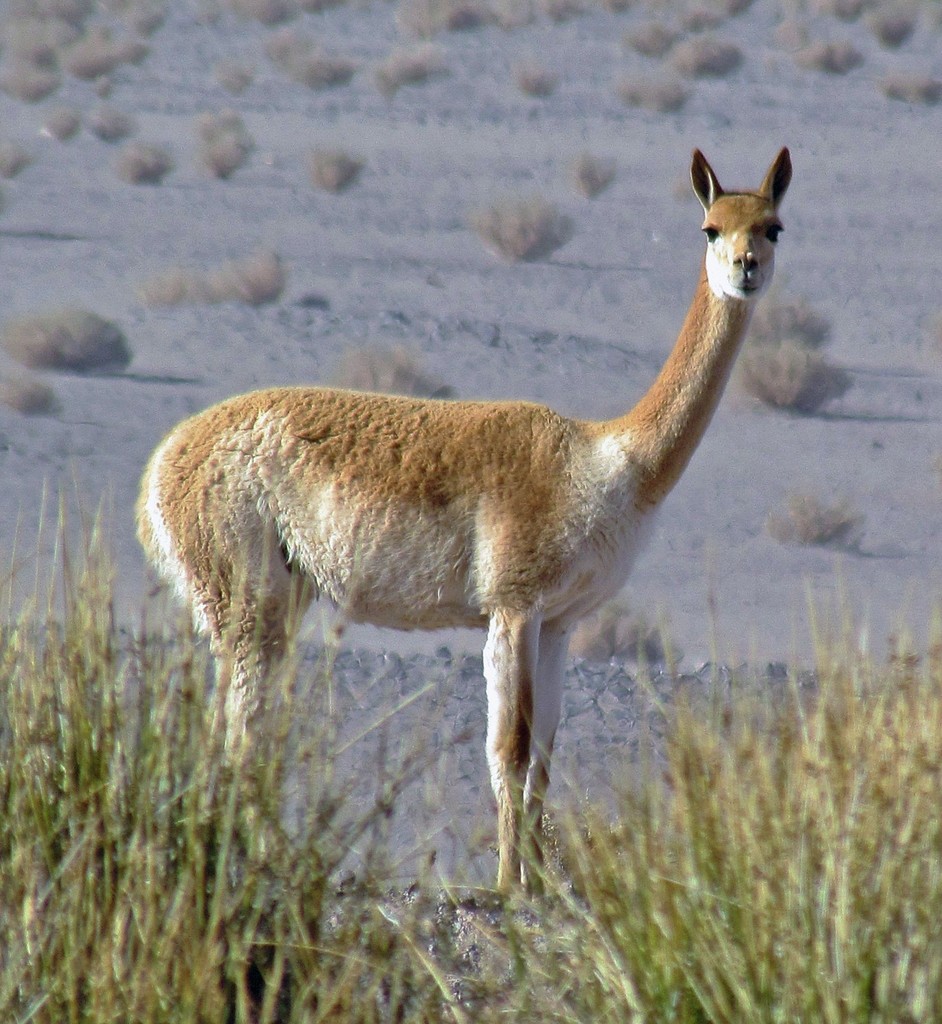
Vicuña (Lama vicugna) lives in andean high plains across South America. It feeds on grasses and plants. Its conservation status is Least Concern.
Fascinating facts about the Vicuña
- When the vicuña was declared endangered in 1974 its numbers had dwindled to roughly six thousand individuals. Protective legislation and coordinated conservation programmes were introduced, including the creation of reserves such as Pampa Galeras and the signing of international conventions. These actions allowed the species to rebound, and today the wild population is estimated at about 350,000 animals.
- Vicuña fibre is among the finest in the world, measuring just 12 μm across, which gives the wool its legendary softness. This diameter is finer than the 14-19 μm fibres of cashmere goats and comparable to the 9-12 μm fibres of shahtoosh from the Tibetan antelope. The tiny scale-covered, hollow fibres interlock to trap air, providing exceptional insulation. Such microscopic thickness makes vicuña wool highly prized for luxury garments.
- To obtain vicuña fleece workers must chase and capture each wild animal, because the animals can only be shorn once every three years. This restriction limits the amount of wool that can be harvested and, combined with the need for live capture, makes the fibre extremely scarce. The rarity drives the market price to over $300 per kilogram, reinforcing its status as a luxury material. Consequently, the limited supply keeps the industry small and tightly regulated.
- During the Inca empire, only members of the royal class were allowed to wear garments made from vicuña wool. The Inca valued the animal's coat so highly that it was forbidden for anyone else to use it, making the fibre a symbol of elite status. Because the vicuña yields only tiny amounts of extremely fine wool and can be shorn just once every three years, the material was both rare and costly.
Sources
Every fact above was checked against these pages, and kept only where one of them states it.
At a glance
RangeSouth America
HabitatAndean high plains
DietGrasses and plants
About the Vicuña
In the windswept expanses of the Andean highlands, the vicuña roams with an ethereal elegance, its slender legs carrying it effortlessly across the rocky terrain as it searches for the tender shoots of grass that sustain it. With a soft, golden coat that shimmers like the sun-kissed earth, this diminutive camelid moves with a quiet confidence, its large, dark eyes ever-vigilant for the predators that stalk its domain. As it grazes, the vicuña embodies a fragile yet resilient beauty, its very existence a testament to the enduring power of life in one of the harshest and most breathtaking landscapes on Earth.
Hear the Vicuña, and 4,400+ more
Real recorded sounds, 11 nature games and a free Daily 5, 1v1 quiz duels, conservation wins and a safe Kids mode. Free on Feravox.