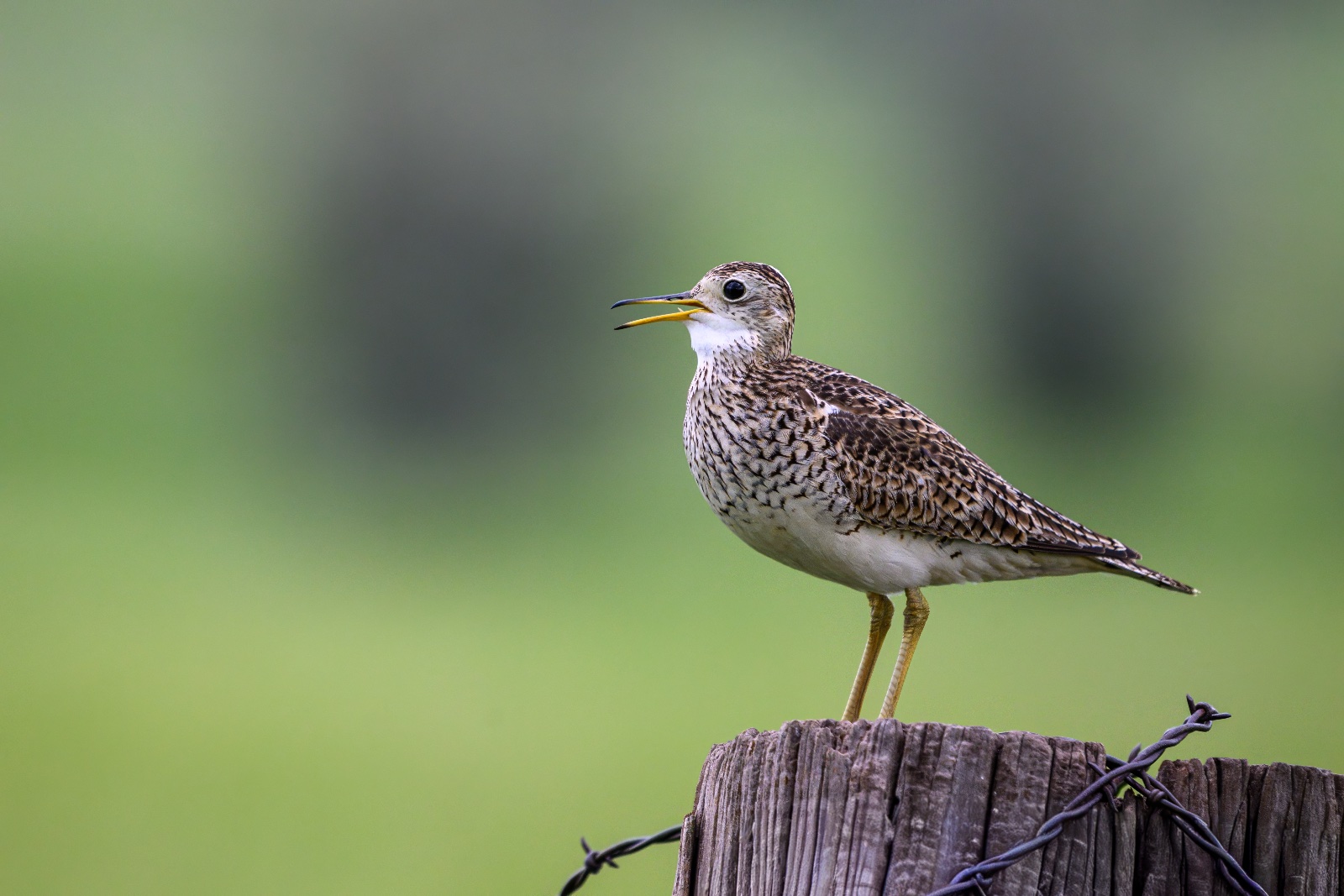
Photo: Seth Owens
Feravox · The Voice of the Wild
Upland Sandpiper
Bartramia longicauda
Least Concern
Upland Sandpiper (Bartramia longicauda) lives in wet meadows, tundra across North America, Eurasia. It feeds on insects, seeds, berries. Its conservation status is Least Concern.
Every fact above was checked against these pages, and kept only where one of them states it.
The upland sandpiper (Bartramia longicauda) is a strikingly lanky bird, its long, slender neck and thin, dark bill giving it a crane‑like silhouette. Plumage is a mottled tapestry of brown, buff, and black streaks that blend seamlessly with the dry grasses and open tundra it frequents, while its long, pink‑tinged legs stride confidently across the tundra’s patchwork of moss, lichen, and low shrubs. In summer, males perform an elaborate aerial display, soaring high before diving in a series of graceful swoops that echo across the wind‑swept plains, a ritual that both courts mates and asserts territory. Their diet is opportunistic: they probe soft soil and leaf litter with their sensitive bills, extracting insects, spiders, and small crustaceans, and in the leaner months they supplement with seeds and berries, showcasing a flexibility that has helped them colonize a range from the Arctic tundra to the high deserts of North America. A surprising trait lies in their vocal repertoire, though often silent, they emit a low, resonant “whoop‑whoop” that can travel several hundred meters, a call used to maintain contact across the vast, open landscapes they inhabit, pulling listeners toward the next hidden oasis of life.
Real recorded sounds, 11 nature games and a free Daily 5, 1v1 quiz duels, conservation wins and a safe Kids mode. Free on Feravox.