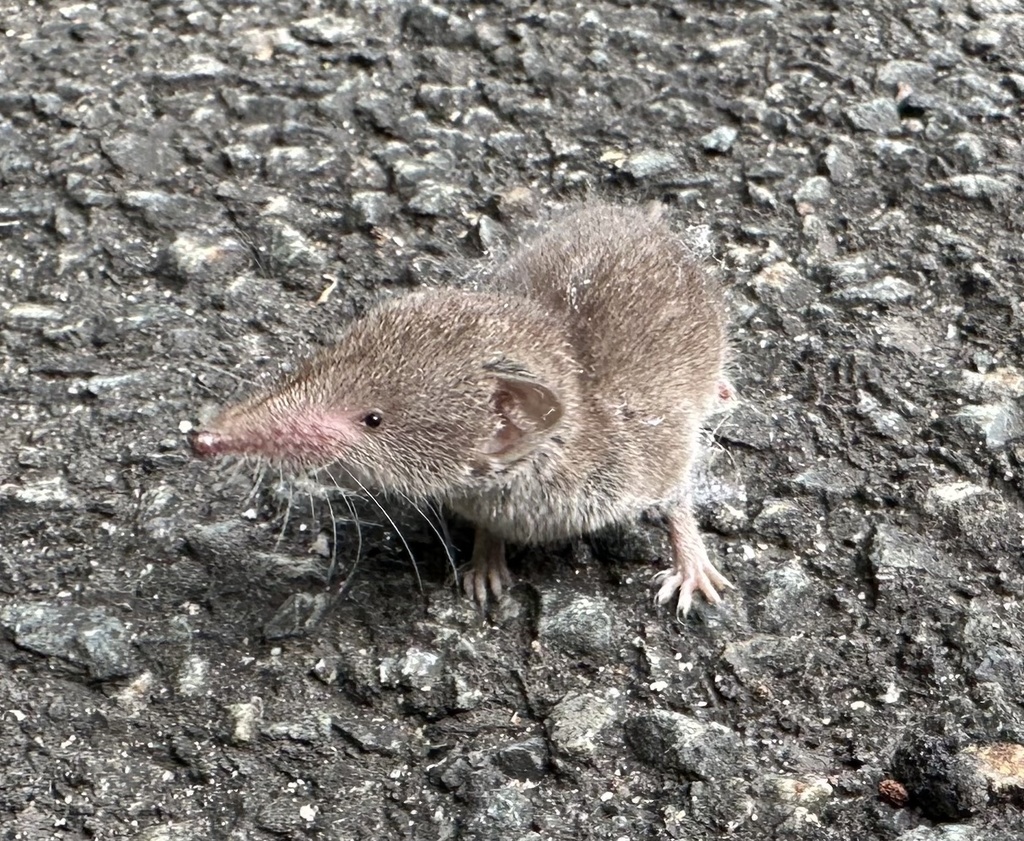
South European White-toothed Shrew (Crocidura fimbriata) lives in mediterranean forests across South Europe. Its conservation status is Least Concern.
Fascinating facts about the South European White-toothed Shrew
- Mummified shrews from the start of the Ptolemaic Period at Quesna, Egypt, show this species once lived in the Nile Delta, a habitat it no longer occupies. This indicates the area was considerably wetter in antiquity, allowing the shrew to thrive there.
- Its range stretches from Spain in the west across Europe to Russia, then south through the Caucasus to the Middle East and the Sinai Peninsula in Egypt. Within this broad distribution the shrew once also inhabited the Nile Delta, as shown by early Ptolemaic mummified specimens. Those fossils reveal that the species formerly occupied that part of Egypt but has since vanished from the Delta.
- Although formerly grouped as a subspecies of the lesser white-toothed shrew, newer studies treat it as a distinct species. The species bears the name of the 18th-century naturalist Johann Anton Güldenstädt.
- Güldenstädt's shrew bears the name of the 18th-century naturalist Johann Anton Güldenstädt and is classified as a true shrew in the family Soricidae. It is a small mammal known scientifically as Crocidura gueldenstaedtii. Although it was once lumped with the lesser white-toothed shrew, recent research now recognises it as a separate species, confirming its distinct taxonomic status.
- Populations from western Europe and the island of Cyprus are currently listed as subspecies of Güldenstädt's shrew, but scientists suspect each may actually represent a separate species.
Sources
Every fact above was checked against these pages, and kept only where one of them states it.
At a glance
RangeSouth Europe
HabitatMediterranean forests
DietInsects and worms
About the South European White-toothed Shrew
In the sun-dappled underbrush of the Mediterranean, the South European White-toothed Shrew darts and weaves with frenetic energy, its slender form blurring as it pursues the hidden world of insects and invertebrates that sustain it. With each twitch of its whiskered snout, it navigates a labyrinthine realm of leaf litter and twisted roots, its tiny heart pounding out a furious rhythm as it seeks to satiate its boundless appetite. As it moves, the shrew's very existence seems a testament to the unyielding vitality of life, a small but indomitable spark that flickers brightly in the secret places of the forest.
Hear the South European White-toothed Shrew, and 4,400+ more
Real recorded sounds, 11 nature games and a free Daily 5, 1v1 quiz duels, conservation wins and a safe Kids mode. Free on Feravox.