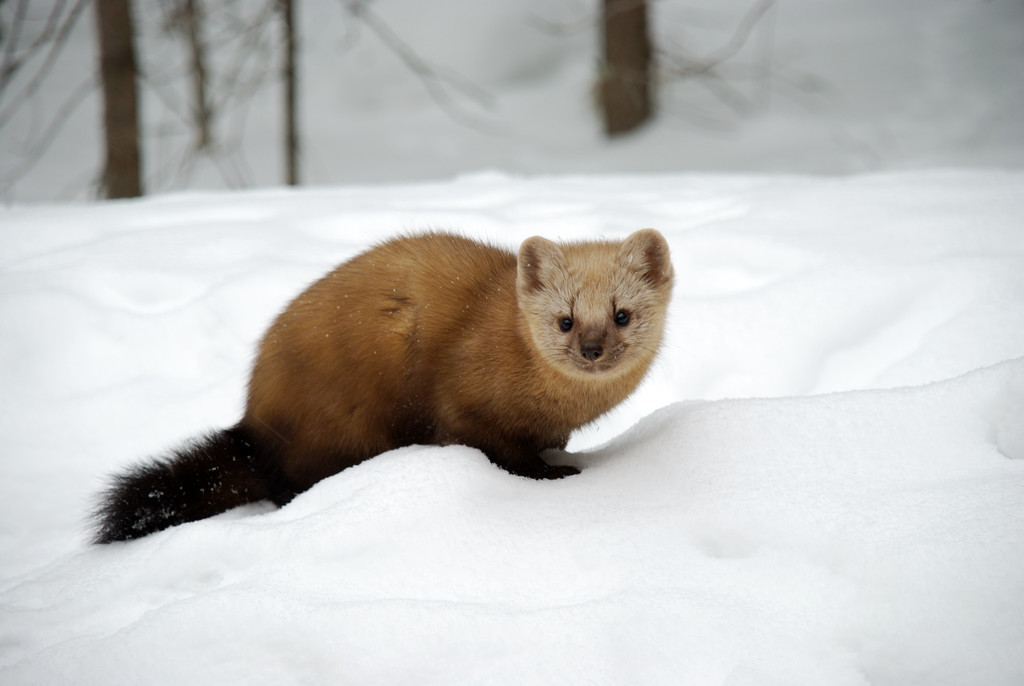
Sable (Martes zibellina) lives in boreal forests across Northern Eurasia. It feeds on small mammals rodents. Its conservation status is Least Concern.
Fascinating facts about the Sable
- A Soviet re-introduction programme released a massive number of sable martens into the wild, with 19,000 individuals being set free between 1940 and 1965. This effort helped re-establish the species across much of its historic Russian range, especially north of the tree line and into the Ural Mountains.
- After mating in the summer, sable embryos enter a prolonged pause, with the blastocyst waiting eight months before it implants in the uterus. Once implantation occurs, the gestation period lasts between 245 and 298 days, yet the actual embryonic development only requires 25 to 30 days of growth. This lets the young be born in the spring when prey such as hares and berries become abundant.
- In captivity sable martens can reach twenty-two years, far exceeding their wild lifespan. In natural forest habitats the longest recorded age is only eighteen years. They reach sexual maturity at two years.
- Sable fur is unique because it retains its smoothness in every direction it is stroked, unlike other animal pelts that feel rough when stroked against the grain. It has been highly valued in the fur trade since the early Middle Ages, and has been used to decorate collars, sleeves, hems and hats through the centuries.
Sources
Every fact above was checked against these pages, and kept only where one of them states it.
At a glance
RangeNorthern Eurasia
HabitatBoreal forests
DietSmall mammals rodents
About the Sable
In the shadowy depths of the forest, the sable moves with an air of mystery, its dark, lustrous fur blending seamlessly with the dappled gloom as it pads silently across the forest floor, its piercing gaze alert to the slightest whisper of movement. With each step, its slender, elongated body seems to weave and glide through the underbrush, propelled by a lithe, muscular power that belies its compact frame. As it navigates this twilight world, the sable embodies a quiet, understated elegance, its very presence a testament to the enduring allure of the wild.
Common questions
Where does the Sable live?
Habitat: boreal forests. Range: Northern Eurasia.
Is the Sable endangered?
The Sable is listed as Least Concern on the IUCN Red List.
Hear the Sable, and 4,400+ more
Real recorded sounds, 11 nature games and a free Daily 5, 1v1 quiz duels, conservation wins and a safe Kids mode. Free on Feravox.