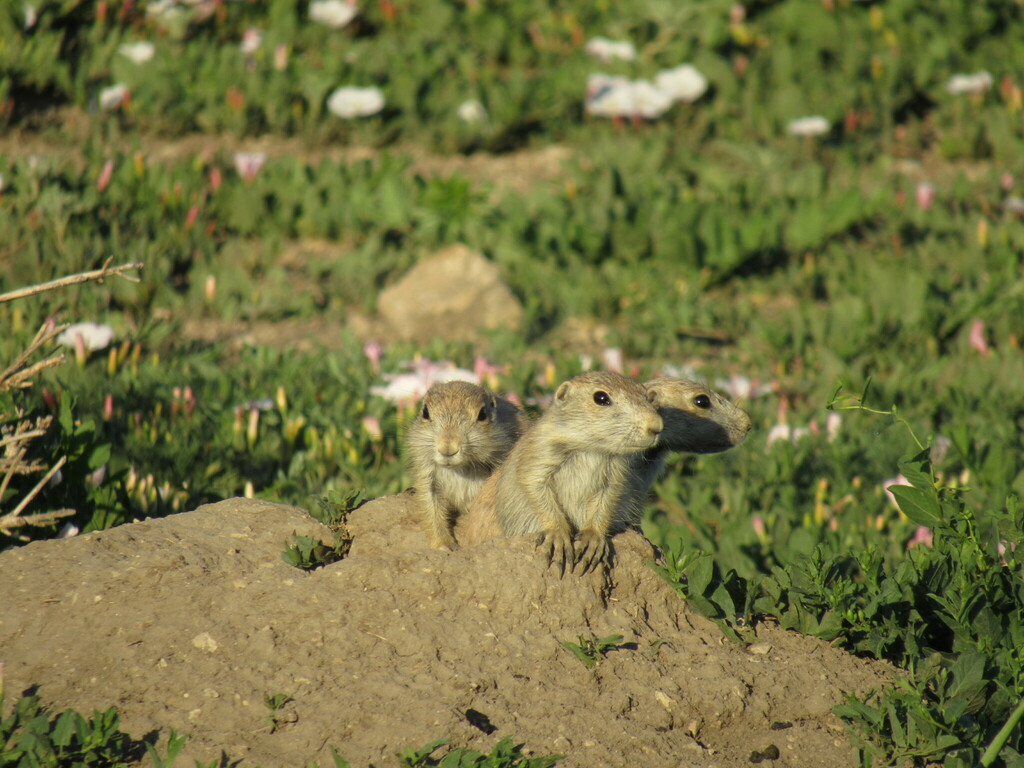
Prairie Dog (Cynomys ludovicianus) lives in grasslands prairie across North America. It feeds on grass and seeds. Its conservation status is Least Concern.
Fascinating facts about the Prairie Dog
- A black-tailed prairie-dog town in Texas once spanned about 25,000 mi² (64,000 km²) and held roughly 400 million individuals. This enormous colony lay within the species' historic range that stretched from the United States-Canada border down to the United States-Mexico border across the Great Plains. Such sheer numbers indicate the prairie dog may have been the most abundant of its kind in central North America before habitat loss.
- Black-tailed prairie dogs do not enter true hibernation and can be seen above ground even in mid-winter. They still venture out of their burrows to forage during the day, but at night they enter a short, involuntary torpor that lowers metabolism, heart rate and respiration. This nightly torpor helps them conserve energy when temperatures drop, yet they remain active enough to maintain their colonies throughout winter.
- During the fall and winter, black-tailed prairie dogs typically lose about twenty percent of their body weight as they undergo repeated bouts of torpor. This weight loss reflects the energy saved when their metabolism slows during nightly torpor periods. As winter advances, the proportion of time spent in torpor increases, further enhancing conservation of limited resources.
- Burrows in central Oklahoma reach depths of 50-60 in (1,270-1,524 mm), providing a substantial underground network for the colony. These tunnels serve as refuges from the external environment, protecting prairie dogs from predators and harsh weather. Within the burrows they breed, rear their young and store food, making the structures essential for colony survival. The depth also helps maintain stable temperatures, supporting their winter torpor behaviour.
Sources
Every fact above was checked against these pages, and kept only where one of them states it.
At a glance
RangeNorth America
HabitatGrasslands prairie
DietGrass and seeds
About the Prairie Dog
Across the sun-drenched expanse of the North American plains, the prairie dog embarks on its daily odyssey, scurrying with purpose through the tall grasses as it forages for sustenance and tends to its intricate network of underground tunnels and burrows. With a twitch of its whiskers and a flick of its tail, this diminutive creature navigates its surroundings with a quiet confidence, its large, inquisitive eyes ever-vigilant for potential threats. As it pops in and out of its burrows, the prairie dog's high-pitched chirping calls echo across the landscape, a symphony of sound that betrays its remarkable social complexity.
Hear the Prairie Dog, and 4,400+ more
Real recorded sounds, 11 nature games and a free Daily 5, 1v1 quiz duels, conservation wins and a safe Kids mode. Free on Feravox.