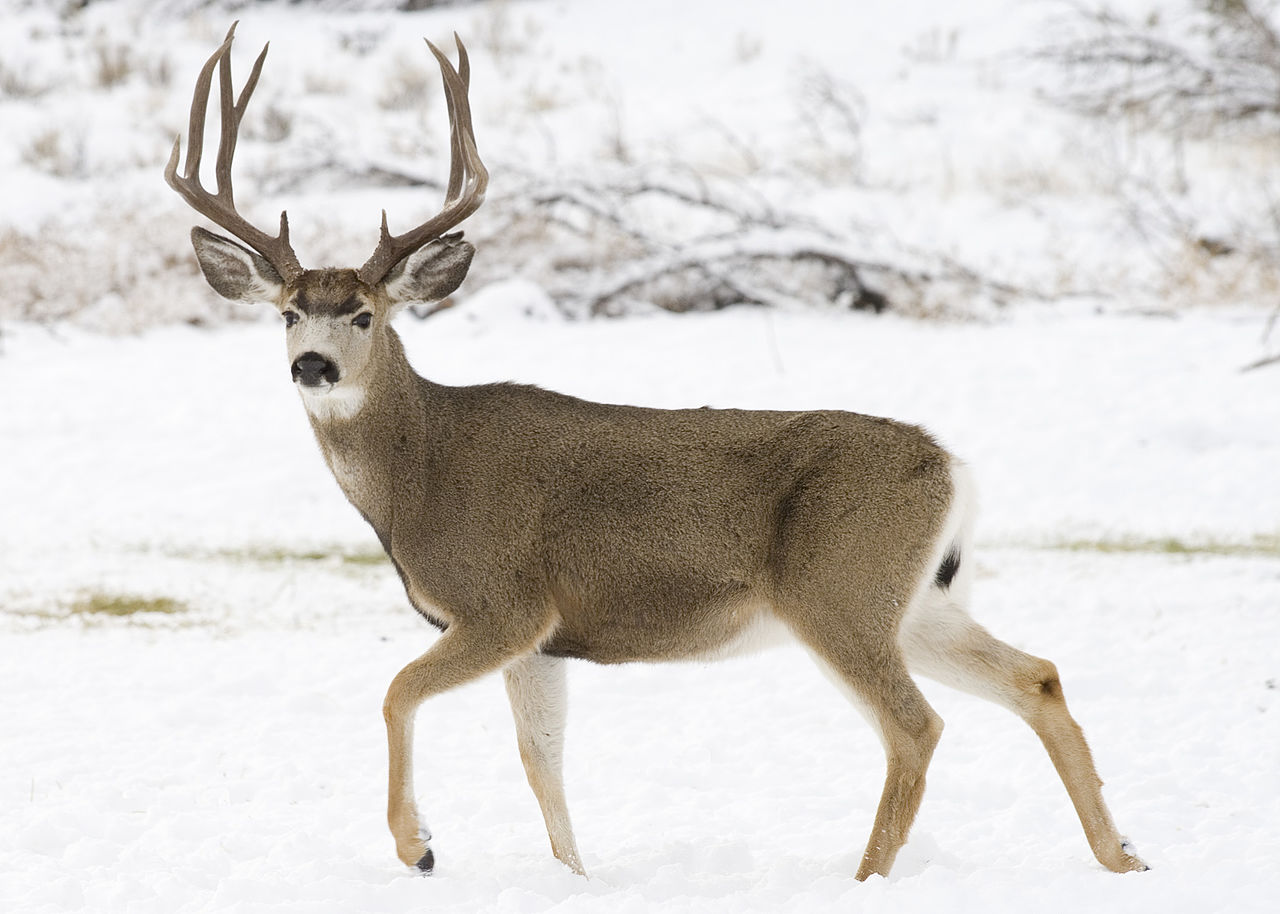
Mule Deer (Odocoileus hemionus) lives in western mountainous terrain across Western North America. It feeds on grass and leaves. Its conservation status is Least Concern.
Hear the Mule Deer
A real field recording of the Mule Deer, made in the wild.
Mule deer: researchers documented a 150-mile trek in Wyoming between winter and summer ranges, the longest recorded for the species. Such long-distance migrations let deer escape deep snow and reach fresh spring growth, linking survival to memory of routes and highlighting the need to protect corridor habitats across vast landscapes.
Mule deer are hefty mammals: adult bucks normally weigh 55-150 kg (121-331 lb), averaging about 92 kg (203 lb), with trophy individuals reaching up to 210 kg (460 lb). Does are lighter, typically 43-90 kg (95-198 lb) and average around 68 kg (150 lb). These weight ranges, confirmed by multiple sources, underline the species' status as the largest of the three Odocoileus deer.
Antler regrowth in mule deer is timed by daylight. Each spring, bucks begin growing new antlers almost immediately after shedding, which usually occurs in mid-February, and the whole cycle is driven by changes in day length.
Mule deer are dietary generalists, sampling an astonishing variety of plants: 99 studies recorded consumption of 788 different plant species, with diets shifting by season, region, year, and elevation.
Top predators can make roads safer for humans: on Washington's Olympic Peninsula, the presence of cougars cut expected deer-vehicle collisions by 76%, because deer avoid high-risk road areas when pumas are active.
Sources
Every fact above was checked against these pages, and kept only where one of them states it.
Through the whispering grasslands and sun-dappled forests of North America, the mule deer moves with a gentle elegance, its large ears twitching like satellite dishes, tuning in to the subtlest vibrations of its surroundings. With a quiet confidence, it navigates the landscape, its hooves barely disturbing the earth as it searches for the tender shoots and leaves that sustain it. As it bounds effortlessly across the terrain, its white-rimmed eyes watchful and alert, the mule deer embodies a quiet resilience, a testament to the enduring power of life in the wild.
Advertisement
Hear the Mule Deer, and 4,400+ more
Real recorded sounds, 11 nature games and a free Daily 5, 1v1 quiz duels, conservation wins and a safe Kids mode. Free on Feravox.