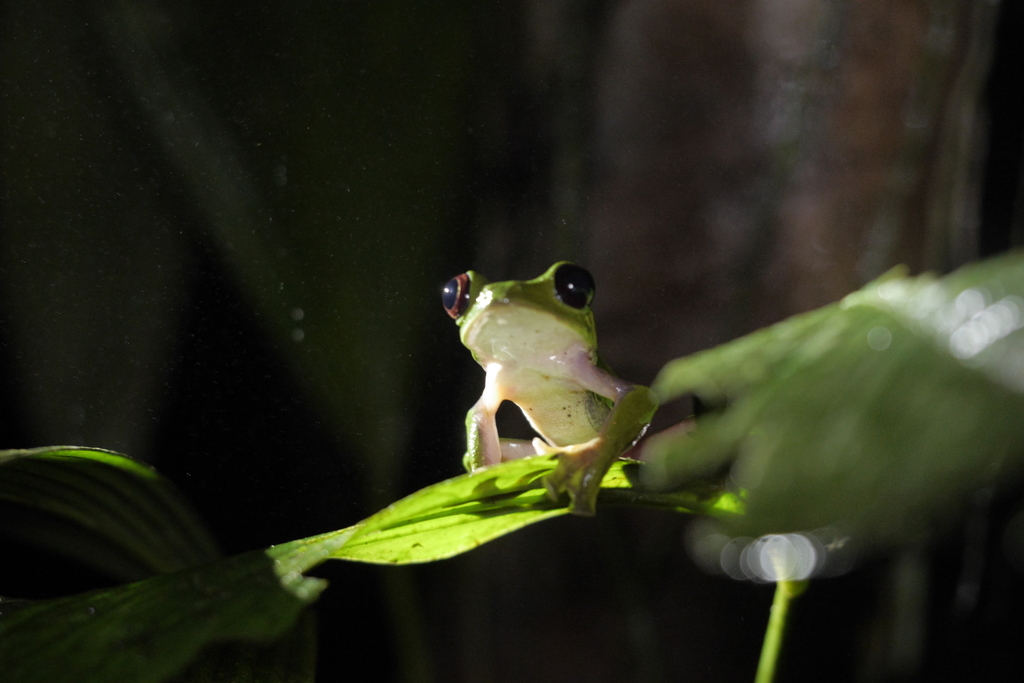
Photo: iNaturalist
Feravox · The Voice of the Wild
Gliding Tree Frog
Agalychnis spurrelli
Least Concern
Gliding Tree Frog (Agalychnis spurrelli) lives in tropical moist lowland forest across Costa Rica to Ecuador. Its conservation status is Least Concern.
The gliding tree frog, Agalychnis spurrelli, is a sleek, nocturnal amphibian that drifts through the humid canopies of southeastern and southwestern Costa Rica, Panama, the Pacific lowlands of Colombia, and north-western Ecuador. Males measure 48–56 mm and females 60–72 mm from snout to vent, with broad heads, large reticulated eyes, and smooth, green dorsal skin that shifts from pale to dark at night. Its slender limbs end in adhesive discs; the fingers are three-quarters webbed while the toes are fully webbed, creating a parachute-like surface that lets the frog glide at angles up to 45° when it leaps. Beneath the vibrant green, the belly displays a cream-orange palette. When rain swells the forest floor, these frogs launch an explosive breeding frenzy. Females deposit small clusters of eggs on the upperside of leaves that overhang temporary pools or water-filled log cavities. After about six days the embryos hatch, and the tadpoles plunge into the waiting water to continue their development.
Real recorded sounds, 11 nature games and a free Daily 5, 1v1 quiz duels, conservation wins and a safe Kids mode. Free on Feravox.