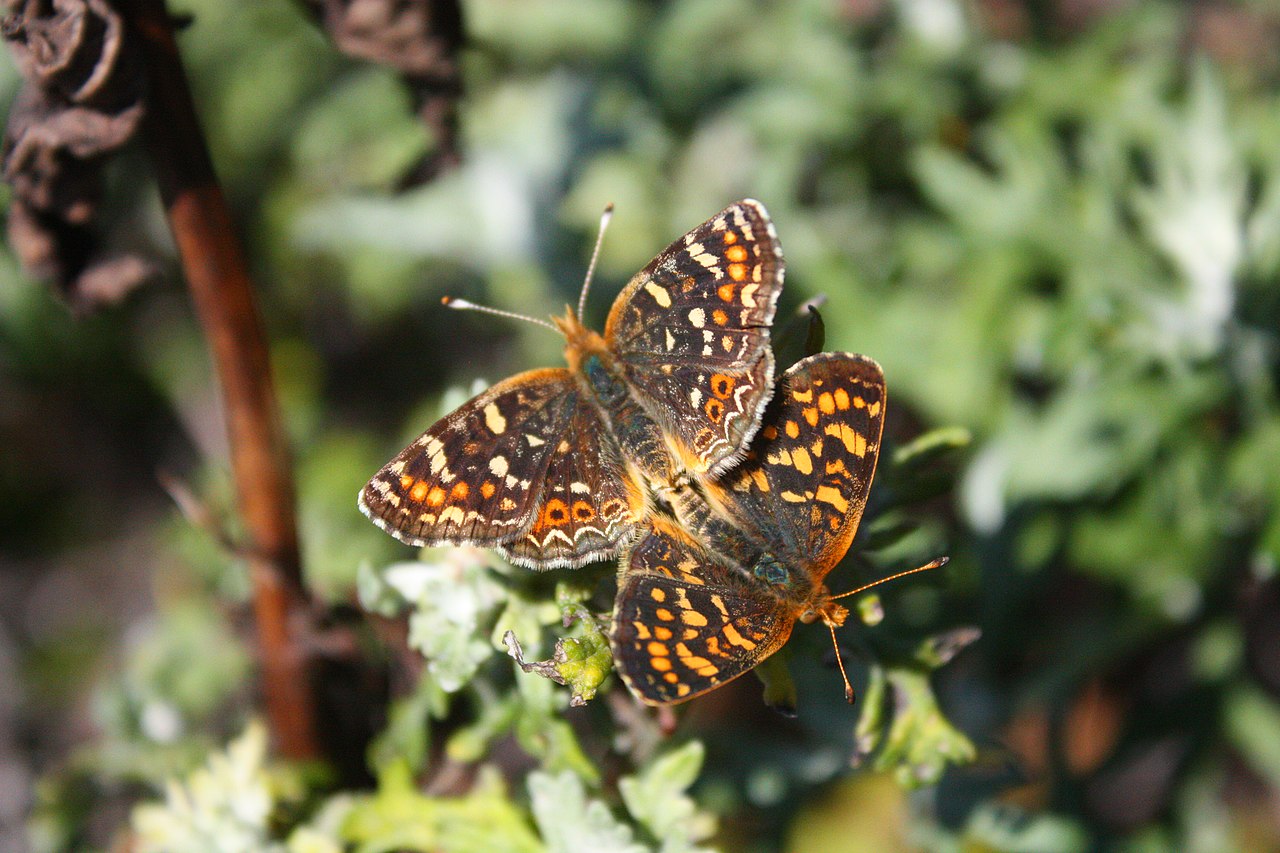
Photo: Scott Loarie
Feravox · The Voice of the Wild
Field Crescent
Phyciodes pulchella
Not Evaluated
Field Crescent (Phyciodes pulchella) lives in dry open areas across Nearctic realm. It feeds on nectar and pollen.
Every fact above was checked against these pages, and kept only where one of them states it.
In the warm, sun-drenched meadows, the Field Crescent butterfly dances across the landscape, its delicate orange wings beating in a hypnotic rhythm as it flits from flower to flower. With an effortless elegance, it navigates the intricate tapestry of grasses and wildflowers, its proboscis uncoiling like a slender thread to sip nectar from the sweetest blooms. As it moves, the subtle play of light on its wings casts a mesmerizing glow, like the soft blush of a summer sunset, illuminating the hidden world of this unassuming, yet captivating creature.
Real recorded sounds, 11 nature games and a free Daily 5, 1v1 quiz duels, conservation wins and a safe Kids mode. Free on Feravox.