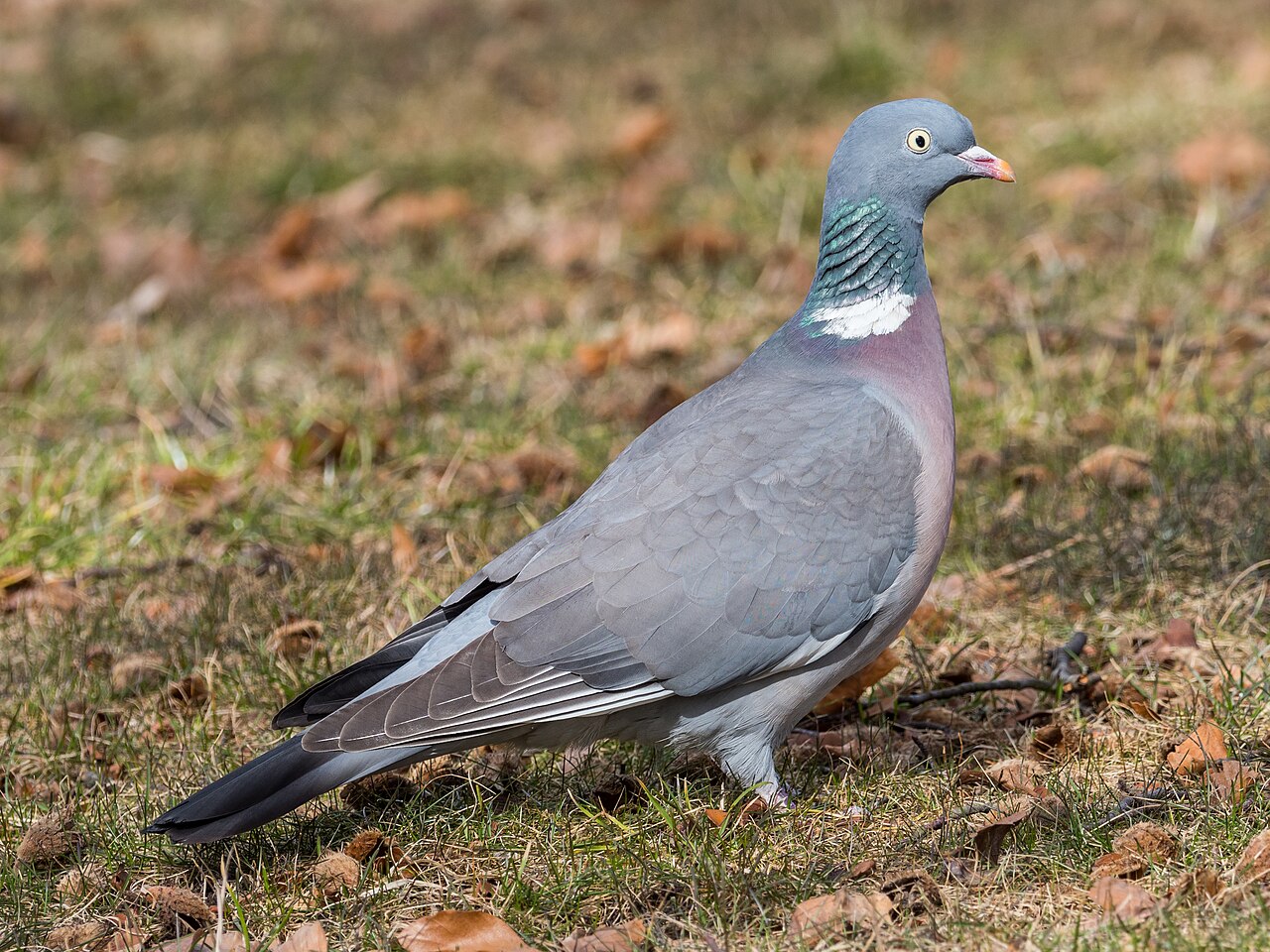
A single wood pigeon was recorded far outside its normal range when it appeared in La Romaine, Quebec, in May 2019. This observation is the only confirmed sighting of the species on the North American continent. The bird is otherwise a resident of the western Palearctic, where it is common across Europe and western Asia. Its appearance in Canada therefore represents a unique outlier for the species.
Wood pigeons usually live only about three years, but a remarkable individual survived far longer. Ring-recovery data show that the longest-recorded bird, ringed in Cambridgeshire, reached an age of 19 years and 8.5 months. This exceptional longevity contrasts with the typical three-year lifespan calculated from adult survival rates of 61 % per year. Such outliers illustrate the species' capacity for unusually extended life under favourable conditions.
One of the five recognised subspecies of the common wood pigeon is no longer extant. The Madeira form, C. maderensis, is listed with a dagger symbol indicating its extinction. This subspecies was described by Tschusi in 1904 and was once found on the island of Madeira. Its disappearance is recorded alongside the other living subspecies in the taxonomic overview.
In urban environments wood pigeons become exceptionally tame, allowing people to stroke and even pet them, a behaviour more pronounced than in feral pigeons. This friendliness contrasts with their wariness in rural areas, where they are more cautious unless not persecuted.
Across Europe the common wood pigeon is extensively hunted, with millions of birds shot each year because it is regarded as an agricultural pest, especially of cereal crops. It is a legal quarry species throughout most European countries, and this level of harvesting has not produced a noticeable decline in its overall population. Despite the large numbers taken, the species remains abundant and its numbers appear stable.
Sources
Every fact above was checked against these pages, and kept only where one of them states it.
In the dappled light of woodland edges, the Common Wood-Pigeon moves with a quiet purpose, its iridescent neck feathers glimmering like polished onyx as it strides through the underbrush with a gentle rustle of leaves. With a soft, mournful call, it announces its presence, a melancholy serenade that echoes through the trees as it searches for seeds and berries to sustain it on its journey. As it takes to the skies, its wings beat in a steady, hypnotic rhythm, a symphony of motion that belies the pigeon's humble reputation, revealing a creature of unexpected beauty and elegance.
Advertisement
Hear the Common Wood-Pigeon, and 4,400+ more
Real recorded sounds, 11 nature games and a free Daily 5, 1v1 quiz duels, conservation wins and a safe Kids mode. Free on Feravox.