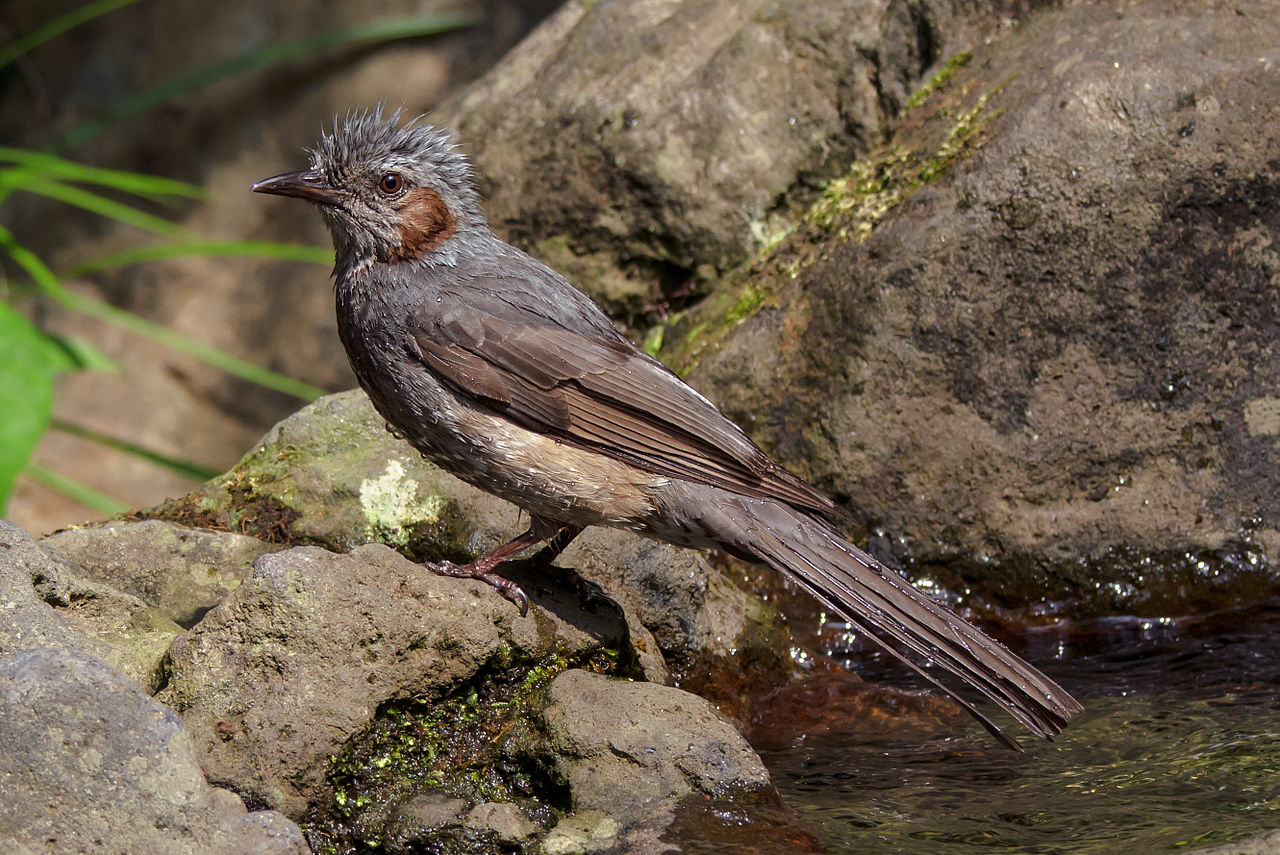
Brown-Eared Bulbul (Hypsipetes amaurotis) lives in temperate forests across Eastern Asia. It feeds on insects and fruit. Its conservation status is Least Concern.
Hear the Brown-Eared Bulbul
A real field recording of the Brown-Eared Bulbul, made in the wild.
The brown-eared bulbul reaches a length of about 28 cm, placing it among medium-sized bulbuls. Its plumage is a muted grayish-brown and the cheek patches are brown, the feature that gives the species its common name. It sports a long tail and prefers forested habitats, yet it readily adapts to urban and rural settings. The bird is extremely common in the northern part of its range, from southern Sakhalin down to the northern Philippines.
Historically the brown-eared bulbul migrated south each winter, moving to the southern parts of its range. In recent decades it has begun overwintering farther north, taking advantage of changes in crops and farming practices that provide food later in the year. Nevertheless, most individuals still travel south in winter, often gathering in huge flocks during migration.
Brown-eared bulbuls are frequently parasitised by cuckoos, which lay their eggs in the bulbul's nest and whose chicks later push the host's eggs and young out. The female bulbul builds a cup-shaped nest in lower branches, bushes or on man-made structures, typically 1.5-4.5 m above ground, and lays around five eggs. She then incubates the clutch for 13 to 14 days before the chicks hatch.
During the warm months the bulbul's diet shifts to insects, but it also seeks out the nectar of Camellia blossoms, which coats its plumage with bright yellow pollen. The pollen adheres to its feathers, giving the bird a golden dusting that is visible as it moves. While feeding, the bird unintentionally transfers pollen between flowers, providing pollination at a time when few insects are active.
In parts of Japan the bulbul is labelled an agricultural pest because it regularly enters cultivated orchards and feasts on leafy vegetables. It can damage crops such as cabbage, cauliflower and spinach, leading farmers to view its presence as harmful. The species is extremely common across a very large range, so large numbers can gather and cause noticeable loss to crops.
Sources
Every fact above was checked against these pages, and kept only where one of them states it.
In the lush, vibrant woodlands of East Asia, the Brown-Eared Bulbul flits and weaves with effortless abandon, its earthy tones blending seamlessly into the dappled shade as it searches for succulent fruits and insects to sustain its lively spirit. With a flick of its sturdy tail and a flash of its distinctive brown ear-patches, this charming songster darts through the underbrush, its melodic voice ringing out in joyous, whistled phrases that fill the forest air. As it moves with quiet confidence, the Brown-Eared Bulbul embodies the carefree essence of its woodland realm, a true embodiment of the beauty and wonder that thrives in these enchanted landscapes.
Advertisement
Hear the Brown-Eared Bulbul, and 4,400+ more
Real recorded sounds, 11 nature games and a free Daily 5, 1v1 quiz duels, conservation wins and a safe Kids mode. Free on Feravox.