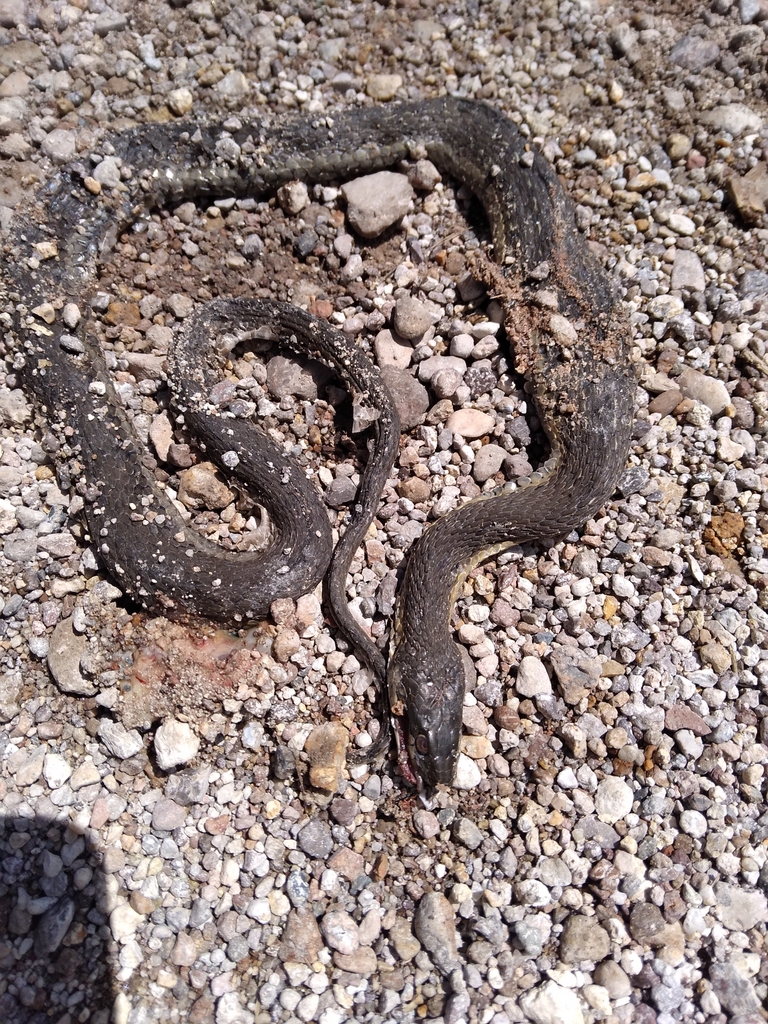
Photo: Miriam Sanchez Loera
Feravox · The Voice of the Wild
Blackbelly Garter Snake
Thamnophis melanogaster
Endangered
Blackbelly Garter Snake (Thamnophis melanogaster) lives in temperate terrestrial across Central Mexican Plateau. Its conservation status is Endangered.
The blackbelly garter snake (Thamnophis melanogaster) glides through the temperate uplands of the Central Mexican Plateau, its dorsal coat shifting among brown, olive-green, gray, red, orange or pink, while a striking black stripe runs the length of its belly, hence both its common and scientific names. Though males and females are virtually indistinguishable in size, the species’ coloration can be as varied as the mosaic of high-altitude grasslands and scrub it inhabits, and its pattern may include bold stripes that flash beneath the surface of the water it never strays more than fifteen metres from. This terrestrial snake is an obligate aquatic forager, feeding exclusively underwater; it is the only known Thamnophis that preys on soft-bodied crayfish, supplementing its diet with fish, frogs, tadpoles, leeches and earthworms, guided by keen underwater vision and chemical cues that pinpoint prey in the dim currents of its mountain streams. Even more surprising, the blackbelly garter snake is ovoviviparous, giving birth to live young after the embryos develop within the mother’s body, a reproductive strategy that blends the safety of internal development with the rapid release of fully formed hatchlings into the watery world they will inhabit. Four subspecies, gray, Chihuahuan, lined, and Mexican blackbelly garter snakes, dot the plateau, each bearing subtle variations in hue and pattern that hint at the complex evolutionary tapestry woven across elevations from 1,158 to 2,545 m. As these snakes glide beneath the surface, their black-streaked bellies remain a vivid reminder of the hidden diversity thriving in Mexico’s high-land streams, urging observers to look beyond the shorelines and into the depths where nature’s most enigmatic hunters dwell
Real recorded sounds, 11 nature games and a free Daily 5, 1v1 quiz duels, conservation wins and a safe Kids mode. Free on Feravox.