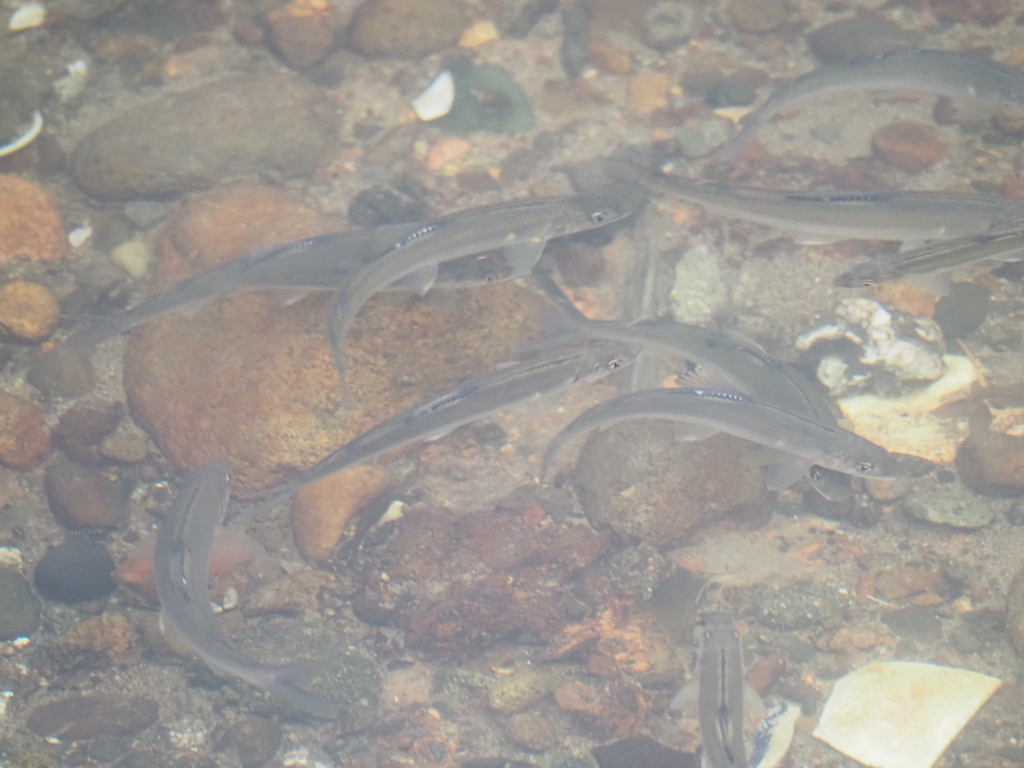
Photo: ITÔ, Hiroki
Feravox · The Voice of the Wild
Ayu Sweetfish
Plecoglossus altivelis
Data Deficient
Ayu Sweetfish (Plecoglossus altivelis) lives in coastal and freshwater rivers across East Asia. It feeds on algae and small invertebrates.
The ayu sweetfish (Plecoglossus altivelis) glides through the rivers and coastal waters of East Asia with a sleek, silvery body that rarely exceeds 30 cm, though occasional giants reach 70 cm. Its saw-shaped teeth scrape algae from river rocks, while its omnivorous palate also devours crustaceans, insects, sponges and worms, giving the flesh its famed sweet, melon-and-cucumber aroma. In the spring, juveniles about 6 cm long embark on a remarkable journey from the sea back to the freshwater streams where they were born, growing rapidly to 15–30 cm by summer and preparing for the autumnal spawning rush in the river’s lower reaches. During this season, males and females dig tiny pits in gravel, lay their eggs, and then many adults die, completing a one-year life cycle, while a few linger in the ocean to repeat the migration up to three times. A distinct freshwater-restricted form thrives in Japan’s lakes, especially Lake Biwa, where the fish remain year-round, moving between the lake and its tributary streams. These lake-bound ayu are smaller, often only 10–15 cm, because their growth hinges on seasonal food availability. They are also the target of traditional fishing techniques: fly anglers, trap nets, and the unique "ayu-no-tomozuri" decoy, a live fish that provokes territorial attacks from conspecifics. The spectacle of cormorant fishing on the Nagara River, where trained Japanese cormorants (umi-u) retrieve ayu for their handlers, adds a cultural flourish to the species’ ecological narrative, illustrating how this modest fish intertwines with human tradition and the rhythm of riverine ecosystems.
Real recorded sounds, 11 nature games and a free Daily 5, 1v1 quiz duels, conservation wins and a safe Kids mode. Free on Feravox.