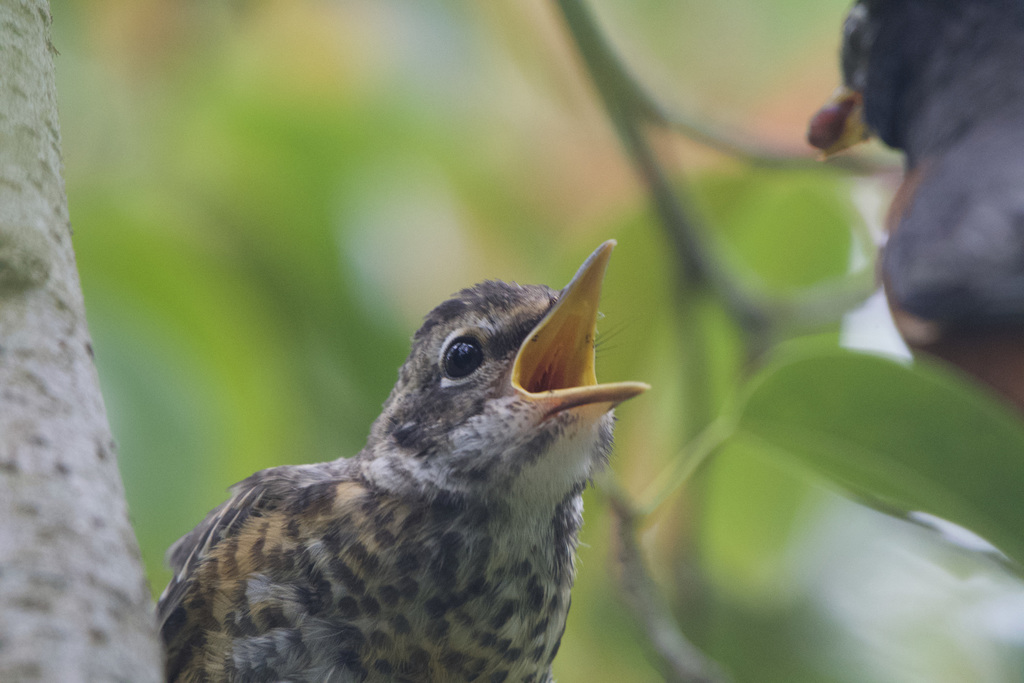
Photo: iNaturalist
Feravox · The Voice of the Wild
American Robin
Turdus migratorius
Least Concern
American Robin (Turdus migratorius) lives in woodland, open farmland and urban areas across North America. Its conservation status is Least Concern.
A real field recording of the American Robin, made in the wild.
Recording: Anonymous, CC0, via xeno-canto
Hear the full recording of the American Robin, and 4,400+ more species, in the free Feravox app.
Every fact above was checked against these pages, and kept only where one of them states it.
As the first light of dawn creeps over the landscape, the American Robin stirs, its rusty red breast a fiery spark against the muted tones of morning, and with a flick of its brown back, it takes to the turf, striding purposefully in search of earthworms and insects to fuel its day. With a gentle rustle of leaves, it moves through the underbrush, its sharp eyes scanning the terrain for the slightest sign of movement, its very presence a testament to the enduring vitality of the natural world. In its quiet, unassuming way, the American Robin is a master of its domain, a true embodiment of the beauty and resilience of life.
Habitat: woodland, open farmland and urban areas. Range: North America.
The American Robin is listed as Least Concern on the IUCN Red List.
Feravox has a two-minute lesson on the American Robin: five facts and five questions. See the lesson
Real recorded sounds, 11 nature games and a free Daily 5, 1v1 quiz duels, conservation wins and a safe Kids mode. Free on Feravox.