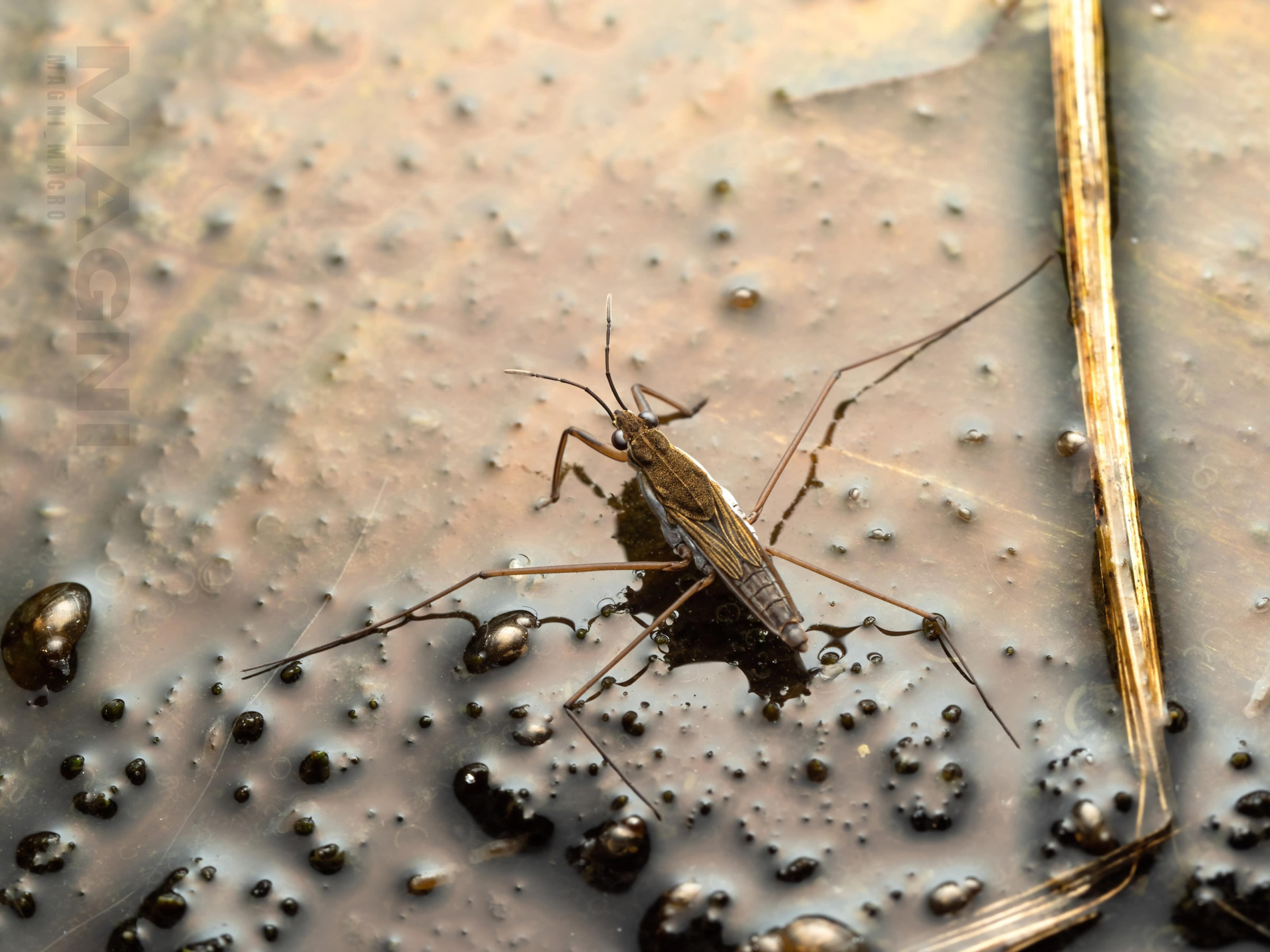
How does an insect run on water, and why are damselflies a sign of a healthy pond? Magni Macro takes a close look at two common pond dwellers.
Two small hunters of the pond
Macro photographer Magni Macro, based in Lithuania, invites readers to look closely at the small dots skating across a pond and the insects hovering around it.
The first part is about water striders. Their long, water-repellent legs spread their weight over the surface, which lets them skate quickly, with middle legs for thrust and hind legs for steering. They lay eggs on plants or rocks, pass through five nymph stages and hunt insects that fall into the water, mosquito larvae included.
The second part covers damselflies, slimmer than dragonflies, with wings folded along the body. Their aquatic nymphs are fierce predators that moult many times before climbing out for a final moult. Adults can serve as an indicator of ecosystem quality, and the author adds that males are often brightly coloured.
He closes by showing why both insects matter: they help control pests and feed birds, fish and other insects, linking pond and land.
_This story was written by Magni Macro for Untold Wildlife, our partner in bringing overlooked conservation stories to more people._