Yellow-legged Hornet: a two-minute wildlife lesson
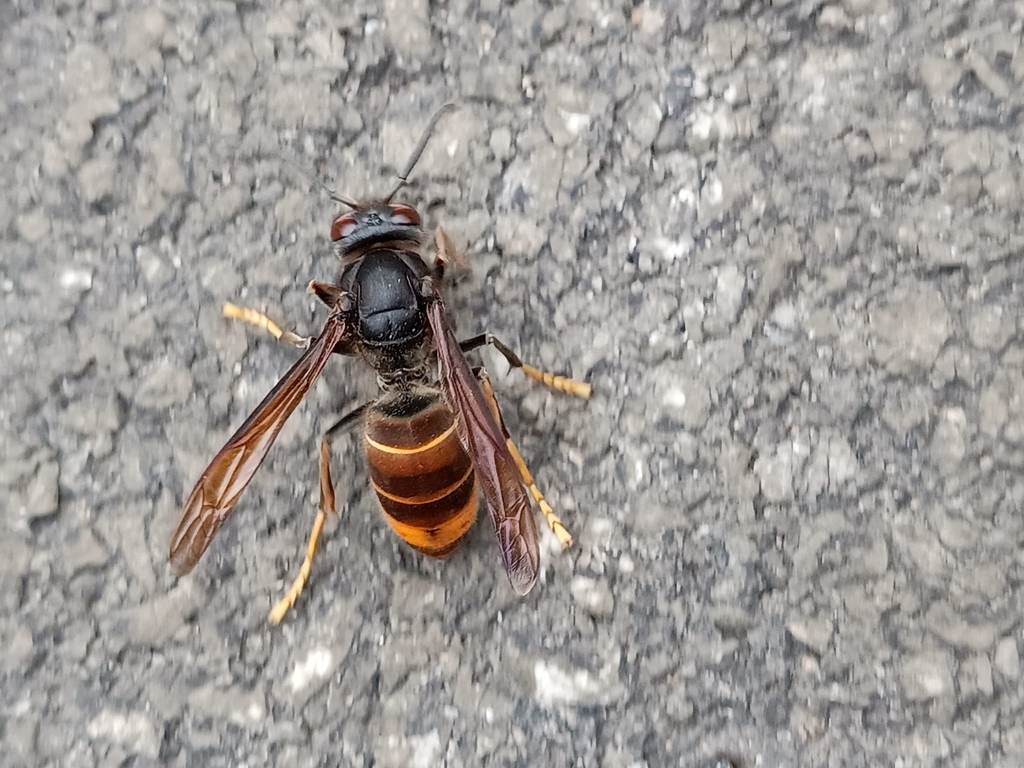
Look at its feet: they are bright yellow. It is clearly smaller than the European hornet, with a dark velvety middle.
Bees and Wasps · day 4 of 7
Five facts
- Look at its feet: they are bright yellow. It is clearly smaller than the European hornet, with a dark velvety middle.
- To hunt, it hovers above a beehive in a small patch of about 0.5 square metres, watching for bees flying home.
- Western honey bees are easier prey for it than Asian honey bees, which dart quickly in and out of the hive when hornets are around.
- A colony often moves house: it starts a nest low in a bush, then after some months quickly builds a new one high up in a tree.
- It probably reached France in 2004, hidden in boxes of pottery from China. By 2015 it was found across most of the country.
The quiz
1. Which part of the yellow-legged hornet gives it its name?
- Its yellow wings
- Its yellow head
- Its yellow feet (correct)
- Its yellow stinger
The species has distinctive yellow tarsi, the end parts of its legs.
2. How does this hornet hunt honey bees?
- It hovers above the hive watching for bees coming home (correct)
- It digs into the hive from below
- It waits at night inside flowers
- It sprays the hive with a liquid
It holds a small area above a hive and scans for foragers returning.
3. Which bees are easier prey for the yellow-legged hornet?
- Asian honey bees
- No bees at all
- Only bumblebees
- Western honey bees (correct)
Western honey bees have not evolved defences against hovering hornets, unlike Asian honey bees.
4. Where does a colony usually build its second nest?
- Underground
- High in a tree (correct)
- Inside a beehive
- Under a rock
After starting low in a shrub, a colony often builds a new nest high in a tree.
5. How is the hornet thought to have reached France?
- Carried by storms
- On migrating birds
- In boxes of pottery from China (correct)
- On a fishing boat from Africa
It is believed to have arrived in 2004 in pottery boxes from China.
More about the Yellow-legged Hornet
Same week
Today’s lesson is waiting
Two minutes a day, a new wild animal. Free on iPhone, Android and the web.
Hear them, don't just read about them
Feravox is a free wildlife app: 4,400+ species with real recorded sounds, 11 nature games and a free Daily 5, 1v1 quiz duels, conservation wins, and a safe Kids mode.