Feravox · The Voice of the Wild
Common Wasp: a two-minute wildlife lesson
After picking a nest site, the queen hovers back and forth in widening sideways figure-eights to memorise the landmarks around it.
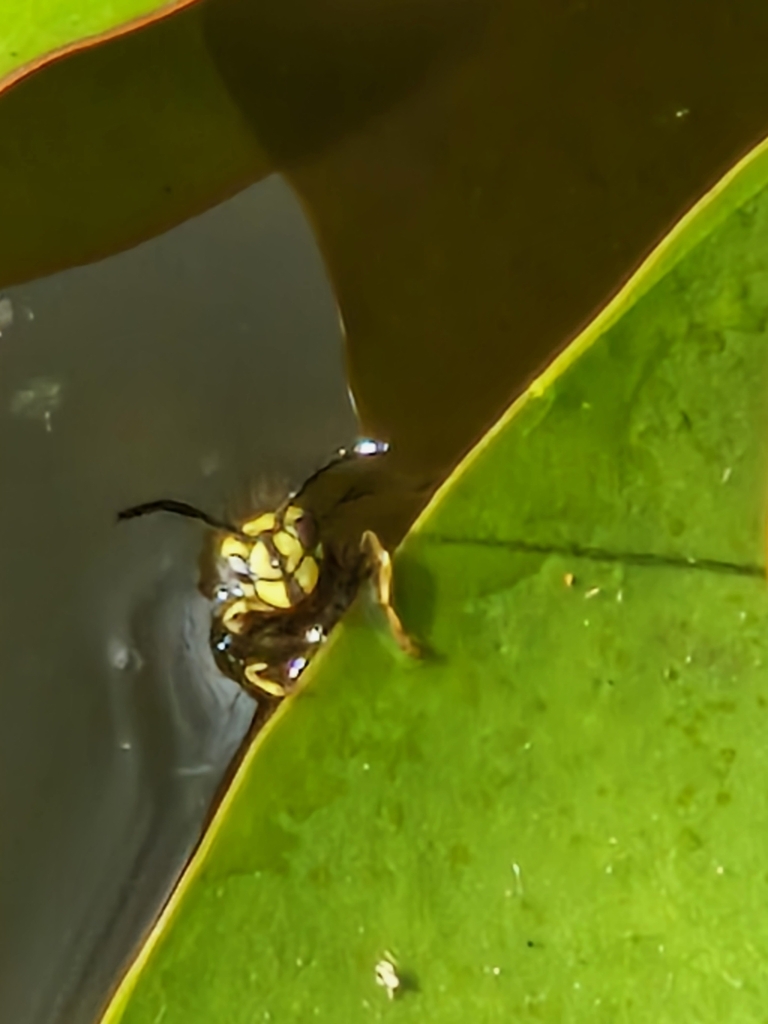
Bees and Wasps · day 6 of 7
Five facts
- After picking a nest site, the queen hovers back and forth in widening sideways figure-eights to memorise the landmarks around it.
- Once the workers take over, the queen only lays eggs. Her belly swells so much with eggs that she can no longer fly.
- To keep ants out, the wasps coat the base of the nest's stalk with a chemical that ants dislike.
- The nest works best at around 32 °C. On hot days, workers beat their wings like fans to cool it down.
- Like honey bees, the common wasp has been shown to recognise human faces.
The quiz
1. Why does the queen fly in sideways figure-eights near a new nest site?
- To scare away birds
- To learn the landmarks around the site (correct)
- To dry her wings
- To call the males
This flight lets her mark the land using landmarks around the nest site.
2. What happens to the queen once workers take over foraging?
- She leaves to found another nest
- She becomes a guard
- She can no longer fly (correct)
- She stops laying eggs
As her body fills up with eggs, she can no longer fly.
3. How do common wasps protect their nest from ants?
- They put an ant-repelling chemical around the nest stalk (correct)
- They build the nest in water
- They post soldiers with big jaws
- They cover the nest in sand
They secrete a chemical that repels ants around the base of the stalk.
4. What do workers do when the nest gets too hot?
- They carry in snow
- They dig the nest deeper
- They leave until night
- They fan it with their wings (correct)
Above about 32 °C, workers beat their wings like fans to bring the heat down.
5. What surprising skill has the common wasp been shown to have?
- Counting to a hundred
- Recognising human faces (correct)
- Seeing through walls
- Making honey
Like honey bees, it can recognise human faces.
Same week
Today’s lesson is waiting
Two minutes a day, a new wild animal. Free on iPhone, Android and the web.
Hear them, don't just read about them
Feravox is a free wildlife app: 4,400+ species with real recorded sounds, 11 nature games and a free Daily 5, 1v1 quiz duels, conservation wins, and a safe Kids mode.
Nature documentaries
Blue Planet III2026 · BBC OnePlanet Earth III2023 · BBC OneBlue Planet II2017 · BBC OnePlanet Earth II2016 · BBC OneFrozen Planet II2022 · BBC OneSeven Worlds, One Planet2019 · BBC OneMammals2024 · BBC OneSecret Garden2026 · BBC OneWild Isles2023 · BBC OneOur Planet2019 · NetflixOur Planet II2023 · NetflixThe Blue Planet2001 · BBC One