Feravox · The Voice of the Wild
Tuatara: a two-minute wildlife lesson
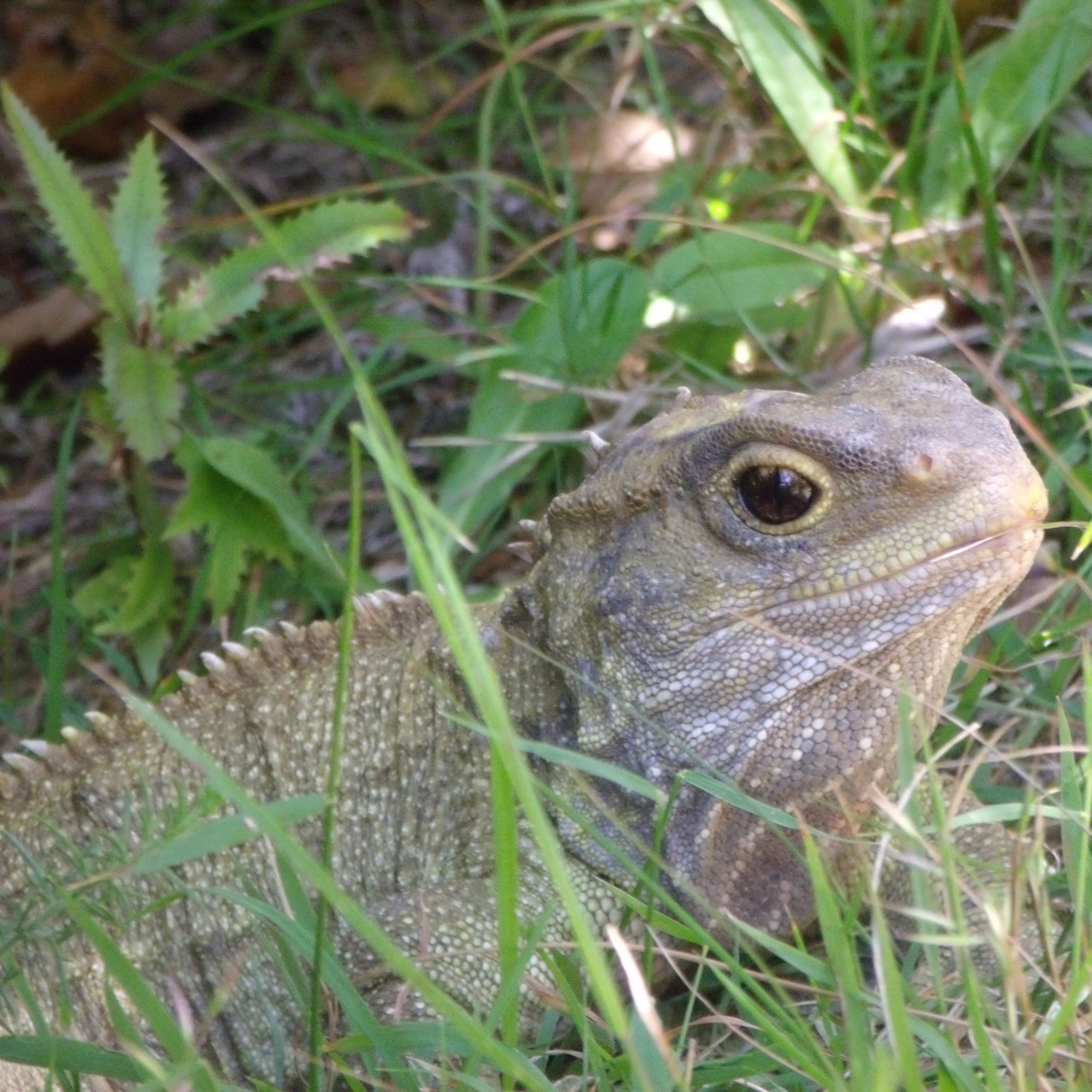
Look closely at a baby tuatara's head: there is a see-through spot on top. Under it sits a third eye, the parietal eye.
Lizards · day 5 of 7
Five facts
- Look closely at a baby tuatara's head: there is a see-through spot on top. Under it sits a third eye, the parietal eye.
- A tuatara's sex depends on the egg's temperature: warmer eggs tend to produce males, cooler eggs females.
- Tuatara thrive in cold that most reptiles can't take, with an optimal body temperature of 16 to 21 °C, the lowest of any reptile.
- Petrels and shearwaters nest on the same islands. A tuatara moves into a seabird burrow when it can, or digs one of its own.
- Tuatara live far beyond 35 years. Reaching 60 is normal, and some kept in captivity have passed 100.
The quiz
1. Where is the tuatara's third eye?
- On top of its head (correct)
- Under its chin
- At the tip of its tail
- On its belly
The third eye sits on top of the head, under a see-through spot.
2. What kind of eggs tend to produce male tuatara?
- Cooler eggs
- Larger eggs
- Warmer eggs (correct)
- The first eggs laid
Warmer eggs tend to produce male tuatara.
3. What is the tuatara's optimal body temperature?
- 26 to 31 °C
- 16 to 21 °C (correct)
- 36 to 41 °C
- 6 to 11 °C
Its optimal body temperature is 16 to 21 °C, the lowest of any reptile.
4. Where do tuatara shelter?
- In tree hollows only
- Under river stones
- In sea caves
- In seabird burrows, or ones they dig (correct)
It moves into a seabird burrow when it can, or digs its own.
5. How long have captive tuatara lived?
- About 20 years
- About 35 years
- Over 100 years (correct)
- About 50 years
Some tuatara kept in captivity have passed 100 years.
Same week
Today’s lesson is waiting
Two minutes a day, a new wild animal. Free on iPhone, Android and the web.
Hear them, don't just read about them
Feravox is a free wildlife app: 4,400+ species with real recorded sounds, 11 nature games and a free Daily 5, 1v1 quiz duels, conservation wins, and a safe Kids mode.
Nature documentaries
Blue Planet III2026 · BBC OnePlanet Earth III2023 · BBC OneBlue Planet II2017 · BBC OnePlanet Earth II2016 · BBC OneFrozen Planet II2022 · BBC OneSeven Worlds, One Planet2019 · BBC OneMammals2024 · BBC OneSecret Garden2026 · BBC OneWild Isles2023 · BBC OneOur Planet2019 · NetflixOur Planet II2023 · NetflixThe Blue Planet2001 · BBC One