Feravox · The Voice of the Wild
Savannah Sparrow: a two-minute wildlife lesson
It is named after the city of Savannah, Georgia, where the naturalist Alexander Wilson spotted it in 1811.
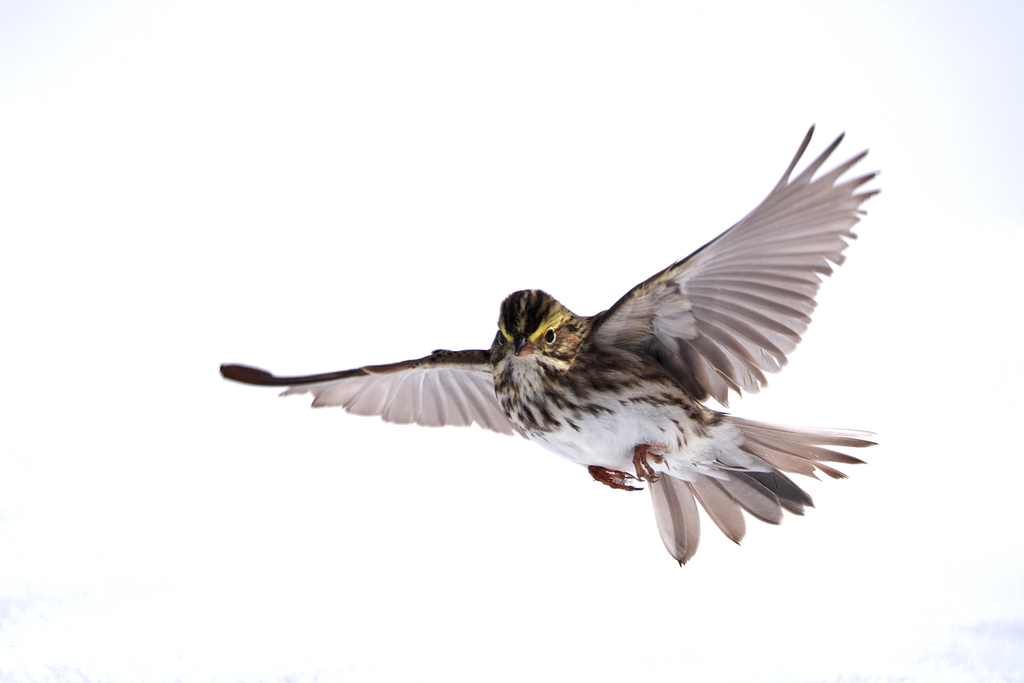
Little Birds of the Americas · day 1 of 7
Five facts
- It is named after the city of Savannah, Georgia, where the naturalist Alexander Wilson spotted it in 1811.
- Young birds migrate at night. They set their built-in magnetic compass using the pattern of sunlight at sunset.
- One subspecies, the Ipswich sparrow, breeds almost only on Sable Island off Nova Scotia. These birds often raise three broods a year.
- Its shade changes with place: birds from Alaska and inland areas are the palest, while those on the southwest coast are the darkest.
- It feeds on the ground or in low bushes. It eats mostly seeds, adding insects in the breeding season.
The quiz
1. Where does the Savannah sparrow's name come from?
- The African savannah
- A city in Georgia, USA (correct)
- A Spanish word for grass
- The naturalist who found it
It is named after Savannah, Georgia, where Wilson saw it.
2. What do young Savannah sparrows use to set their inner compass?
- The smell of the sea
- The sound of rivers
- The light at sunset (correct)
- The shape of mountains
They calibrate their magnetic compass on the light at sunset.
3. Where does the Ipswich sparrow subspecies breed?
- Almost only on Sable Island (correct)
- Only in Ipswich, England
- In the Andes
- On Hawaii
It breeds almost exclusively on Sable Island, off Nova Scotia.
4. Which Savannah sparrows are the darkest?
- Those from Alaska
- Those from inland areas
- Those from the Great Lakes
- Those from the southwest coast (correct)
Southwestern coastal birds are darkest; Alaskan and inland ones are palest.
5. What does the Savannah sparrow mainly eat?
- Nectar
- Seeds (correct)
- Fish
- Tree sap
It eats mostly seeds, plus insects when nesting.
More about the Savannah Sparrow
Same week
Today’s lesson is waiting
Two minutes a day, a new wild animal. Free on iPhone, Android and the web.
Hear them, don't just read about them
Feravox is a free wildlife app: 4,400+ species with real recorded sounds, 11 nature games and a free Daily 5, 1v1 quiz duels, conservation wins, and a safe Kids mode.
Nature documentaries
Blue Planet III2026 · BBC OnePlanet Earth III2023 · BBC OneBlue Planet II2017 · BBC OnePlanet Earth II2016 · BBC OneFrozen Planet II2022 · BBC OneSeven Worlds, One Planet2019 · BBC OneMammals2024 · BBC OneSecret Garden2026 · BBC OneWild Isles2023 · BBC OneOur Planet2019 · NetflixOur Planet II2023 · NetflixThe Blue Planet2001 · BBC One