Feravox · The Voice of the Wild
Eurasian Goshawk: a two-minute wildlife lesson
Its scientific name gentilis means noble. In the Middle Ages, only nobles were allowed to hunt with goshawks.
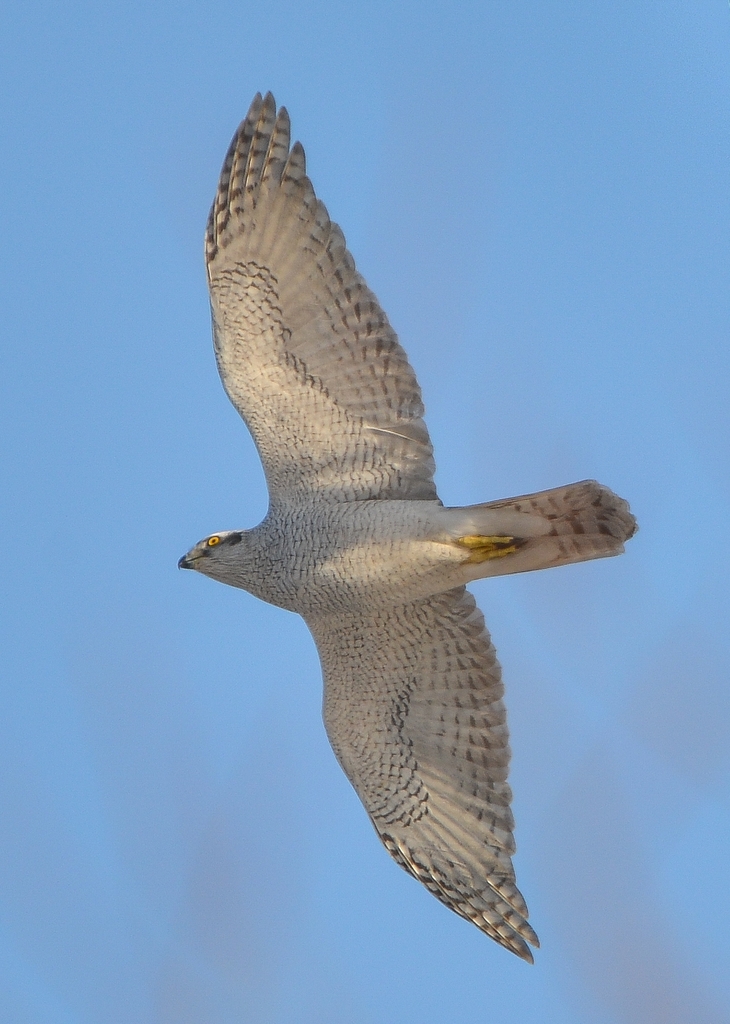
Hawks and Falcons · day 2 of 7
Five facts
- Its scientific name gentilis means noble. In the Middle Ages, only nobles were allowed to hunt with goshawks.
- The Azores islands are named after the Portuguese word for goshawk. Yet the birds the explorers saw there turned out to be kites or buzzards.
- When calling from a perch, a goshawk slowly turns its head from side to side. This trick makes its voice hard to pin down, like a ventriloquist.
- Chasing a flying bird, a goshawk can adjust its height so that it stays hidden behind its target's own tail.
- Goshawks do not give up easily. They have been seen running on foot into thick brambles, and even into water, after their prey.
The quiz
1. What does the goshawk's scientific name gentilis mean?
- Fast
- Noble (correct)
- Grey
- Forest
Only nobles could fly goshawks in the Middle Ages, hence noble.
2. Which islands are named after the Portuguese word for goshawk?
- The Canary Islands
- Madeira
- The Falklands
- The Azores (correct)
Açor is Portuguese for goshawk, though the birds there were kites or buzzards.
3. Why does a calling goshawk turn its head slowly from side to side?
- It makes its voice hard to locate (correct)
- It is looking for water
- It is shaking off rain
- It is counting its chicks
The head-turning creates a ventriloquial effect.
4. How does a goshawk stay hidden while chasing a flying bird?
- It changes colour
- It flies only at night
- It flies inside clouds
- It stays behind the bird's tail (correct)
It adjusts its flight level so the prey cannot see it past its own tail.
5. What have goshawks been seen doing when chasing prey?
- Digging tunnels
- Dropping stones on it
- Running on foot into brambles and water (correct)
- Waiting for the prey to fall asleep
They will run into thickets and even water after prey.
More about the Eurasian Goshawk
Same week
Today’s lesson is waiting
Two minutes a day, a new wild animal. Free on iPhone, Android and the web.
Hear them, don't just read about them
Feravox is a free wildlife app: 4,400+ species with real recorded sounds, 11 nature games and a free Daily 5, 1v1 quiz duels, conservation wins, and a safe Kids mode.
Nature documentaries
Blue Planet III2026 · BBC OnePlanet Earth III2023 · BBC OneBlue Planet II2017 · BBC OnePlanet Earth II2016 · BBC OneFrozen Planet II2022 · BBC OneSeven Worlds, One Planet2019 · BBC OneMammals2024 · BBC OneSecret Garden2026 · BBC OneWild Isles2023 · BBC OneOur Planet2019 · NetflixOur Planet II2023 · NetflixThe Blue Planet2001 · BBC One