Red-footed Falcon: a two-minute wildlife lesson
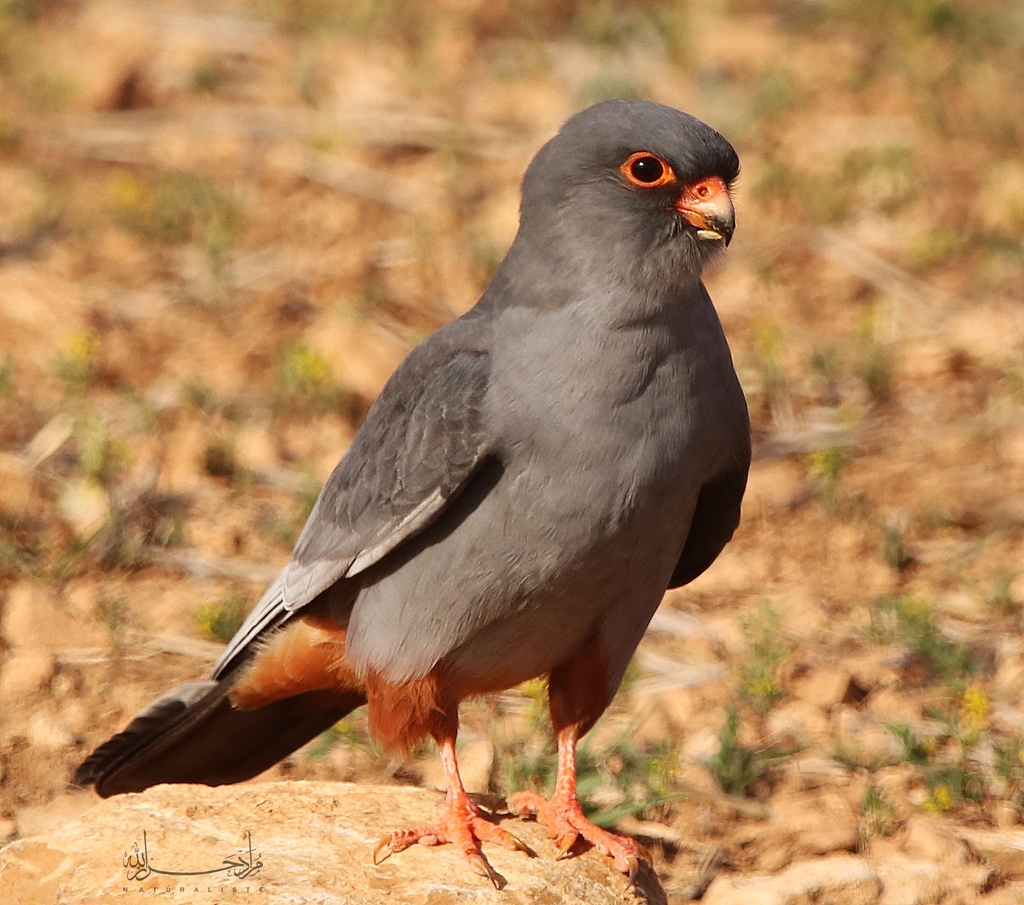
The male is blue-grey all over except for his red legs and red patch under the tail. The female has an orange head and belly and a white face.
Hawks and Falcons · day 4 of 7
Five facts
- The male is blue-grey all over except for his red legs and red patch under the tail. The female has an orange head and belly and a white face.
- Its scientific name, vespertinus, comes from vesper, the Latin word for evening. It means of the evening.
- This falcon does not build its own nest. Pairs move into old nests of rooks and other crows, often side by side in colonies.
- It spends winter in Africa. In August 2004, one turned up on Martha's Vineyard, the first ever found in North America.
- Parents feed their youngest chicks the most often. Chicks under 3 weeks old get the bigger prey, such as lizards and large bush-crickets.
The quiz
1. What colour are the male red-footed falcon's legs?
- Yellow
- Blue-grey
- Black
- Red (correct)
Apart from red legs and a red patch under the tail, the male is all blue-grey.
2. What does vespertinus, its scientific name, mean?
- Of evening (correct)
- Red foot
- Little hunter
- Of the steppe
Vespertinus is Latin for of evening.
3. Where does the red-footed falcon usually raise its young?
- In a burrow it digs
- In old nests of rooks, crows or magpies (correct)
- On bare sand
- In a nest it weaves from reeds
It does not build a nest but uses abandoned nests of other birds.
4. Where was a red-footed falcon seen in North America for the first time, in 2004?
- In Alaska
- In Mexico City
- On Martha's Vineyard (correct)
- In Greenland
In August 2004 one was found on Martha's Vineyard, in Massachusetts.
5. Which chicks do red-footed falcon parents feed most often?
- The oldest
- The youngest (correct)
- Only the males
- Only the loudest
The youngest nestlings receive food most often and most regularly.
More about the Red-footed Falcon
Same week
Today’s lesson is waiting
Two minutes a day, a new wild animal. Free on iPhone, Android and the web.
Hear them, don't just read about them
Feravox is a free wildlife app: 4,400+ species with real recorded sounds, 11 nature games and a free Daily 5, 1v1 quiz duels, conservation wins, and a safe Kids mode.