Egyptian Vulture: a two-minute wildlife lesson
Faced with a huge ostrich egg, it picks up a pebble in its bill and throws it down again and again until the shell cracks. It prefers round stones.
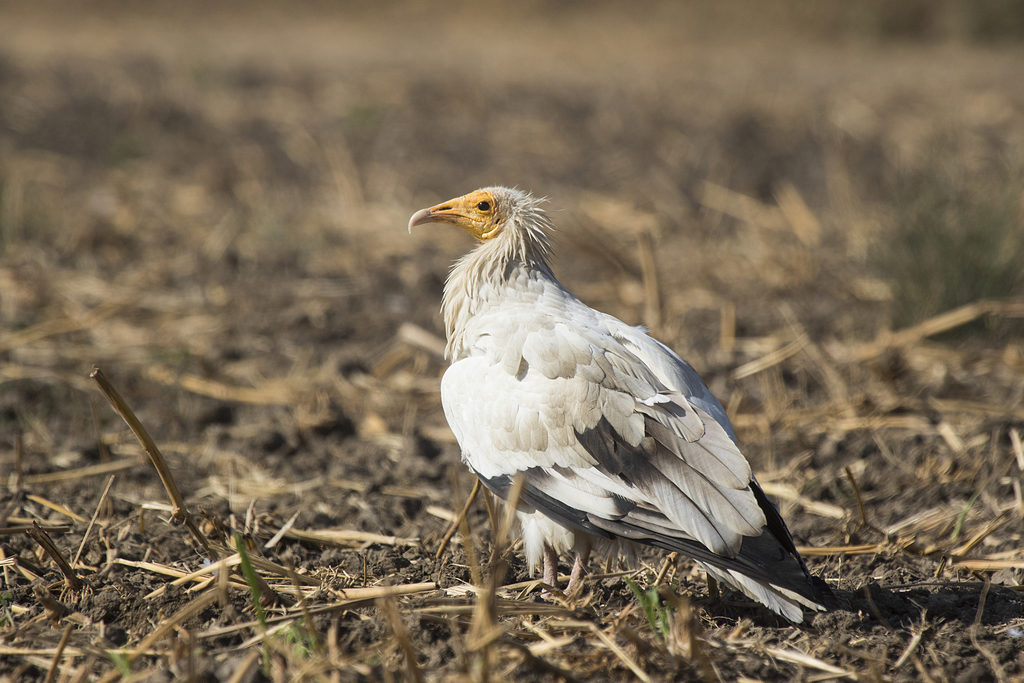
Wings over Water · day 7 of 7
Five facts
- Faced with a huge ostrich egg, it picks up a pebble in its bill and throws it down again and again until the shell cracks. It prefers round stones.
- Its white feathers often look rusty brown in the wild, stained by mud or iron-rich soil. Birds kept away from soil stay clean white.
- Migrating birds can cover 500 km in a day. Some end up 3,500 to 5,500 km from their summer home, at the southern edge of the Sahara.
- In ancient Egypt it was sacred and protected by the pharaohs' law. It became so common in the streets that people called it pharaoh's chicken.
- In Béarn, in south-west France, it is called the Marie-Blanque, and a pass in the French Pyrenees, the col de Marie-Blanque, is named after it.
The quiz
1. How does the Egyptian vulture open a large ostrich egg?
- It rolls it off a cliff
- It pecks it with its bill
- It throws pebbles at it (correct)
- It sits on it until it breaks
It tosses a pebble at the egg again and again until it cracks.
2. Why do wild Egyptian vultures often look rusty brown?
- Their feathers are stained by mud or iron-rich soil (correct)
- They are still young
- They have been rained on
- They moult brown in winter
Mud or iron-rich soil stains their white feathers.
3. How far can a migrating Egyptian vulture travel in a single day?
- About 5 km
- About 50 km
- About 20 km
- About 500 km (correct)
Migrating birds can sometimes cover 500 km in one day.
4. What nickname did the Egyptian vulture get in ancient Egypt?
- The desert king
- Pharaoh's chicken (correct)
- The sun bird
- Nile eagle
Protected by law, it was common in the streets and called pharaoh's chicken.
5. What is named after the Egyptian vulture in the French Pyrenees?
- A river
- A village church
- A mountain pass (correct)
- A lake
The col de Marie-Blanque takes its name from the bird's local name in Béarn.
More about the Egyptian Vulture
Same week
Today’s lesson is waiting
Two minutes a day, a new wild animal. Free on iPhone, Android and the web.
Hear them, don't just read about them
Feravox is a free wildlife app: 4,400+ species with real recorded sounds, 11 nature games and a free Daily 5, 1v1 quiz duels, conservation wins, and a safe Kids mode.