Great Frigatebird: a two-minute wildlife lesson
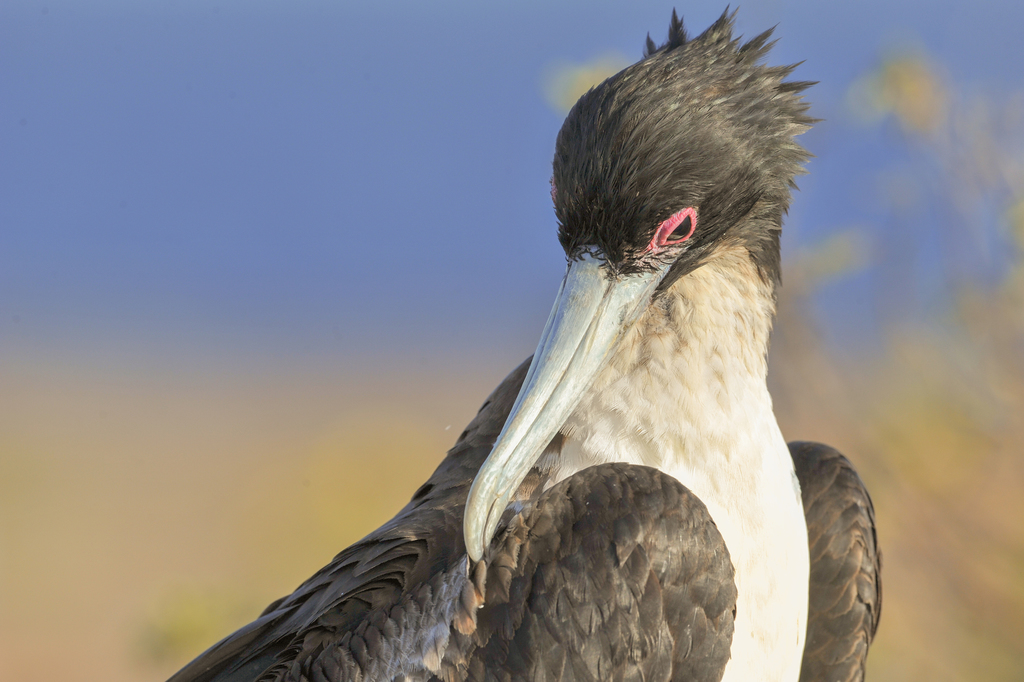
With wings up to 230 cm across, frigatebirds carry less weight per bit of wing than any other bird. This may help them ride warm air over the sea.
Wings over Water · day 2 of 7
Five facts
- With wings up to 230 cm across, frigatebirds carry less weight per bit of wing than any other bird. This may help them ride warm air over the sea.
- A seabird that avoids landing on the sea: if it settles on the water, it usually cannot take off. It snatches flying fish in mid-air instead.
- To impress females, a male pumps air into his red throat pouch for about 20 minutes until it swells like a balloon, then shakes his head and wings.
- Even after young frigatebirds can fly, their parents keep caring for them for 150 to 428 days, longer than any other bird.
- Young birds play catch: one drops a stick and another tries to grab it before it hits the water. This game may train their flying skills.
The quiz
1. What is special about the frigatebird's wings?
- They are shorter than its tail
- They carry less weight per area than any other bird's (correct)
- They cannot fold up
- They are covered in scales
Frigatebirds have the lowest wing loading of any bird.
2. What usually happens if a great frigatebird lands on the sea?
- It dives for crabs
- It sleeps for hours
- It cannot take off again (correct)
- It swims back to shore
Frigatebirds do not land on water and usually cannot take off if they do.
3. What does the male inflate to attract a female?
- A red throat pouch (correct)
- His tail feathers
- A blue crest
- His cheeks
He fills his red throat sac with air until it becomes a big red balloon.
4. How long do parents keep caring for young frigatebirds after they can fly?
- About 1 week
- About 3 weeks
- About 2 months
- Between 150 and 428 days (correct)
Care lasts 150 to 428 days after fledging, the longest of any bird.
5. What game do young frigatebirds play?
- Racing each other along the beach
- Catching a dropped stick before it hits the water (correct)
- Hiding in the bushes
- Splashing in rock pools
One drops a stick and another tries to catch it before it reaches the water.
More about the Great Frigatebird
Same week
Today’s lesson is waiting
Two minutes a day, a new wild animal. Free on iPhone, Android and the web.
Hear them, don't just read about them
Feravox is a free wildlife app: 4,400+ species with real recorded sounds, 11 nature games and a free Daily 5, 1v1 quiz duels, conservation wins, and a safe Kids mode.