Photo: Tomas Broucek
Feravox · The Voice of the Wild
Zander
Sander lucioperca
Least Concern
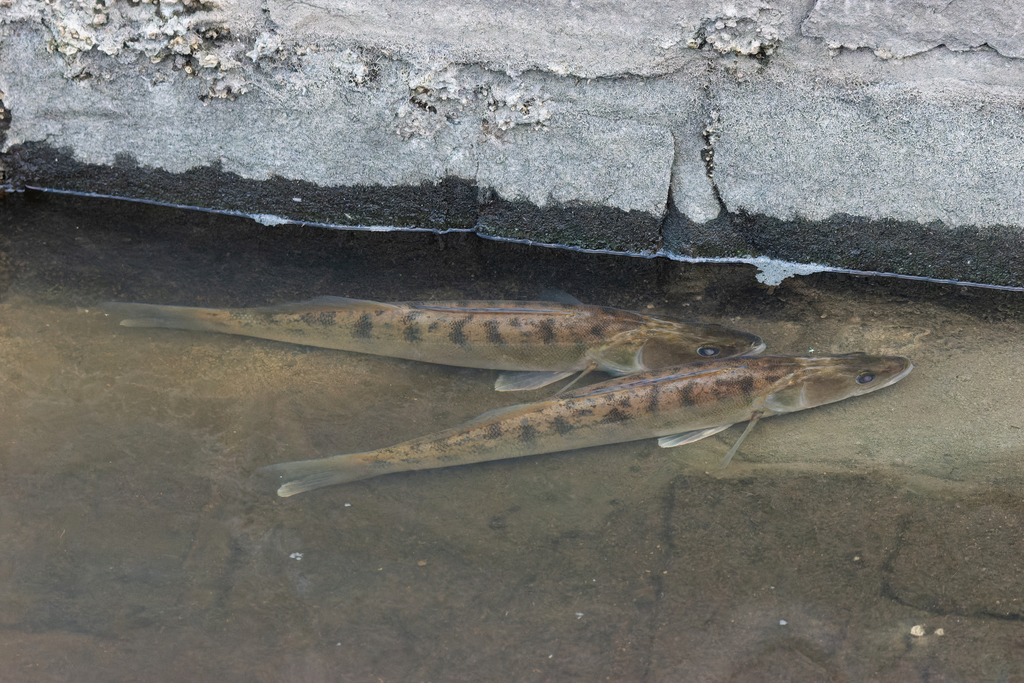
Zander (Sander lucioperca) lives in large rivers, eutrophic lakes across Eurasian basins. It feeds on small schooling fish. Its conservation status is Least Concern.
The zander, Sander lucioperca, is the largest member of the perch family, bearing a sleek, muscular silhouette that hints at its distant cousin, the Northern pike. Its upper body shimmers in green-brown tones, streaked with dark vertical bars reminiscent of the European perch, while a creamy-white belly and dark caudal fin complete its striking palette. Powerful jaws armed with sharp teeth and two prominent canines give it a predatory edge, and its unusually large, opaque eyes are an adaptation for hunting in the turbid, low-light waters it favors. Zander thrive in large rivers, eutrophic lakes, and even brackish estuaries across western Eurasia, migrating up to 250 km (160 mi) upriver to spawn in gravel nests that males defend and aerate. Their diet is a carnivorous buffet of smaller schooling fish, European smelt, ruffe, perch, vendace, roach, and even conspecific juveniles. A surprising trait is their reproductive strategy: unlike many percids, zander males build and guard nests, fanning the eggs until the larvae, attracted to light, emerge to feed on zooplankton.
Real recorded sounds, 11 nature games and a free Daily 5, 1v1 quiz duels, conservation wins and a safe Kids mode. Free on Feravox.