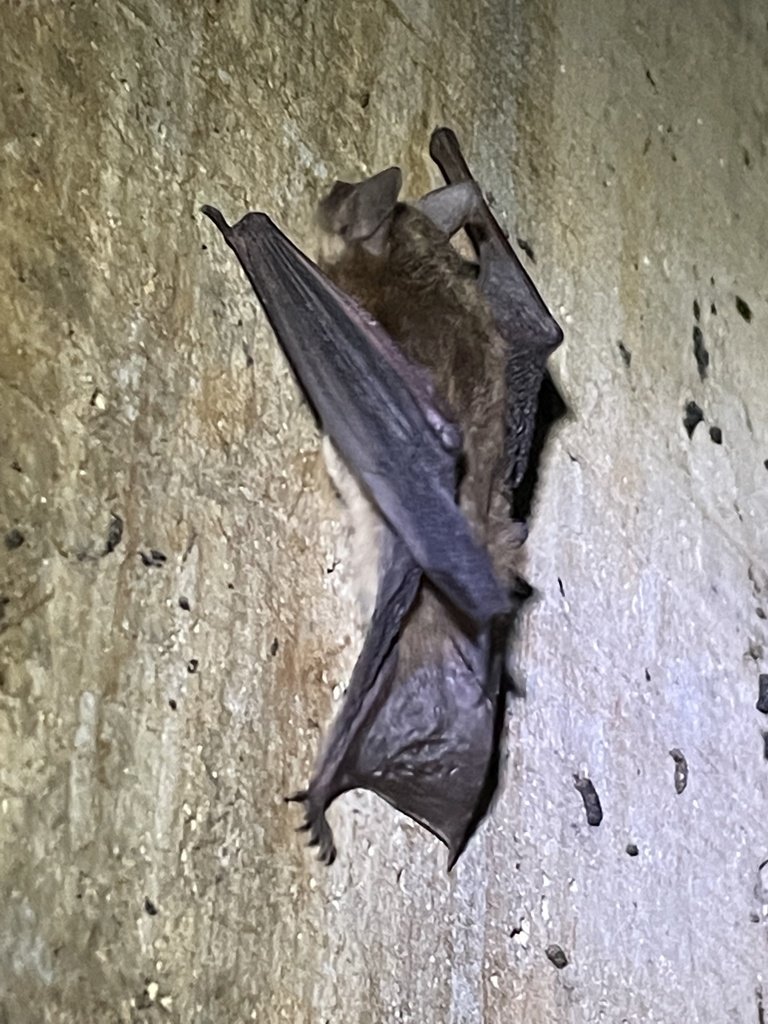
Yuma Myotis (Myotis yumanensis) lives in desert scrublands across Southwest North America. It feeds on insects and spiders. Its conservation status is Least Concern.
Fascinating facts about the Yuma Myotis
- When water is nearby the Yuma myotis can form enormous colonies, sometimes reaching ten thousand individuals in a single roost. Such massive groups have been recorded in suitable locations that provide shelter close to lakes or ponds. Outside of these prime water sites the bats still gather in the thousands, using caves, attics, mines and bridges for roosting. In winter they become largely inactive, spending part of the season in torpor to conserve energy.
- The Yuma myotis possesses a long calcar that stretches about 60% of the distance from the ankle to the tail, and unlike most North American Myotis species it lacks a keel. This distinctive feature is paired with a short tail of 2.7 to 4.0 cm, of which only the tip projects beyond the uropatagium. Its feet are large and broad, aiding in clinging to rough surfaces while roosting.
- In May 2017 the lethal fungus white-nose syndrome was documented in the Yuma myotis for the first time, marking the second recorded case of the disease in Washington state. This finding confirmed the species as a new host for the pathogen and raised the total number of bat species known to be affected to eight. The increase includes seven additional species that have been found carrying fungal spores even though they show no disease symptoms.
- The Yuma myotis flies with a wing aspect ratio of about 6.45, which makes its flight highly agile and able to weave through vegetation near water. This aerodynamic shape lets it reach speeds of up to 9 mph (14 km/h) while it pursues insects at dusk. Its manoeuvrable style is especially useful when hunting over the surface of slow-moving water or among reeds at the water's edge.
- An adult Yuma myotis measures between 3.9 and 4.8 cm from head to body, giving it a compact profile suited to tight roosting spots. Its wings spread to an average span of 24 cm, providing enough lift for sustained flight without compromising manoeuvrability. The bat weighs roughly 6 g, a lightness that aids its ability to hover briefly while catching insects.
Sources
Every fact above was checked against these pages, and kept only where one of them states it.
At a glance
RangeSouthwest North America
HabitatDesert scrublands
DietInsects and spiders
About the Yuma Myotis
In the velvety darkness of a desert twilight, the Yuma Myotis unfurls its delicate wings, a whisper of movement as it dances through the air with an effortless elegance. With high-frequency calls, it navigates the labyrinthine canyons and rocky outcrops, its echolocation a symphony of sound that weaves together the intricate tapestry of its nocturnal world. As it flits and swoops, its leathery wings beating at a hypnotic pace, this small but remarkable bat embodies the very essence of Adaptation, a testament to the enduring power of life in even the most unforgiving of landscapes.
Hear the Yuma Myotis, and 4,400+ more
Real recorded sounds, 11 nature games and a free Daily 5, 1v1 quiz duels, conservation wins and a safe Kids mode. Free on Feravox.