Photo: Andrew Allen
Feravox · The Voice of the Wild
Yellowtail Horse Mackerel
Trachurus novaezelandiae
Least Concern
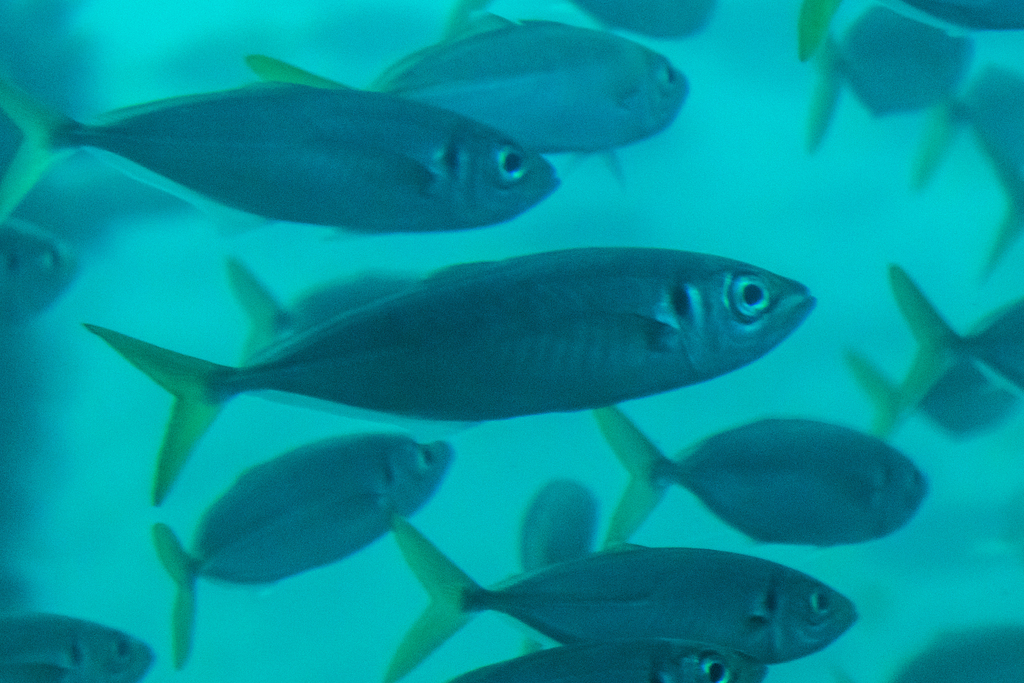
Yellowtail Horse Mackerel (Trachurus novaezelandiae) lives in coastal waters, estuaries across Australia and New Zealand. Its conservation status is Least Concern.
The yellowtail horse mackerel (Trachurus novaezelandiae), colloquially called yakka, cuts a striking figure in the coastal waters of Australia and New Zealand. Its body is a moderately compressed oval, cloaked in a bright olive green dorsally that fades to a golden green on the sides before turning silvery white beneath. Nine to sixteen faint grey bars run vertically along its flanks, and a small black spot sits just above the eye on the operculum. Adults reach up to 50 cm (20 in) and bear 68–73 lateral-line scutes, a key metric that separates them from the closely related greenback horse mackerel. In the shallower, soft-bottom nurseries juveniles gather in large schools, while mature fish favor rocky reefs offshore, typically staying below 150 m (490 ft) and in water no colder than 13 °C (55 °F). Their diet shifts dramatically with size: fish 91–150 mm long feast on crustaceans, whereas those over 151 mm become almost exclusive predators of small fish, cruising the midwater column in coordinated sweeps. A surprising quirk of the species is its susceptibility to the tongue-replacing parasite Cymothoa exigua in some Australian locales, an odd hitch that harms neither the fish nor its human consumers, though the parasite should be removed before cooking. Their longevity, up to 15 years, and their versatility on the plate, fresh, smoked, canned, or frozen, make them a prized target for both commercial and recreational fisheries, with New South Wales alone pulling 300–500 tonnes annually since 1997, much of which ends up as discard or bait.
Real recorded sounds, 11 nature games and a free Daily 5, 1v1 quiz duels, conservation wins and a safe Kids mode. Free on Feravox.