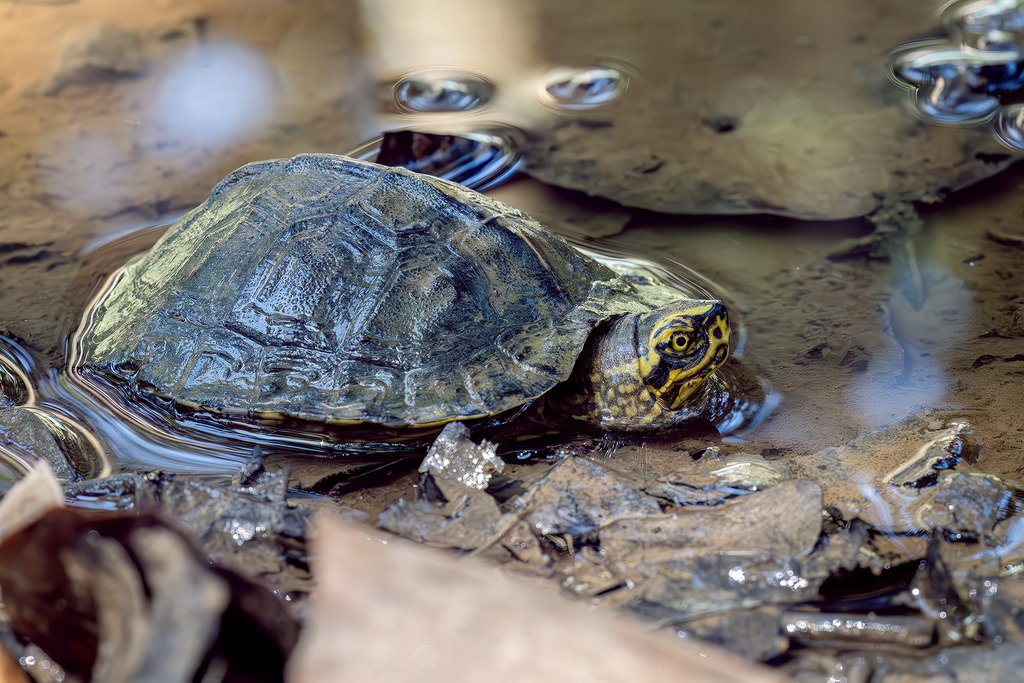
Photo: James Hunt
Feravox · The Voice of the Wild
Yellow-headed Temple Turtle
Heosemys annandalii
Critically Endangered
Yellow-headed Temple Turtle (Heosemys annandalii) lives in wet forests, wetlands across Southeast Asia. It feeds on primarily herbivorous. Its conservation status is Critically Endangered.
The yellow-headed temple turtle (Heosemys annandalii) can exceed 20 in (51 cm) in straight carapace length. It is aquatic and generally herbivorous, inhabiting wet forests and freshwater wetlands in Cambodia, Laos, Malaysia, Thailand, Vietnam, and possibly Myanmar. The leech Placobdelloides siamensis is an ectoparasite of this turtle. In captivity it may live up to 35 years, and two hatchlings were produced in November 2019 at the Columbus Zoo and Aquarium.
Real recorded sounds, 11 nature games and a free Daily 5, 1v1 quiz duels, conservation wins and a safe Kids mode. Free on Feravox.