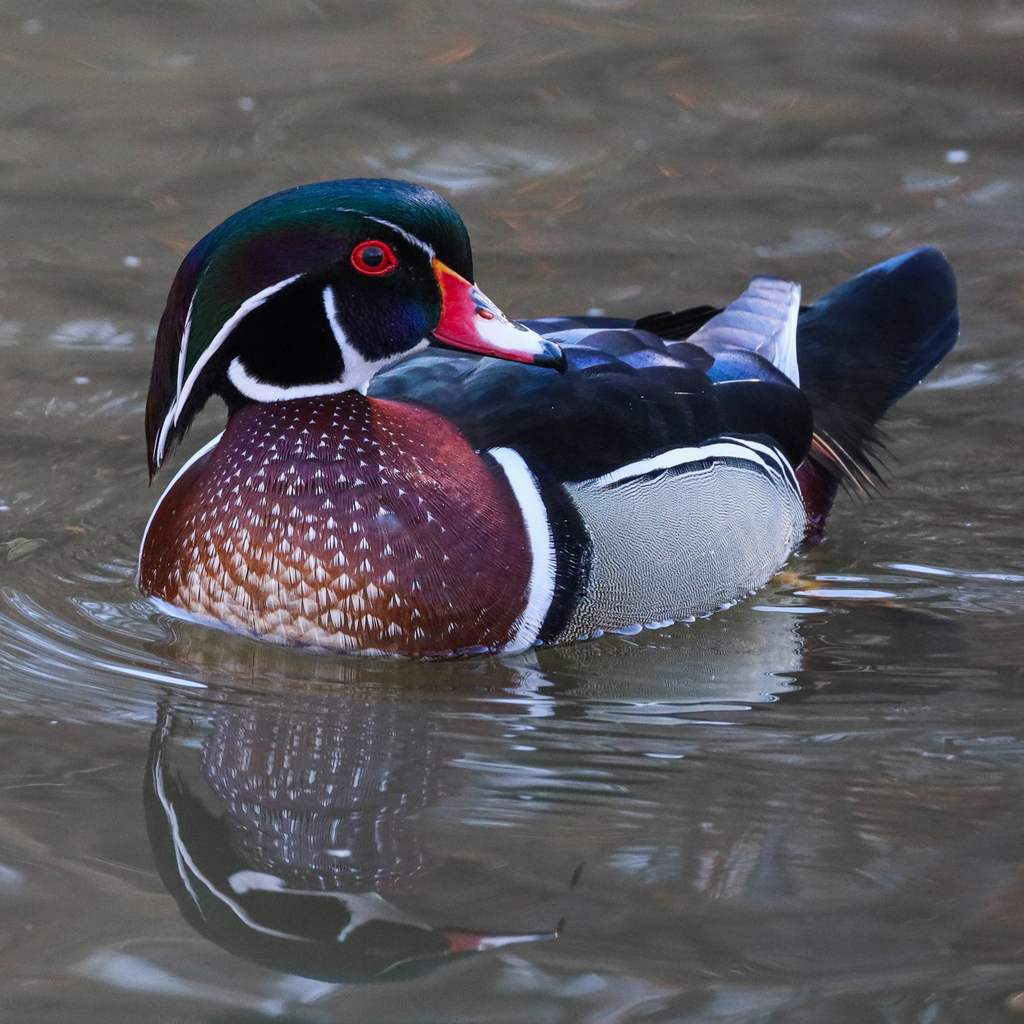
Females typically lay seven to fifteen eggs which are incubated for an average of thirty days. The day after they hatch, the precocial ducklings climb to the opening of the nest cavity and jump down from the nest tree to the ground. Chicks can jump from as high as 50 feet, surviving by landing either in water or on soft leaf litter.
A wood duck's menu reads like a forest buffet. They feed by dabbling on the water surface or grazing on land, eating berries, acorns and seeds as well as insects. Their gizzard can crush hard acorns after swallowing them, turning a tough nut into a high-energy snack.
From near-extinction to a Michigan mascot, the wood duck's comeback is a conservation textbook case. The population was in serious decline in the late 19th century, becoming rare by the early 20th century. Enforcement of hunting regulations and habitat protection sparked a rebound starting in the 1920s, and the erection of nesting boxes in the 1930s gave them safe tree cavities. Expanding beaver wetlands further boosted habitat, and today Michigan estimates about 100,000 wood ducks, celebrated by a 2026 law naming it the state's official duck.
Wood ducks live a brief but perilous life, with most never seeing adulthood. The average lifespan in the wild is three to four years, though some individuals reach roughly 15 years. Within the first two weeks after hatching, 86 to 90 percent of the chicks die, mainly from predation by great horned owls, mink, raccoons, red and gray foxes, alligators and black rat snakes. This high early mortality underscores the importance of tree cavities and the mother's alarm calls that guide ducklings to water safety.
A typical adult is from 47 to 54 cm (19 to 21 in) in length with a wingspan of between 66 and 73 cm (26 and 29 in). Its weight ranges from 454-862 grams (16.0-30.4 oz). These dimensions make it about three-quarters the length of an adult mallard.
Sources
Every fact above was checked against these pages, and kept only where one of them states it.
In the dappled light of woodland ponds, the wood duck glides with effortless elegance, its iridescent feathers shimmering like jewels as it navigates the tranquil waters with a soft, whispery quack. With a flick of its tail, it darts beneath the surface, its webbed feet propelling it through the aquatic realm with a quiet efficiency, as it forages for the tender shoots and aquatic delicacies that sustain it. As it emerges, shaking droplets of water from its resplendent plumage, the wood duck's very presence seems to embody the serene and hidden world of the forest, a fleeting glimpse of beauty in a secret realm.
Advertisement
Hear the Wood Duck, and 4,400+ more
Real recorded sounds, 11 nature games and a free Daily 5, 1v1 quiz duels, conservation wins and a safe Kids mode. Free on Feravox.