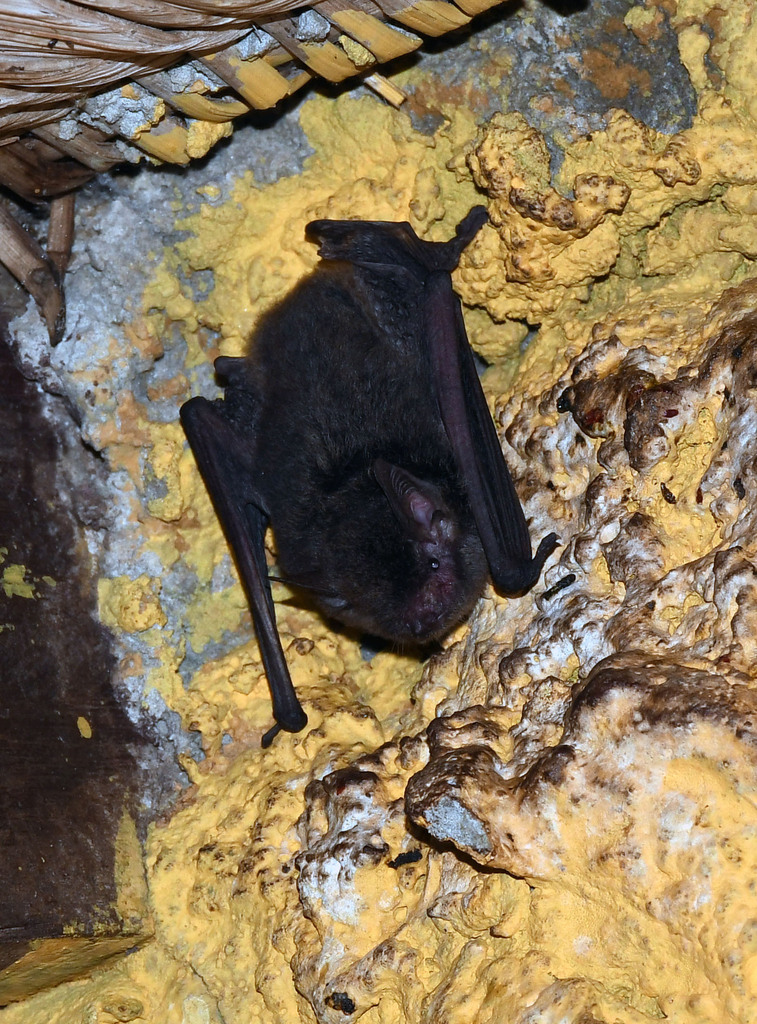
Riparian Myotis (Myotis riparius) lives in tropical rainforest across Central and South America. It feeds on insects & spiders. Its conservation status is Least Concern.
Fascinating facts about the Riparian Myotis
- The riparian myotis displays a clear geographic shift in dorsal fur colour, with individuals in the north showing a reddish hue while those farther south bear a darker, almost blackish tint. This variation is evident across its range and is linked to the colour of the dorsal pelage. The dorsal hairs themselves are unicoloured, providing a uniform texture despite the colour change. Such regional differences help identify populations in the field.
- A distinctive feature of the riparian myotis is the broad attachment of the plagiopatagium to the foot at the base of the toes. It also has short ears and unicoloured dorsal hairs.
- In its natural habitats the riparian myotis frequently shares roosting sites with other bat species such as black myotis, silver-tipped myotis and the velvety free-tailed bat.
- Colonies of this bat may reach about fifty individuals. Such colonies are typically found in roosts under tree bark or in caves, where they often share these shelters with black myotis, silver-tipped myotis and velvety free-tailed bat.
- The riparian myotis is most frequently encountered from sea level up to 2,000 m, an altitude band that encompasses much of its neotropical range. Within this span it inhabits rainforests, savannas and open areas, showing a broad ecological tolerance. It shows a particular affinity for primary forests and other preserved habitats, where roosting sites are plentiful.
Sources
Every fact above was checked against these pages, and kept only where one of them states it.
At a glance
RangeCentral and South America
HabitatTropical rainforest
DietInsects & spiders
About the Riparian Myotis
In the velvety darkness of tropical night skies, the riparian myotis unfurls its delicate wings, a whisper of leathery membrane that carries it effortlessly above the glistening waters of its native habitats. With echolocation calls that punctuate the air like a staccato beat, this diminutive bat navigates the intricate landscape of riverbanks and wetlands, its agile form weaving through the tangled vegetation with an uncanny precision. As it flits and darts, the riparian myotis embodies the very essence of nocturnal life, a tiny, winged embodiment of the mysterious and unseen forces that shape the world under the cover of darkness.
Hear the Riparian Myotis, and 4,400+ more
Real recorded sounds, 11 nature games and a free Daily 5, 1v1 quiz duels, conservation wins and a safe Kids mode. Free on Feravox.