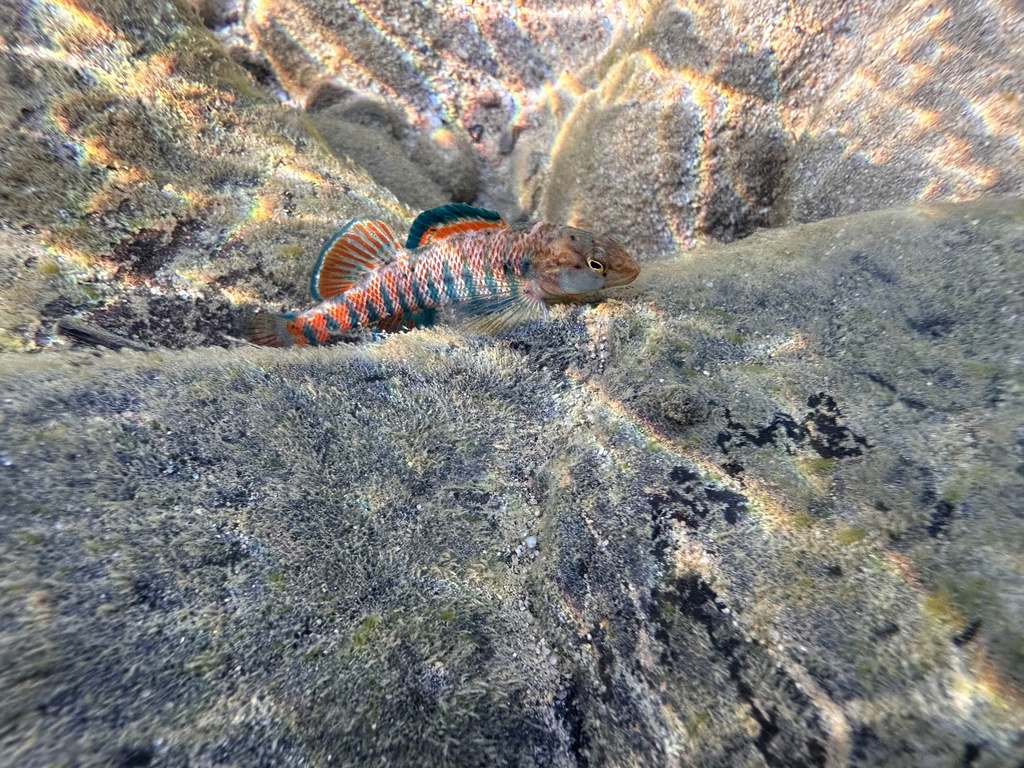
Photo: Catherine Tamlyn
Feravox · The Voice of the Wild
Rainbow Darter
Etheostoma caeruleum
Least Concern
Rainbow Darter (Etheostoma caeruleum) lives in rocky riffles across eastern United States. It feeds on insects and crayfish. Its conservation status is Least Concern.
The rainbow darter (Etheostoma caeruleum) darts through the crystal-clear riffles of North America’s small, fast-moving streams, its three dark dorsal spots a subtle beacon against a backdrop of rocky substrate. Males blaze with bright oranges and iridescent blue spots, stripes, and checks, while females display a more modest palette, the largest reaching just under 43 mm. Growing only 2 to 3 inches (51 to 76 mm), these benthic fish cling to the current with a remarkable ability to maintain position on the substrate, a trait that lets them exploit oxygen-rich, swift-flowing habitats that many other species avoid. Their diet is a relentless pursuit of tiny invertebrates, caddisfly larvae dominate in places like Ohio’s Four-Mile Creek, where they feed in two daily peaks, morning and late afternoon, while occasional crayfish and other insects supplement their meals. Reproduction unfolds in spring when water warms to 17-18 °C; males establish territories on pebbles at pool edges, and the species engages in group spawning, with females laying up to 800 eggs after several days of courtship. A surprising facet of their life history is the tight link between size and reproductive output: the average 45 mm adult produces a clutch of about 82 eggs, yet the larger, more dominant individuals can lay far more, illustrating how even modest growth can dramatically boost fecundity.
Real recorded sounds, 11 nature games and a free Daily 5, 1v1 quiz duels, conservation wins and a safe Kids mode. Free on Feravox.