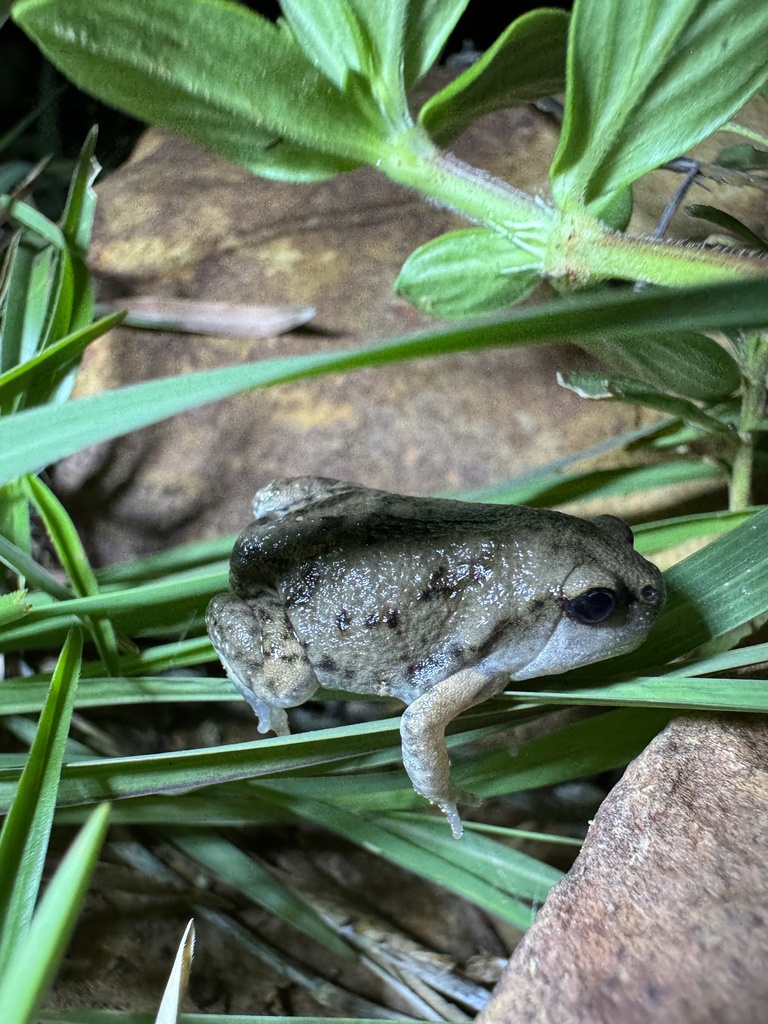
Photo: Teja Yantrapalli
Feravox · The Voice of the Wild
Marbled Globular Frog
Uperodon systoma
Least Concern
Marbled Globular Frog (Uperodon systoma) lives in dry forest and plains across South Asia. It feeds on termites and ants. Its conservation status is Least Concern.
The marbled globular frog, Uperodon systoma, wears its name on its stout, balloon-like body. Measuring up to 64 mm (2.5 in) from snout to vent, this narrow-mouthed amphibian sports a small, almost hidden head and a marbled skin pattern that blends seamlessly with the loam it burrows into. Uniquely toothless among many of its kin, it captures its primary prey, termite and ant swarms, by flicking a sticky tongue, a strategy that proves more efficient than chewing when tackling countless tiny insects clustered together. A true fossorial specialist, the frog spends most of the year concealed beneath the soil of dry forests, plains, gardens, and cultivated fields across Pakistan, India, Nepal, and Sri Lanka. It emerges only with the summer monsoons, when the rains coax termites to the surface and the air fills with the chorus of males calling from stream banks and paddy fields. Here, the females deposit floating egg clutches in the inundated water, ensuring the next generation hatches into the same season of abundance. The frog’s life is a rhythmic dance with the monsoon, its brief surface appearances a flash of marbled resilience in a world that often stays hidden beneath the earth.
Real recorded sounds, 11 nature games and a free Daily 5, 1v1 quiz duels, conservation wins and a safe Kids mode. Free on Feravox.