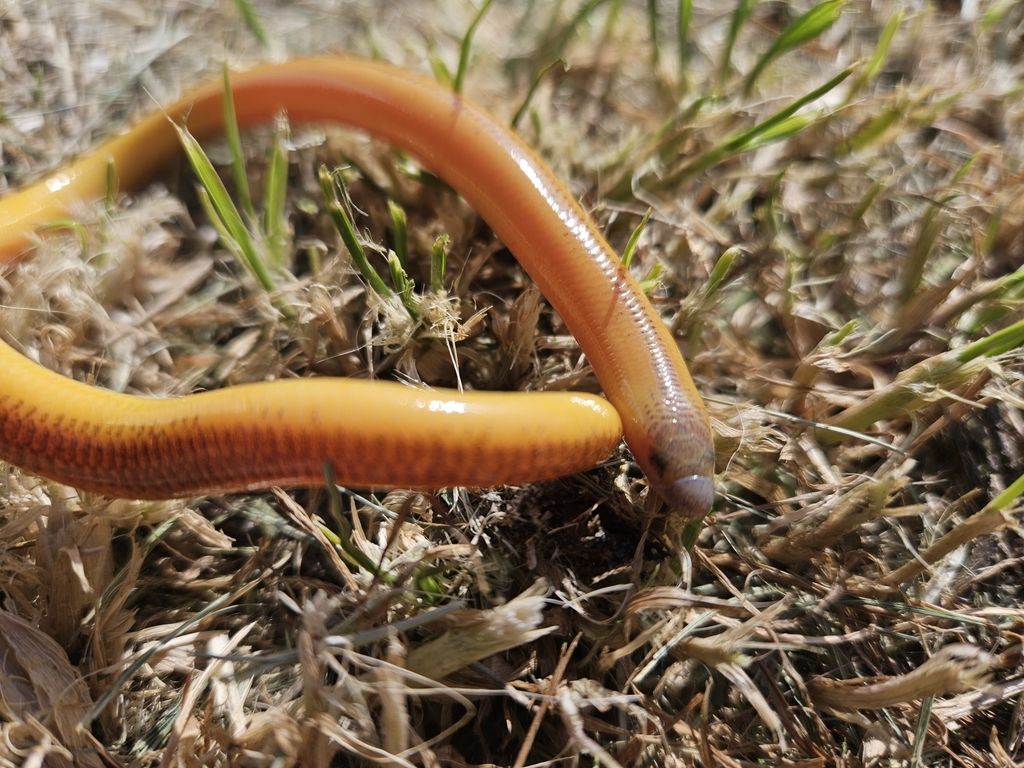
Linnaeus' Lance Skink (Acontias meleagris) lives in dry sand burrows across southern Cape South Africa. It feeds on unknown diet. Its conservation status is Least Concern.
Fascinating facts about the Linnaeus' Lance Skink
- A single summer litter can contain just two to four babies, making each birth a tiny, high-stakes event in the Cape’s dry sand. The newborns emerge fully formed, ready to wiggle into the burrows their parents already know. Such small broods highlight how this legless skink invests heavily in each offspring’s survival.
- When you watch the sand shift under a boulder, you might be witnessing a golden-brown, tube-shaped body gliding unseen. Its sleek form, streaked with tiny black spots that sometimes merge into stripes, lets it slip through tight spaces as it burrows beneath rocks and detritus.
- In the southern Cape of South Africa, this skink is found burrowing in dry sand and beneath dead wood and other detritus.
At a glance
Rangesouthern Cape South Africa
Habitatdry sand burrows
Dietunknown diet
About the Linnaeus' Lance Skink
The Cape legless skink, Acontias meleagris, has a slender, tube-shaped body that is golden-brown with tiny black spots, which in some specimens fuse into longitudinal stripes. It has no limbs and is found burrowing in dry sand as well as beneath bouldles, dead trees and other detritus in the southern Cape of South Africa. It gives birth to two to four young in summer.
Hear the Linnaeus' Lance Skink, and 4,400+ more
Real recorded sounds, 11 nature games and a free Daily 5, 1v1 quiz duels, conservation wins and a safe Kids mode. Free on Feravox.
More reptiles to discover