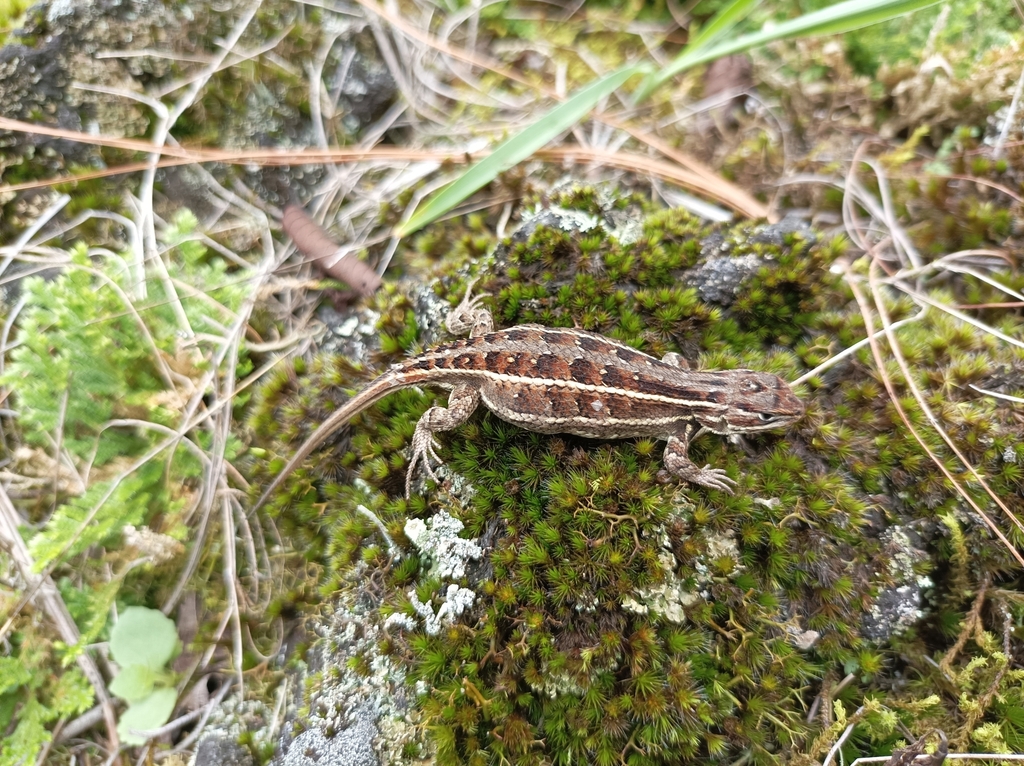
Trans Volcanic Bunchgrass Lizard (Sceloporus bicanthalis) lives in bunchgrass grassland across central Mexico. Its conservation status is Least Concern.
Fascinating facts about the Trans Volcanic Bunchgrass Lizard
- At just 45 mm from snout to vent, about the length of a small paperclip, this tiny lizard packs a live birth strategy, giving birth to fully formed young instead of laying eggs.
- Living only where the air thins, it thrives between 2,900 and 4,400 m elevation.
- Its home is a patchwork of open pine forests dotted with tussock grass, a landscape that looks like a sea of green clumps scattered across volcanic slopes.
- From the eastern edge of the Valley of Mexico all the way to the northern reaches of the Sierra Madre de Oaxaca, its distribution stretches across the Trans-Mexican Volcanic Belt, linking several distinct mountain systems.
At a glance
Rangecentral Mexico
Habitatbunchgrass grassland
Dietdiet unknown
About the Trans Volcanic Bunchgrass Lizard
The trans volcanic bunchgrass lizard, Sceloporus bicanthalis, is a small, viviparous lizard measuring on average 45 mm in snout-vent length. It inhabits tussock grassland habitats within open pine forests in the eastern Valley of Mexico, the Trans-Mexican Volcanic Belt, and the northern Sierra Madre de Oaxaca at elevations of 2,900–4,400 m.
Hear the Trans Volcanic Bunchgrass Lizard, and 4,400+ more
Real recorded sounds, 11 nature games and a free Daily 5, 1v1 quiz duels, conservation wins and a safe Kids mode. Free on Feravox.
More reptiles to discover