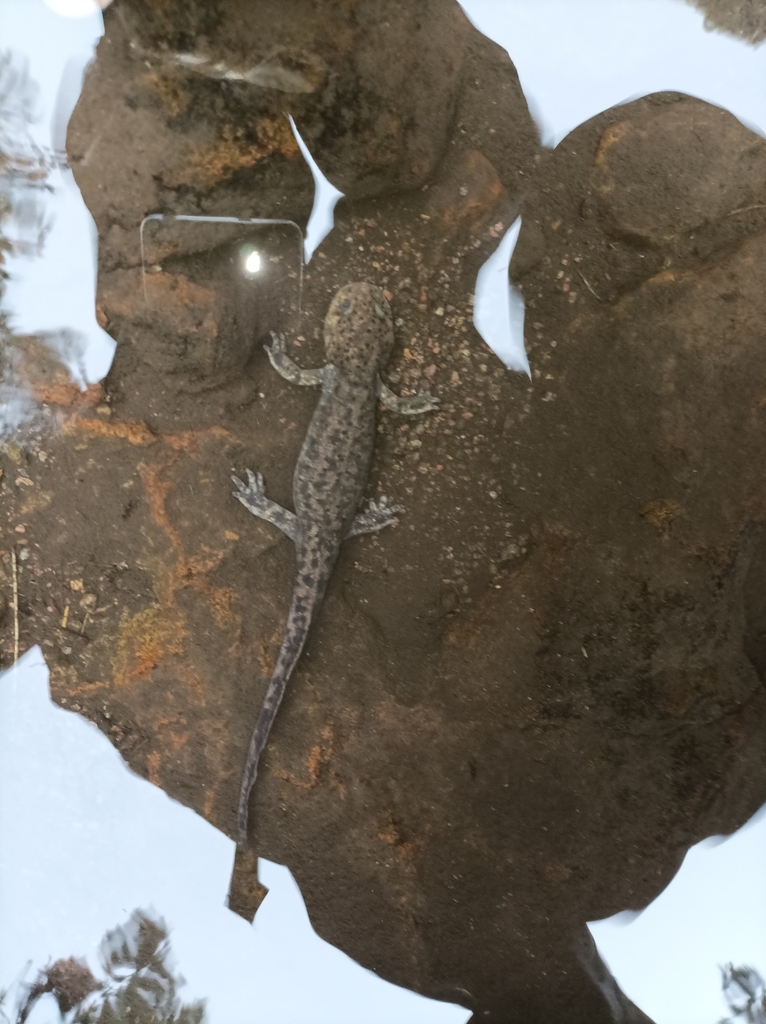
Leora's Stream Salamander (Ambystoma leorae) lives in cold alpine streams across Mount Tlaloc, Mexico. It feeds on unspecified diet. Its conservation status is Critically Endangered.
Fascinating facts about the Leora's Stream Salamander
- A single surviving group lives on Mount Tlaloc, the only known population of this salamander perched just outside Mexico City’s sprawling urban jungle. Its isolation shows how close a species can hover to oblivion.
- Scientists once recorded the salamander in six separate sites across the Iztaccihuatl-Popocatepetl National Park, but today it clings to just one spot, underscoring how fragile its range has become.
- The creatures dwell in streams only about 2 m wide but plunging 6.5 m deep, where the water stays a chilly 12-15 °C and holds 78% dissolved oxygen, conditions as precise as a laboratory experiment.
- Genetic testing revealed low overall diversity yet surprisingly high average heterozygosity, meaning the few individuals still carry a surprising mix of genetic variants despite their tiny numbers.
- Local people have traditionally harvested these salamanders for food, adding direct human predation to threats like water extraction and cattle grazing, a reminder that cultural habits can tip the balance for an already endangered animal.
At a glance
RangeMount Tlaloc, Mexico
Habitatcold alpine streams
Dietunspecified diet
About the Leora's Stream Salamander
Leora's stream salamander (Ambystoma leorae) lives in two small alpine streams about 2 m wide and 6.5 m deep, with cold water temperatures of 12–15 °C and high oxygen levels. The streams are surrounded by alpine grassland (Muhlenbergia spp.) and mountain forest (Pinus hartwegii and Abies religiosa). Genetic studies show low overall diversity but high average heterozygosity, and three genetic subpopulations have been recognized within its restricted range.
Hear the Leora's Stream Salamander, and 4,400+ more
Real recorded sounds, 11 nature games and a free Daily 5, 1v1 quiz duels, conservation wins and a safe Kids mode. Free on Feravox.
More other animals to discover