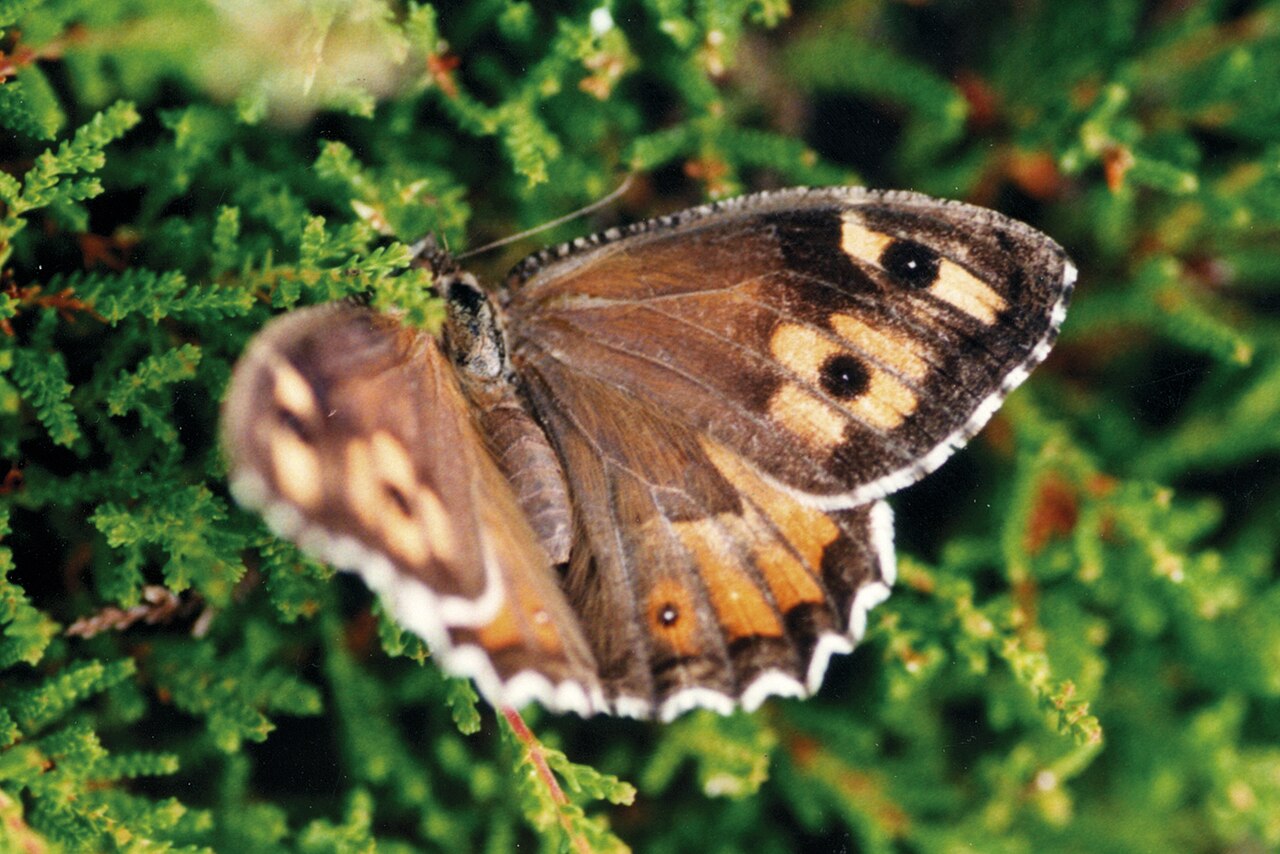
Grayling (Hipparchia semele) lives in dry grasslands across Europe, Western Asia. It feeds on grasses and leaves. Its conservation status is Least Concern.
Fascinating facts about the Grayling
- Graylings travel in tiny flocks of just two or three individuals, maintaining a steady speed of 10-11 km per hour throughout August. Their migration follows a direct, constant course without any pauses or sudden darts, allowing them to cover distance efficiently. Throughout the month they head predominantly southeast, a consistent direction that characterises the whole flight period.
- The grayling is endemic to Europe and once occupied much of the continent, but today it is largely confined to coastal zones. In northern and western Europe - Scandinavia, Britain, Ireland and the Baltic states - it is now seen mainly along the shoreline, while inland numbers have dropped sharply. This inland decline has pushed the species onto the UK's priority-species list, even though it remains globally listed as Least Concern.
- After hatching, the caterpillars feed at night and seek refuge in deep grass tussocks where they hibernate through the cold months. The first and second instars feed in late summer before entering a third-instar pause at the base of a tussock, remaining dormant until spring. When temperatures rise, the larvae resume feeding, staying nocturnal and hidden in the tussock base during daylight, a pattern that stretches from August to June.
- Male graylings can raise their body temperature by up to three degrees Celsius by exposing as much of their body as possible to the sun, a behaviour known as sun-basking. When it becomes too warm they reverse this posture, reducing the exposed surface area and can lower their temperature by as much as two and a half degrees Celsius.
- Each year the grayling produces a single generation, with females laying eggs singly between July and September. The eggs start out white and gradually turn pale yellow as they develop, and the entire egg stage lasts between two and three weeks before hatching. This brief developmental period ensures that the larvae emerge in late summer, ready to begin their slow growth and seasonal hibernation cycle.
Sources
Every fact above was checked against these pages, and kept only where one of them states it.
At a glance
RangeEurope, Western Asia
HabitatDry grasslands
DietGrasses and leaves
About the Grayling
As the warm sunlight dances across the rustic landscape, the grayling butterfly, with its subtle yet striking beauty, flutters effortlessly, its delicate wings beating in a mesmerizing rhythm as it navigates the gentle breeze. With an air of quiet confidence, it alights upon a weathered stone, its dull brown hue allowing it to blend seamlessly into the surroundings, a testament to its remarkable adaptability. In this fleeting moment, the grayling embodies the essence of understated elegance, its unassuming nature belied by a deep-seated resilience that has allowed it to thrive in harmony with its environment.
Hear the Grayling, and 4,400+ more
Real recorded sounds, 11 nature games and a free Daily 5, 1v1 quiz duels, conservation wins and a safe Kids mode. Free on Feravox.
More insects and spiders to discover