Photo: Alan Flisch
Feravox · The Voice of the Wild
Bumblebee
Bombus terrestris
Least Concern
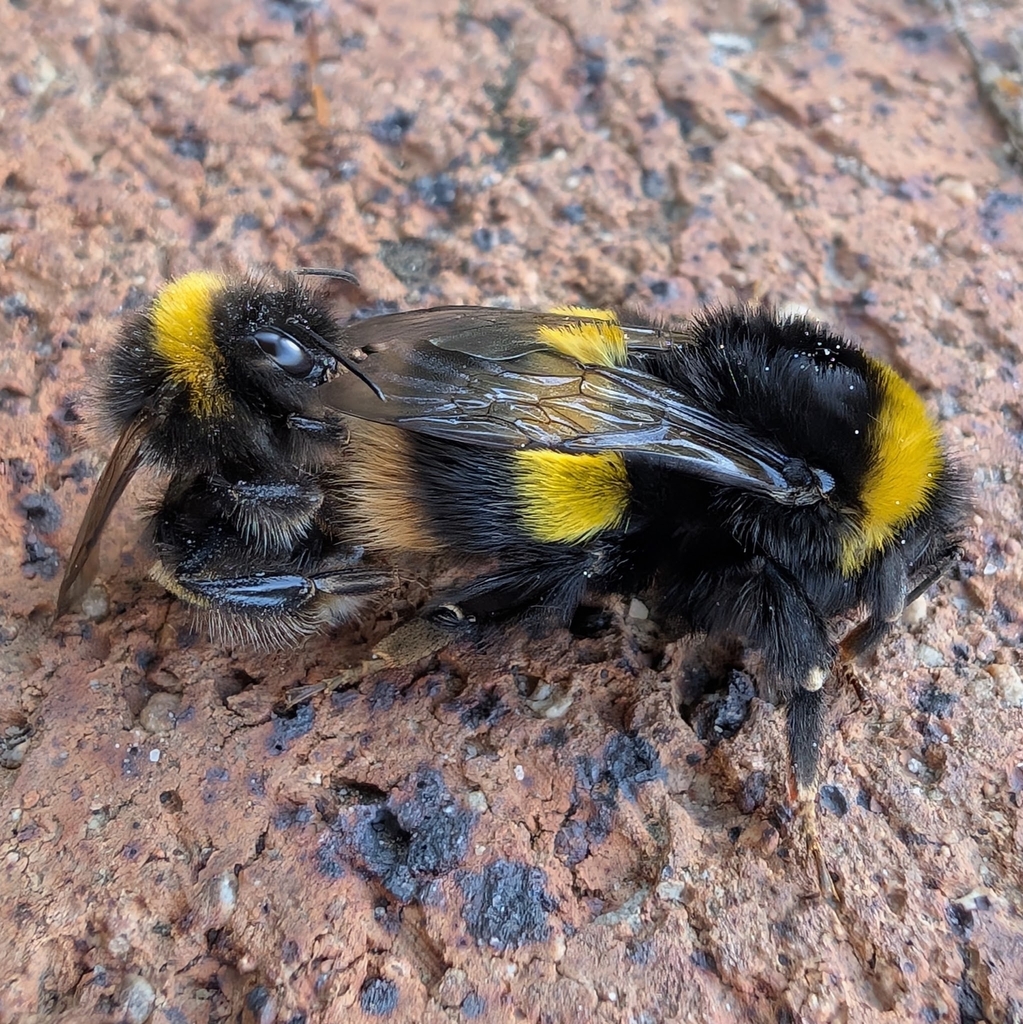
Bumblebee (Bombus terrestris) lives in meadows, gardens, woodland edges, heathland, upland moorland across Europe, North Africa, temperate Asia. Its conservation status is Least Concern.
Every fact above was checked against these pages, and kept only where one of them states it.
The Buff-tailed Bumblebee (Bombus terrestris) is the most familiar of the world's 250-plus bumblebee species, a stocky, densely furred insect in black and yellow with a distinctive pale tail, found across Europe from the Mediterranean to Scandinavia and east into central Asia. Where most insects are cold, passive, and entirely dependent on ambient warmth, the bumblebee is something different: a thermoregulating animal that generates its own body heat, capable of flying on mornings that would ground every other pollinator. It is one of the first insects to emerge each spring and one of the last to disappear each autumn, and in that extended window it is irreplaceable. Unlike the honeybee, it masters buzz pollination, a targeted, frequency-precise vibration that releases pollen from flowers that respond to nothing else, making it essential to the production of tomatoes, blueberries, peppers, and dozens of other crops. Each colony is an annual creation: a single overwintered queen builds it from nothing in spring, and the entire structure, workers, drones, queen, dies by late autumn. The bumblebee's relatives are not so fortunate; dozens of species are in steep decline or already gone, casualties of a world that has traded meadows and wildflower margins for monoculture. The buff-tailed itself holds on, but its genus is a living barometer of what industrial agriculture has cost.
Real recorded sounds, 11 nature games and a free Daily 5, 1v1 quiz duels, conservation wins and a safe Kids mode. Free on Feravox.