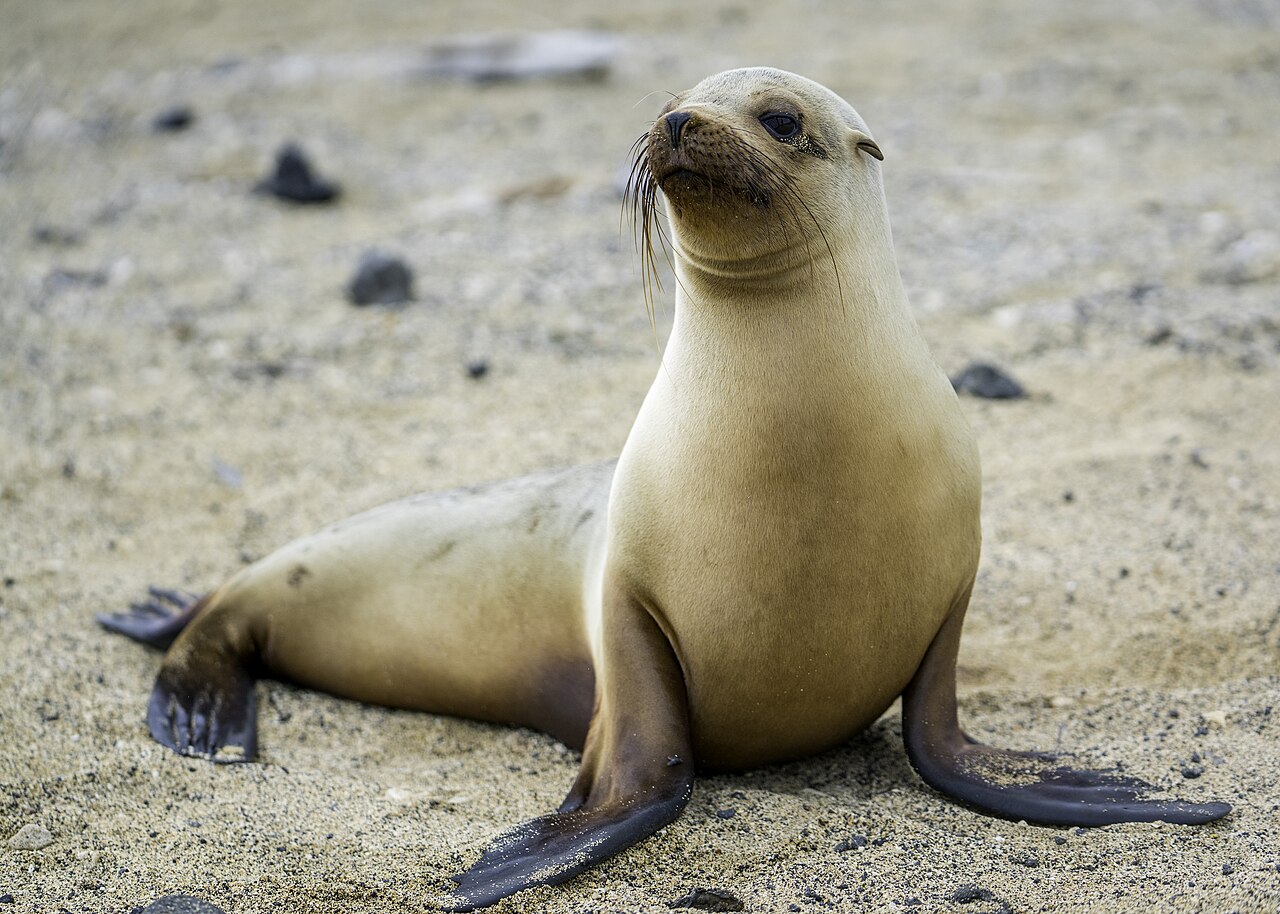
Galápagos Sea Lion (Zalophus wollebaeki) lives in galapagos Islands coast across Galapagos Islands. It feeds on fish and squid. Its conservation status is Endangered.
Fascinating facts about the Galápagos Sea Lion
- Galápagos sea lions stretch from a modest 1.5 m up to a towering 2.5 m, weighing anywhere between 50 kg and 400 kg, yet the dominant bulls can tip the scales at 360 kg (800 lb). This size spread makes them the smallest sea-lion species, but still large enough that a single male can dominate a harem and fend off rivals with sheer bulk. Their massive necks and shoulders give them the power to push opponents aside, a physical edge that underpins the fierce territorial battles seen on the islands.
- Breeding stretches from May through January, a nine-month window that keeps pups in the colonies all year long. Because each female raises only one pup at a time and may nurse it for up to three years, mothers are constantly juggling a newborn and an older dependent.
- When a bull patrols his shoreline, he barks loudly and repeatedly, a vocal display that can travel far across the surf. Territorial males shout more often than their non-territorial peers, using these calls to warn off intruders and cement their harem. The constant barking not only marks ownership but also lets rivals gauge each other's strength without a physical clash, shaping the social hierarchy of the colony.
- Galápagos sea lions are primarily sardine eaters, but when El Niño warms the water and sardines disappear, they dive deeper to chase lantern fish. This dietary shift is forced by the loss of their favorite prey, and the resulting food shortage drives noticeable drops in sea-lion numbers. The link between ocean temperature, sardine availability, and lion survival shows how climate swings can directly reshape a top predator's fate.
- Young females become independent hunters early: by one year, 81 % are diving on their own, and by two they travel up to 30 km from shore, diving about 100 times daily. In stark contrast, only 46 % of males dive at one year and two-year-old boys never leave 200 m of the colony, preferring milk over fish. This sex-biased foraging means mothers must support sons longer.
Sources
Every fact above was checked against these pages, and kept only where one of them states it.
At a glance
RangeGalapagos Islands
HabitatGalapagos Islands coast
DietFish and squid
About the Galápagos Sea Lion
In the crystal-clear waters of the Galápagos, the sea lion glides with effortless elegance, its sleek, dark form undulating through the waves like a living embodiment of the ocean's own fluidity. As it moves, its flippers propel it with a slow, powerful rhythm, a testament to the remarkable adaptability that has allowed this endangered species to thrive in one of the most unique and fragile ecosystems on the planet. With its large, soulful eyes and expressive features, the Galápagos Sea Lion exudes a captivating charm, as if beckoning us to witness the secrets of its underwater realm.
Hear the Galápagos Sea Lion, and 4,400+ more
Real recorded sounds, 11 nature games and a free Daily 5, 1v1 quiz duels, conservation wins and a safe Kids mode. Free on Feravox.
More ocean life to discover