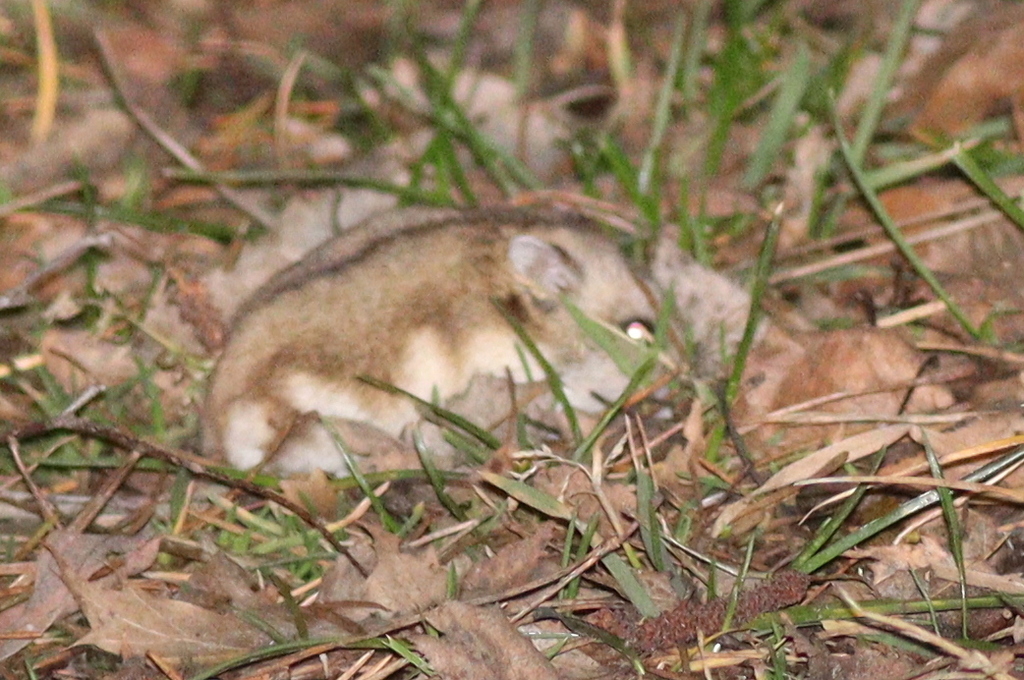
Dzhungarian Hamster (Phodopus sungorus) lives in temperate grasslands across Central Asia. It feeds on seeds and grains. Its conservation status is Least Concern.
Fascinating facts about the Dzhungarian Hamster
- When daylight drops below fourteen hours, the hamster's dark summer pelage is almost entirely replaced by a white winter coat, turning the animal into a snow-coloured speck that blends with the steppe. The change is triggered by the shortening days and begins in October or November, completing by December. This seasonal whitening is the origin of its common name, as the wild hamster adopts a white coat for the winter months.
- The hamster digs tunnels about one metre deep that open into ground burrows used for sleeping, rearing young and escaping predators. Most burrows have six entrances and are lined with moss in summer, while in winter the animal closes all but one opening and lines the chamber with animal fur or wool it gathers. These deep, multi-entrance chambers give it a safe refuge beneath the harsh steppe surface and help maintain a stable micro-climate.
- Inside its burrow the air stays at a steady 16.7 °C, a modest warmth compared with the frigid exterior of the steppe. This stable temperature is achieved by sealing most entrances and insulating the chamber with collected fur, which reduces heat loss during the cold months. The relatively warm micro-environment helps the hamster conserve energy that would otherwise be spent on thermoregulation.
- The winter white dwarf hamster can produce viable offspring only when paired with the closely related Campbell's dwarf hamster; no other hamster species shares this interbreeding capability. This rare compatibility allows the two to create live hybrid litters, a fact noted among the few pet hamster species.
- Winter white dwarf hamsters breed continuously because they lack a fixed breeding season, enabling them to produce litters throughout the year when kept as pets. In captivity, especially under artificial lighting that mimics long days, they can breed all year round, unlike their wild counterparts that breed only in spring and summer. This nonstop reproductive cycle makes them faster breeders than golden hamsters, a trait highlighted by researchers.
Sources
Every fact above was checked against these pages, and kept only where one of them states it.
At a glance
RangeCentral Asia
HabitatTemperate grasslands
DietSeeds and grains
About the Dzhungarian Hamster
In the whispering grasslands of the Eurasian steppes, the Dzhungarian hamster weaves a secretive existence, its tiny paws barely disturbing the soil as it scurries through the undergrowth with an air of furtive urgency. With eyes aglow like dark jewels, this diminutive creature navigates its world with a quiet intensity, driven by the imperative to forage and survive in a realm of towering grasses and hidden predators. As it darts and pauses, its soft fur fluffed against the chill of the steppe winds, the Dzhungarian hamster embodies a fierce and unassuming resilience.
Hear the Dzhungarian Hamster, and 4,400+ more
Real recorded sounds, 11 nature games and a free Daily 5, 1v1 quiz duels, conservation wins and a safe Kids mode. Free on Feravox.