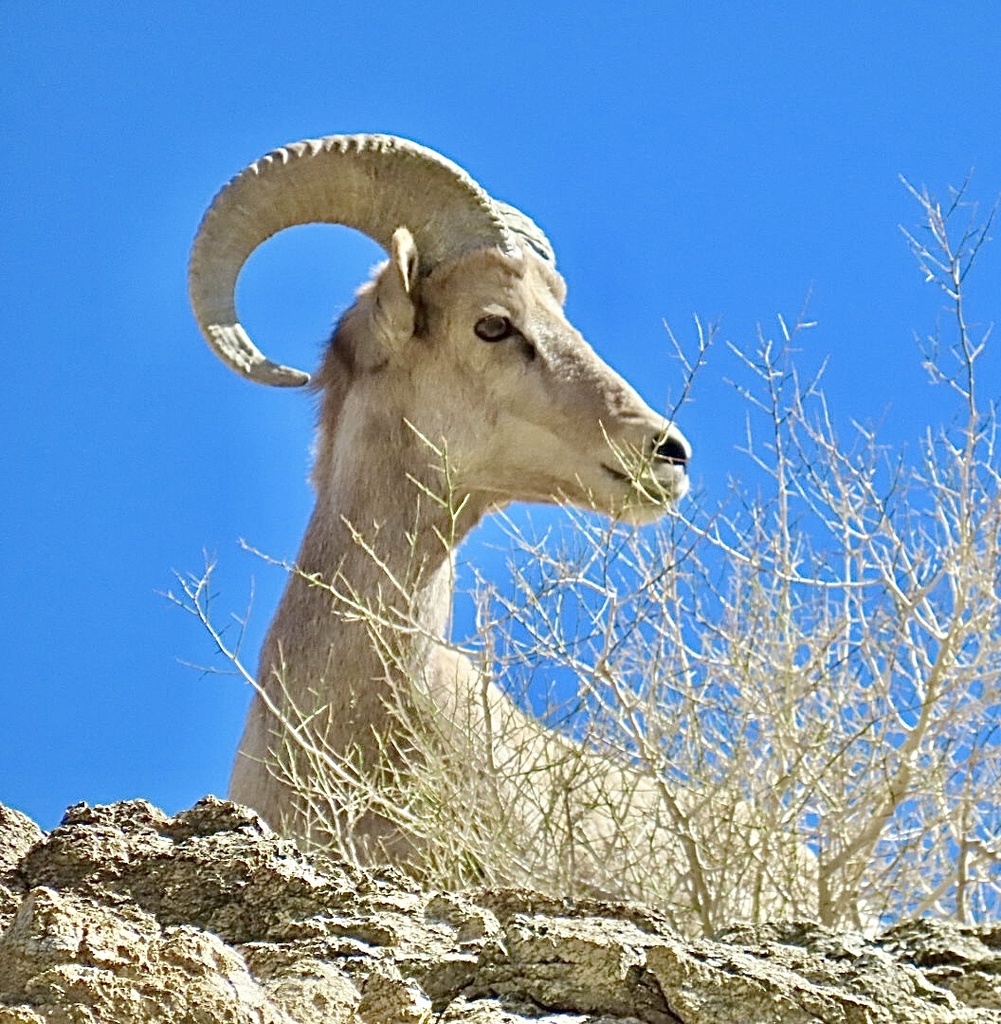
Bighorn Sheep (Ovis canadensis) lives in mountainous terrain across Western North America. It feeds on grass and leaves. Its conservation status is Least Concern.
Fascinating facts about the Bighorn Sheep
- Bighorn rams can smash into rivals at about 20 mph, using horns that may weigh as much as 14 kg, roughly the weight of every bone in their own bodies. This massive head-on weapon is supported by a double-layered skull shored with bone struts and a broad tendon linking skull to spine, letting the head pivot and recoil without crushing the brain. The sheer force of these clashes decides who gets to mate, turning each battle into a high-stakes test of strength and stamina that shapes the herd's genetic future.
- A single bighorn ram can weigh up to 143 kg (315 lb) and stand 1.85 m (6.1 ft) long, yet the desert subspecies is noticeably smaller, with flatter, wider-spreading horns. Males in the Rocky Mountains sometimes exceed 230 kg (500 lb), while Sierra Nevada males top out at just 90 kg (198 lb).
- Bighorn sheep can sprint across level ground at 30 mph and scramble up sheer cliffs at 15 mph, even leaping between ledges only 2 inches wide or spanning gaps up to 20 ft. Their ability to move so nimbly on vertical terrain lets them escape predators such as wolves, bears and mountain lions, making them living barometers of mountain-range health, where they thrive, the rocky landscape is intact and predator-prey dynamics are balanced.
- By 1900, bighorn numbers had collapsed from millions to just several thousand because diseases from domestic livestock and unchecked hunting decimated the herd. Today, only about one-tenth of the historic population remains, with the Sierra Nevada and Peninsular desert groups listed as endangered. This dramatic decline shows how quickly human-introduced pathogens can erase a once-abundant megafauna.
- A newborn bighorn lamb weighs just 3.6-4.5 kg (8-10 lb) but can walk within hours and follow its mother over precipitous terrain. By the time it's weaned at four to six months, it has grown to 25-35 kg. This rapid early development is vital because lambs born early in the spring have higher survival rates than those born later, when milk is scarcer and food quality drops, highlighting the tight link between birth timing and population recruitment.
Sources
Every fact above was checked against these pages, and kept only where one of them states it.
At a glance
RangeWestern North America
HabitatMountainous terrain
DietGrass and leaves
About the Bighorn Sheep
As the golden light of dawn creeps across the rugged landscape, a majestic bighorn sheep emerges from the rocky outcroppings, its surefooted hooves clicking against the stone as it navigates the treacherous terrain with effortless ease. With a regal bearing, the sheep moves deliberately, its curved horns bobbing up and down as it scales the steep inclines, its thick coat glistening in the growing light. In this unforgiving yet breathtaking world, the bighorn sheep is a master of adaptation, its remarkable agility and endurance allowing it to thrive in one of the most inhospitable environments on Earth.
Hear the Bighorn Sheep, and 4,400+ more
Real recorded sounds, 11 nature games and a free Daily 5, 1v1 quiz duels, conservation wins and a safe Kids mode. Free on Feravox.