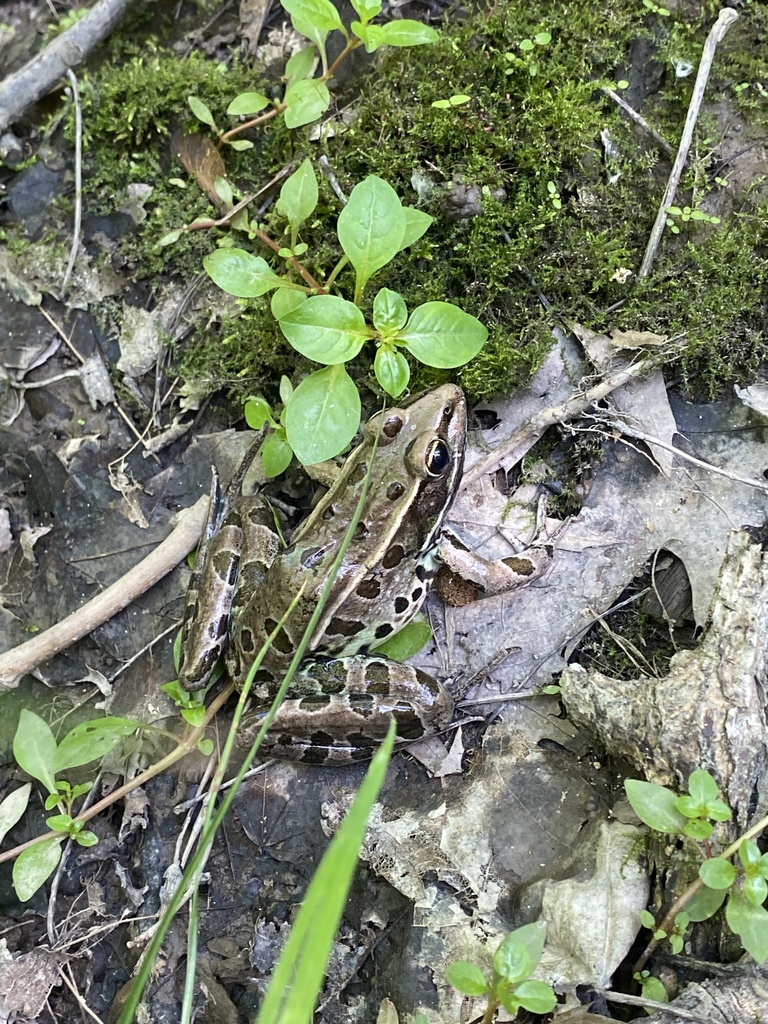
Atlantic Coast Leopard Frog (Lithobates kauffeldi). Its conservation status is Least Concern.
Fascinating facts about the Atlantic Coast Leopard Frog
In 2014 scientists finally gave this frog a name, Lithobates kauffeldi, after a Staten Island herpetologist who guessed it existed back in 1936, showing how even seasoned observers can overlook a whole species in plain sight. The discovery reminds us that urban wetlands still hide secrets worth protecting.
Its home stretches about 780 km north-to-south and only 100 km inland along the Atlantic coast, hugging the I-95 corridor from Connecticut down to North Carolina. This narrow strip makes the frog especially vulnerable to any sea-level rise or coastal development, turning a modest range into a tightrope walk for survival.
Male frogs announce love with a single, sharp “chuck” instead of the rapid “ak-ak-ak” of its southern cousins, a vocal cue that’s the most reliable way to tell the species apart. That unique call highlights how subtle sound can keep species distinct even when they look alike.
During breeding season, groups of five or more frogs gather in shallow water, and the peak of egg-laying lasts just two to three weeks in late March and early April in New York. Such a brief, intense window means any disturbance then can wipe out a whole generation.
Although classified as least concern overall, the frog is listed as endangered in both Pennsylvania and New York and has disappeared from places like Long Island and western Connecticut. Its precarious status in half its range shows how quickly a common-looking amphibian can slip toward extinction.
Advertisement
Hear the Atlantic Coast Leopard Frog, and 4,400+ more
Real recorded sounds, 11 nature games and a free Daily 5, 1v1 quiz duels, conservation wins and a safe Kids mode. Free on Feravox.