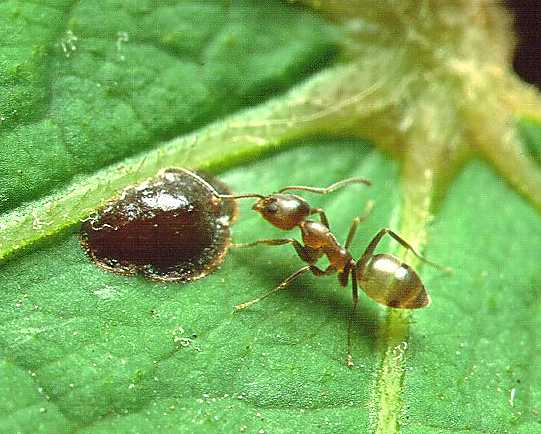
Argentine Ant (Linepithema humile) lives in warm temperate regions across Argentina, Uruguay, Paraguay, Bolivia, southern Brazil. Its conservation status is Least Concern.
Fascinating facts about the Argentine Ant
- One trillion ants march from San Diego up past San Francisco. Researchers estimate the Very Large Colony may have a population of one trillion individuals as of 2010, dwarfing any other insect aggregation on Earth. This sheer mass lets the ants overwhelm native species, monopolize food, and reshape entire ecosystems, showing how a single invasive supercolony can rival human populations in scale.
- At the front line between two rival supercolonies, thirty million ants die each year, a battlefield stretching for miles. The border of the Very Large Colony and the Lake Hodges Colony sees constant, ceaseless fighting, unlike the brief raids of other ants. This relentless war creates massive dead-ant piles.
- Argentine ants survive from, -5 °C up to 45 °C, but they cannot thrive where the mean daily temperature falls below 7-14 °C. This thermal ceiling limits their spread to Mediterranean-type climates, yet within those zones they dominate, illustrating how a narrow temperature niche can still support a global invasion when human activity transports them to suitable habitats.
- In introduced colonies, there may be one queen for every 125 workers, and each queen can lay 20-30 eggs daily, sometimes up to 50-60. With hundreds of queens per nest, the colony can produce a constant stream of brood, fueling rapid expansion and making control difficult.
Sources
Every fact above was checked against these pages, and kept only where one of them states it.
At a glance
RangeArgentina, Uruguay, Paraguay, Bolivia, southern Brazil
HabitatWarm temperate regions
DietInsects and sweets
About the Argentine Ant
In the scorching landscapes of its native Argentina, the Argentine Ant moves with ruthless efficiency, a dark, unyielding tide of individual bodies united in a singular purpose. As it forages, it leaves behind a trail of chemical signals, a hidden map that guides its kin through the intricate network of cracks and crevices that crisscross the sun-baked earth. With each step, this diminutive conqueror asserts its dominance, a testament to the unyielding power of cooperation and industry that has allowed it to thrive in even the most inhospitable of environments.
Hear the Argentine Ant, and 4,400+ more
Real recorded sounds, 11 nature games and a free Daily 5, 1v1 quiz duels, conservation wins and a safe Kids mode. Free on Feravox.
More insects and spiders to discover