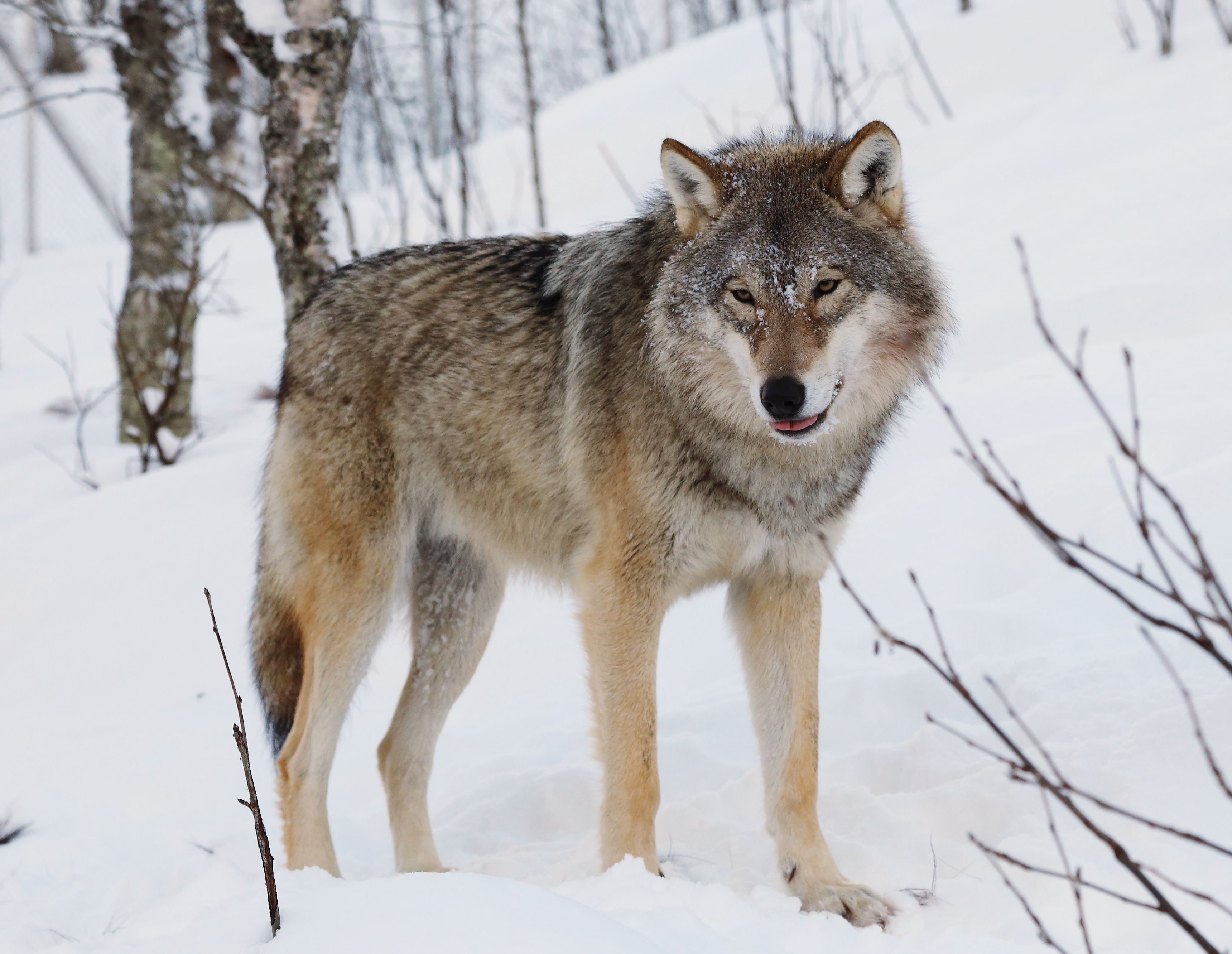
When 14 grey wolves were released into Yellowstone in 1995, no one fully predicted what would follow. Elk numbers fell, and willows and aspens grew back in places. How much of that was the wolves' doing is still debated by scientists.
The Absence of Wolves
When wolves were eradicated from Yellowstone in the 1920s, elk lost their main predator. In the decades that followed, willows along the park's streams declined, though the reasons are still debated.
Fourteen Wolves Change Everything
In 1995, biologists introduced 14 grey wolves from Canada into Yellowstone. Elk numbers fell, and willows and aspens began to grow back in some areas. Beaver colonies increased too, from 49 in 1996 to 127 by 2007, damming streams and creating wetlands.
>> "Wolves did not act alone: cougars, bears, hunting and drought also cut the elk herds."
Scientists call this kind of chain reaction a trophic cascade, but how strong it was in Yellowstone is still debated. A 2025 scientific comment argued the willow response was more modest and varies from place to place. At the end of 2025, the park held 84 wolves in seven packs.
_Sources: U.S. National Park Service, Yellowstone, "History of Wolf Management". National Park Service, "Yellowstone Wolf, Cougar, and Elk Project Annual Report 2025". National Park Service, Yellowstone "Elk" and "Beaver" pages. Utah State University news release on MacNulty and Cooper, Global Ecology and Conservation, 21 October 2025._